How to Write SEO Articles That Rank Faster in Search
Writing an SEO article is easy. Writing an article that deserves to be discovered, clicked, read, and remembered is much harder.
Many bloggers approach SEO by starting with a keyword, adding it to a few headings, writing a long article, and then waiting for Google to send traffic. That process can produce a page that looks optimized on paper but still struggles to gain meaningful visibility.
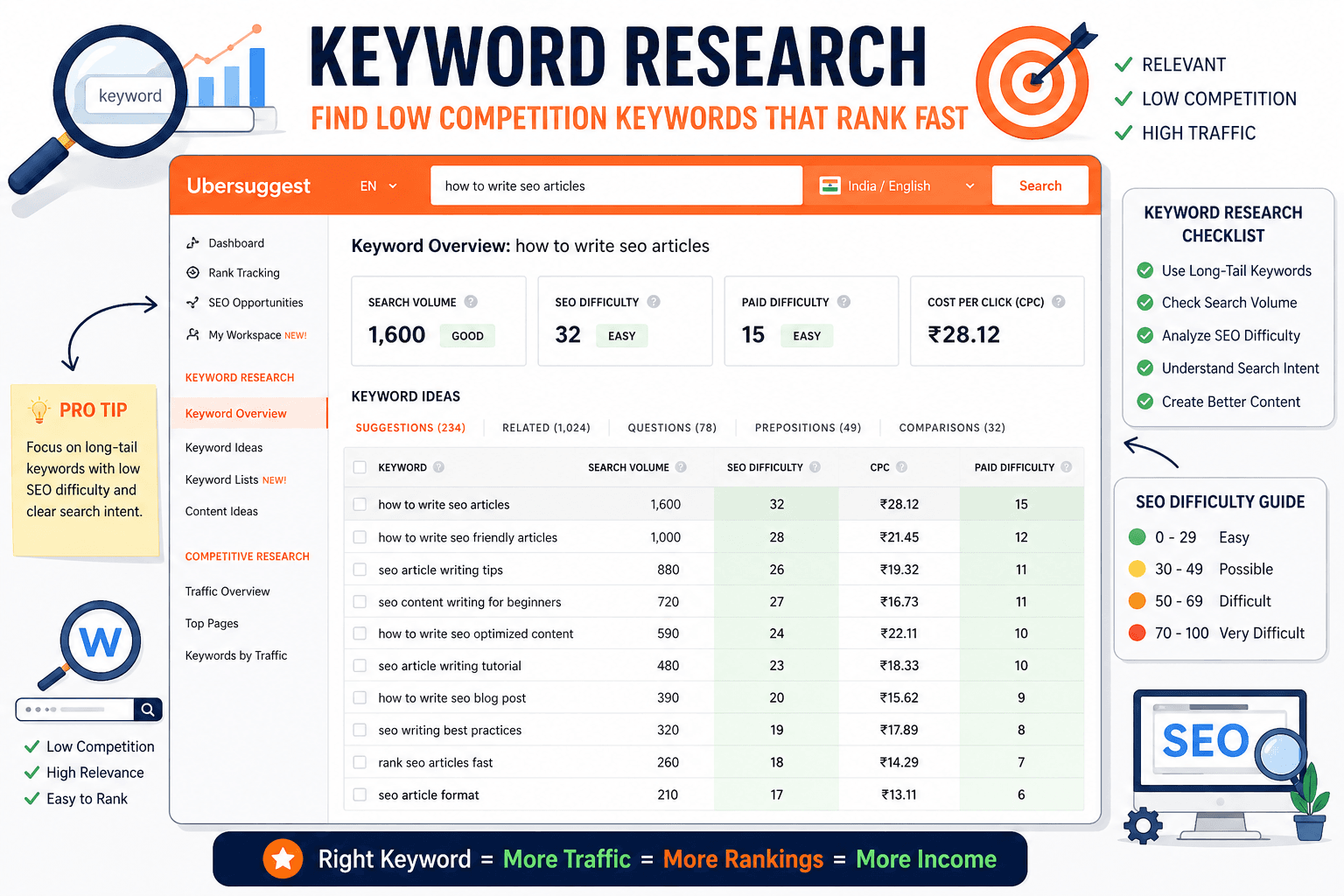
Modern search optimization requires a different mindset. Instead of writing primarily for search engines, you need to understand what the searcher wants, create the most useful answer you can, and then make that answer easy for both users and search engines to understand.
There is also an important reality that many SEO guides overlook: there is no guaranteed ranking speed. A well-written article can take time to be discovered, evaluated, indexed, and established in search results. Your job is not to force Google to rank a page quickly. Your job is to remove unnecessary weaknesses that could hold the page back.
Start With the Problem, Not the Keyword
One of the biggest differences between average SEO content and strong SEO content is where the writing process begins.
Weak content often begins with a keyword. Strong content begins with a problem.
Imagine someone searching for information about reducing the loading time of a WordPress website. Their real goal is not to read an article containing the phrase “WordPress speed optimization” as many times as possible.
They want to know what is making the website slow, which changes are worth making, what can be fixed without technical knowledge, and which improvements could make a noticeable difference.
That difference matters because search intent is more important than simply repeating a keyword.
Understand What the Searcher Wants
Before writing, search for the topic yourself. Look at the language used in the results, the questions people are asking, the type of pages Google is displaying, and the information those pages emphasize.
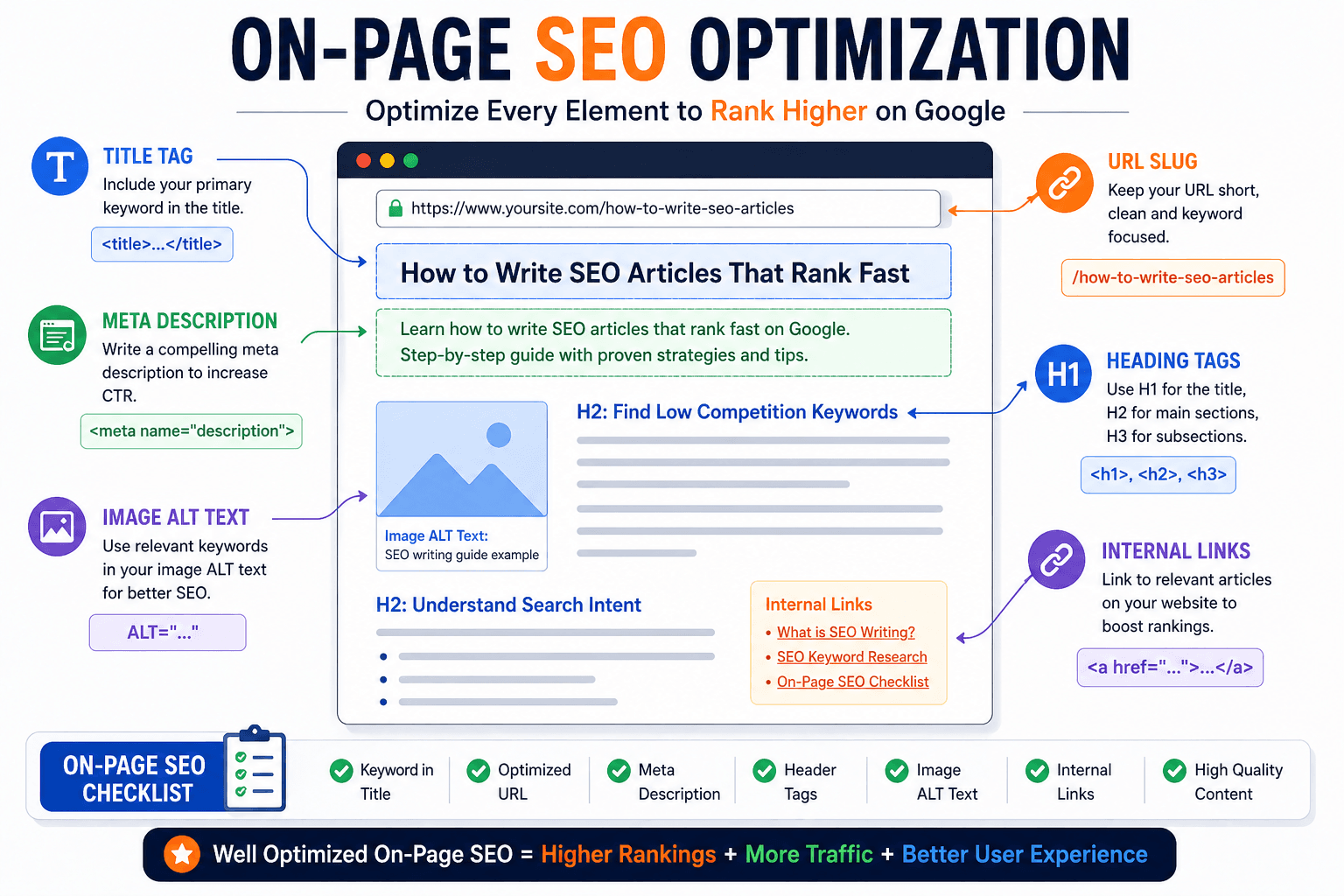
You are not doing this to copy competing articles. You are trying to understand the expectations surrounding the query.
If most results are tutorials, a general opinion article may not satisfy the intent. If users are clearly looking for comparisons, a basic definition may not be enough. If the query is a problem-solving search, the reader probably wants practical steps rather than a long introduction about the history of the topic.
The closer your content matches the underlying purpose of the search, the easier it becomes to create a useful page.
Choose Topics You Can Actually Compete For
A new website does not need to attack the biggest keyword in an industry immediately.
Broad searches such as “SEO,” “hosting,” or “blogging” can have enormous competition and extremely broad intent. A smaller website may have a better opportunity by focusing on a specific problem within that larger subject.
For example, instead of creating another general article about website speed, you could address a specific problem such as reducing layout shifts in Elementor or improving server response time on shared hosting.
These narrower topics often make it easier to create a page with a clear purpose.
Look Beyond Search Volume
Search volume can be useful during keyword research, but it should not be the only factor influencing your decision.
A keyword with enormous search demand may be extremely difficult to compete for. A narrower query with fewer searches may attract visitors who are much more likely to find your content useful.
For a small website, relevance and realistic competition can be more valuable than chasing the biggest possible number.
Build the Article Around Search Intent
Once you understand the topic, decide what kind of answer the searcher expects.
Informational searches usually require clear explanations. Comparison searches require meaningful differences, advantages, disadvantages, and decision-making information. How-to searches require practical instructions. Commercial searches often require enough information for someone to evaluate an option before taking action.
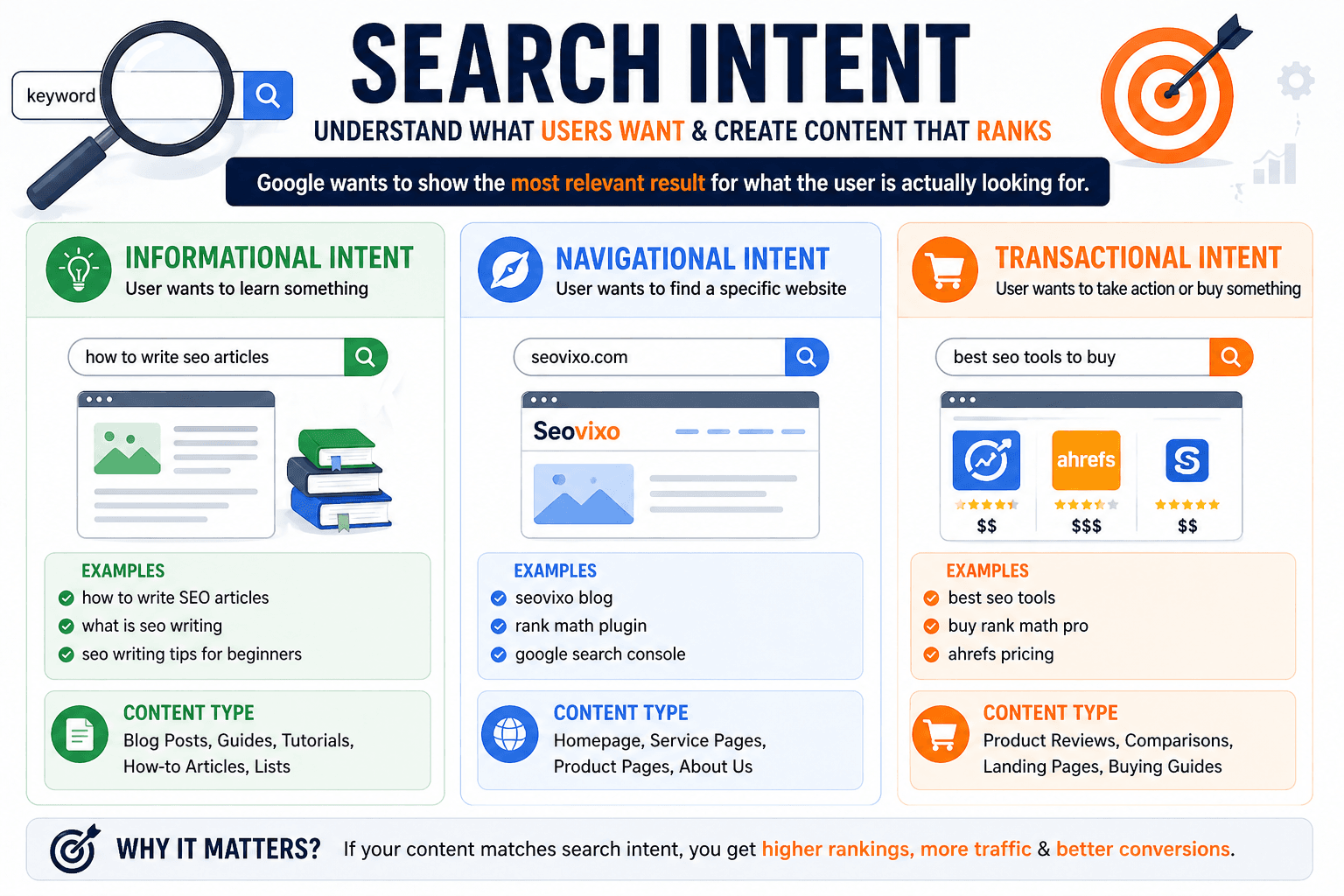
The structure of your article should reflect that intent.
If someone searches for the best hosting for a small blog, beginning with a lengthy explanation of what a server is wastes valuable attention. The reader probably wants to know which options are suitable, why they are suitable, what they cost, and what limitations they should consider.
Give them that information.
Answer the Main Question Early
A common weakness in SEO articles is an introduction that takes too long to reach the actual subject.
Readers do not need several paragraphs explaining why a topic is important before they receive useful information. Establish the problem, confirm what the article will cover, and begin delivering value.
This does not mean every article should reveal its entire conclusion immediately. It means the reader should quickly understand that they are in the right place.
Clarity creates trust. When visitors understand what they are going to get, they are more likely to continue reading.
Create a Strong Article Structure
A good SEO article should feel like a guided conversation rather than a collection of keywords and headings.
Start with the central problem. Move into the explanation. Then provide the practical solution, examples, important warnings, and supporting information. Finish by helping the reader understand what to do next.
Headings should make that journey obvious.
A reader who only scans your headings should still be able to understand the major ideas covered by the article.
Use Headings to Organize Ideas
Avoid creating headings simply because you want to insert another keyword. A heading should introduce a meaningful section of information.
For example, an article about improving blog traffic could have sections covering why traffic is low, how to identify the problem, how to improve search visibility, how to improve click-through rates, and how to measure progress.
Each section answers a different part of the reader's problem.
Write for People Before Search Engines
Search optimization should support good writing, not replace it.
Avoid forcing exact-match keywords into every paragraph. Modern search systems can understand related concepts, entities, phrases, and the broader meaning of a page.
If your article is about improving WordPress performance, you can naturally discuss caching, image optimization, scripts, server response time, Core Web Vitals, content delivery networks, and other related concepts without repeatedly using the same target phrase.
That makes the article more natural and gives the reader a much richer explanation.
Avoid Filler
Longer does not automatically mean better.
If a short explanation completely answers a question, there is no reason to stretch it into several paragraphs simply to increase the word count.
On the other hand, an article should not be so short that important parts of the problem remain unanswered.
The right length is the amount of content required to satisfy the search intent without unnecessary repetition.
Make the Introduction Worth Reading
Your introduction is not simply an SEO formality. It is the first opportunity to convince a visitor that your article is worth their attention.
Start by acknowledging the problem. Then explain what the reader will learn and why the information matters.
For example, if the topic is why a new blog is not receiving traffic, the introduction should speak directly to that situation rather than beginning with a generic explanation of what blogging means.
The reader should recognize their problem almost immediately.
“If I clicked this result because I have a problem, does the opening make me confident that this article understands what I need?”
Make Every Section Add Something Useful
An article becomes much stronger when every section has a clear purpose.
Instead of repeating the same advice in different words, use sections to introduce new information, explain difficult concepts, provide examples, compare options, or solve common problems.
Original examples can be particularly valuable. If you are explaining SEO to beginners, show what a weak title looks like and then demonstrate how you would improve it. If you are explaining internal linking, show how several related articles could connect naturally.
These examples turn abstract SEO advice into something readers can actually apply.
Useful examples are often more valuable than another paragraph of theory.
Think About What Happens After Publication
Publishing an article is not the end of the SEO process.
Once the page is live, Search Console can reveal how Google is actually connecting your content with search queries. You may discover searches you did not originally target, pages receiving impressions without enough clicks, or topics where your content needs more depth.
This feedback is extremely valuable because keyword research happens before publication, while Search Console gives you evidence from actual search visibility after publication.
That means your first version does not have to be your final version.
Optimize the Page Without Over-Optimizing It
Once your article is written, review the important elements that help search engines and users understand the page.
Your main topic should be clear from the title, introduction, headings, and surrounding content. You do not need to force the same keyword into every available location.
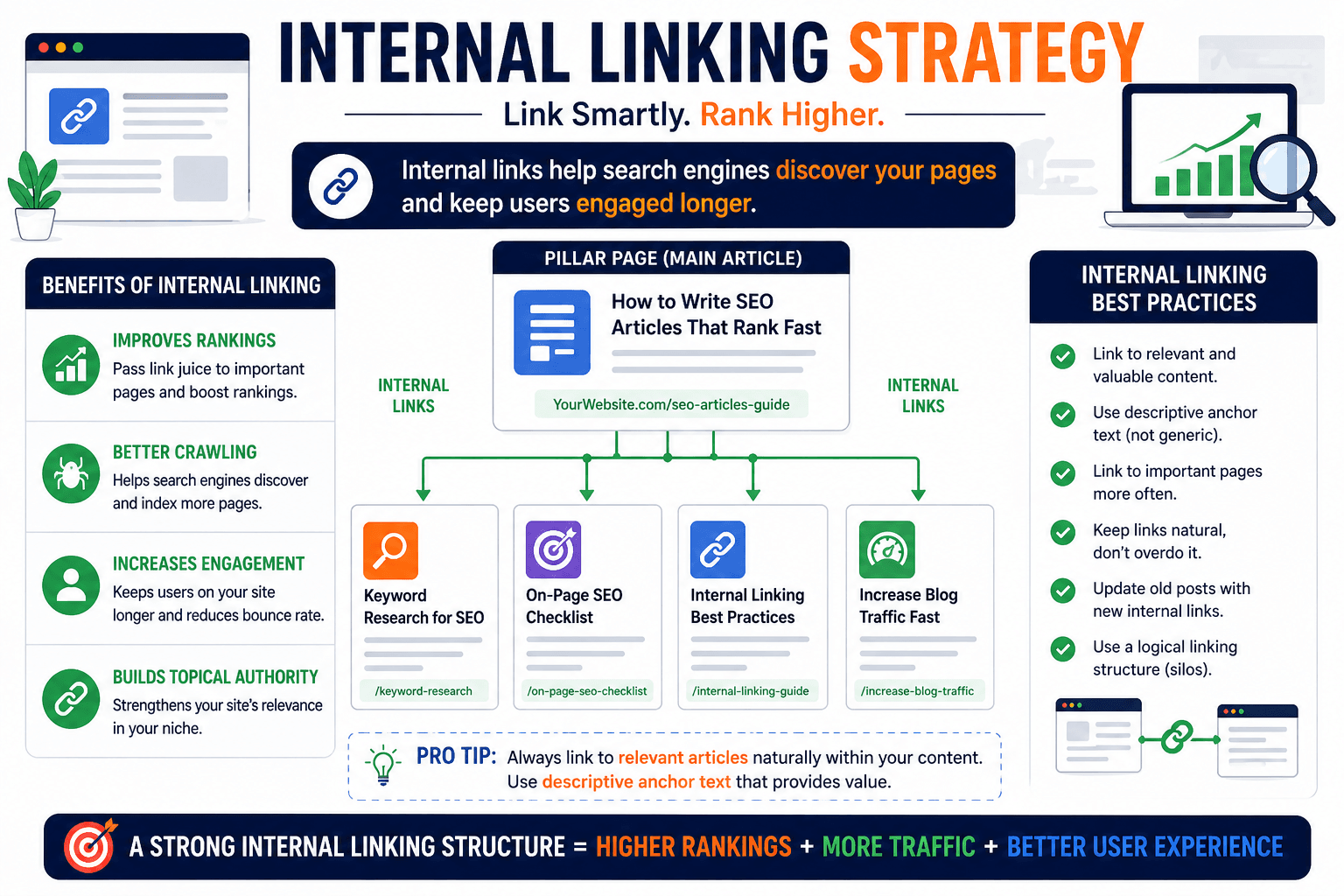
A natural page will normally contain related terminology because a genuinely useful explanation requires it. If your article is about WordPress SEO, it may naturally discuss crawling, indexing, internal links, structured data, site speed, titles, descriptions, and search intent.
Relevance is more important than repetition.
Write a Clear SEO Title
Your title should tell the searcher what the page is about and give them a reason to consider it.
Avoid titles that are vague, overloaded with keywords, or designed entirely around exaggerated claims.
A title such as “SEO Guide” provides very little context. A title such as “How to Write SEO Articles That Match Search Intent” communicates a much clearer purpose.
The second title gives the searcher a better understanding of what they will find after clicking.
Make the Meta Description Useful
A meta description should summarize the value of the page in natural language. Avoid turning it into a list of keywords.
Explain what the article covers and, when appropriate, what problem it helps solve.
Remember that search engines may generate the displayed snippet from the content on the page rather than always using the exact meta description you provide.
That is another reason your opening paragraphs should be clear and useful.
Use Internal Links as Part of the Article
Internal linking is often treated as a technical SEO task, but it is also a navigation strategy.
When you mention a subject that you have explained in greater detail elsewhere, link to that resource. The reader should be able to move naturally from one useful piece of information to another.
For example, an article about writing SEO content could naturally link to a guide about keyword research, another article about blog traffic, and a resource explaining how long SEO can take for a new website.
This creates a connected content structure rather than leaving every article isolated.
Use Descriptive Anchor Text
Instead of using generic phrases such as “click here,” use words that describe the destination.
For example, “learn how to improve WordPress page speed” gives the reader much more information about where the link leads.
The link should still feel natural within the sentence. Internal links should help the reader, not interrupt the reading experience.
Make Images Support the Content
Images should do more than make an article look attractive.
A useful screenshot can demonstrate a process. A comparison graphic can make differences easier to understand. A diagram can explain a relationship that would otherwise require several paragraphs.
For technical articles, screenshots can be particularly valuable because they show readers exactly where to find a setting or what a result should look like.
Do Not Add Images Just for SEO
Adding unnecessary images does not automatically make an article better.
Every visual should have a reason to exist. If it explains something, demonstrates something, or improves understanding, keep it. If it only fills empty space, it may not be necessary.
Use descriptive alternative text where appropriate, especially when the image communicates information that matters to understanding the page.
Useful visuals improve comprehension; decorative clutter does not.
Make the Article Easy to Read on Mobile
A large percentage of web browsing happens on mobile devices, so your article needs to remain comfortable to read on a narrow screen.
Short paragraphs are one of the simplest improvements you can make.
A paragraph containing several lines on a desktop screen can become a large block of text on a phone. Breaking complex ideas into smaller paragraphs creates more visual breathing room and makes scanning easier.
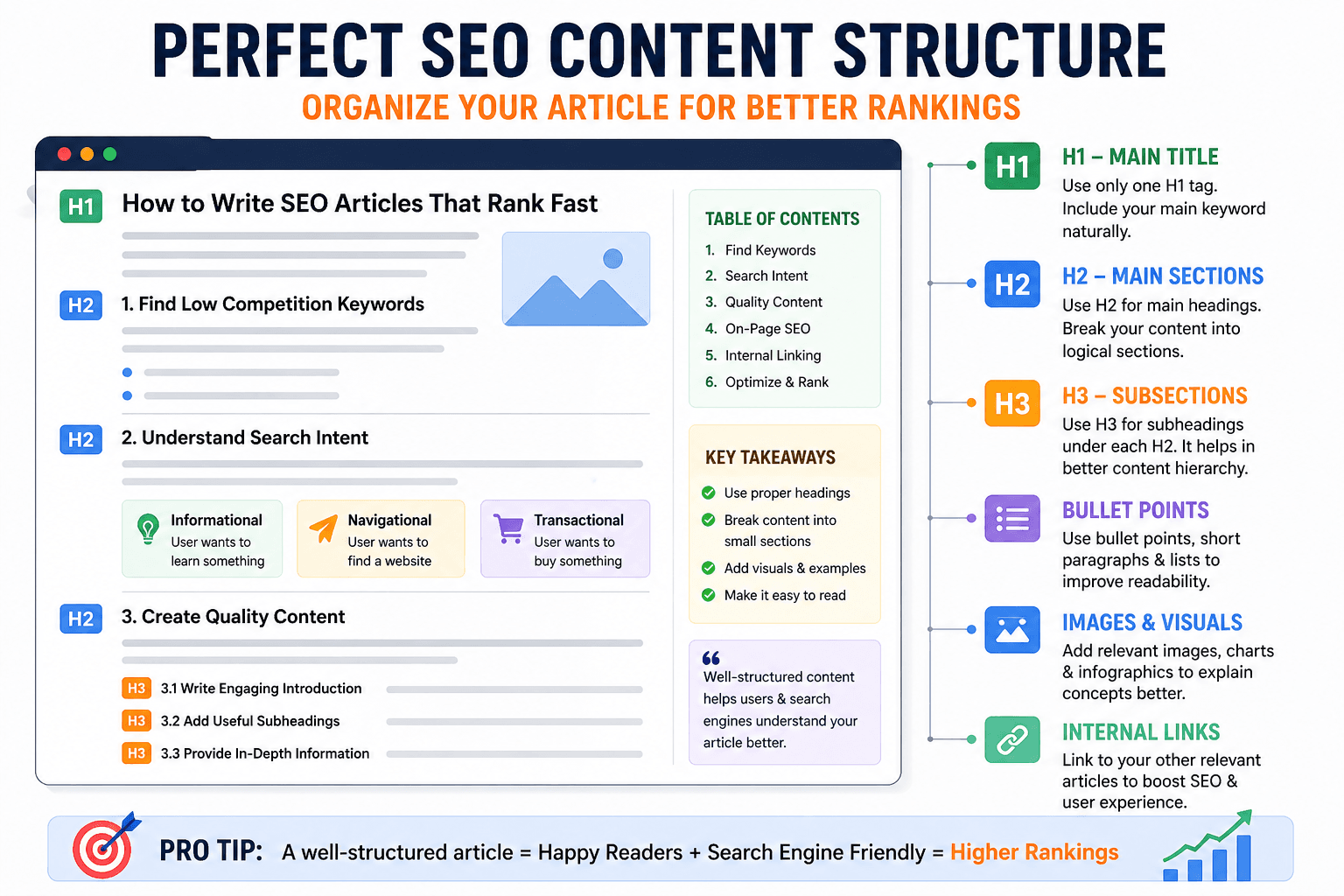
Your headings should also communicate what each section is about. A mobile reader should be able to scroll through the page and quickly identify the sections most relevant to them.
Avoid Walls of Text
Even excellent information becomes difficult to consume when it is presented as enormous blocks of text.
Use paragraphs, subheadings, lists, examples, tables, screenshots, and callout boxes when they genuinely improve the presentation.
The goal is not to make every section visually busy. The goal is to make the information easy to find and understand.
Improve the Page Experience Without Chasing Scores
Website performance matters because visitors do not enjoy waiting for pages to load or dealing with layouts that move unexpectedly.
Compress unnecessarily large images, avoid excessive scripts, use appropriate caching, and keep your page design simple enough to load efficiently.
But do not turn performance optimization into an obsession with achieving a perfect testing score.
A useful page that loads reliably and provides a good experience is more important than changing the design simply to make a synthetic score look perfect.
Optimize for the visitor first.
Use Original Experience and Practical Knowledge
One of the easiest ways to make an SEO article more valuable is to include information that comes from actual experience.
Instead of simply repeating advice found on other websites, explain what you tested, what happened, what worked, what failed, and what you would do differently.
For example, a tutorial about improving WordPress performance becomes more useful when it includes the actual troubleshooting process rather than a generic list of optimization suggestions.
Screenshots, examples, observations, original comparisons, and practical limitations can all make an article more distinctive.
Explain the Limitations
Good content does not pretend that every recommendation works perfectly for everyone.
If a technique works well on one hosting environment but may create problems on another, explain that. If a recommendation is more appropriate for advanced users, say so.
Honest limitations make advice more useful because readers can make better decisions.
Use Google Search Console After Publishing
Publishing is the beginning of the learning process.
Once your article begins receiving search impressions, Google Search Console can show you which queries are bringing visibility to the page.
Sometimes the results will be different from what you expected. Google may display your article for related searches that you did not intentionally target.
That information can reveal opportunities for improving the article.
Look for Impressions Without Enough Clicks
If a page receives meaningful impressions but very few clicks, investigate the queries and ranking positions before changing anything.
A page with strong visibility but a weak click-through rate may benefit from a clearer title or better alignment between the searcher's expectation and the page.
A page with very low visibility may have a different problem. It may need stronger topical coverage, better internal linking, improved relevance, or simply more time to establish itself.
Do not treat every Search Console problem as a title problem.
Update Articles Based on Evidence
One of the advantages of publishing on the web is that an article can evolve.
You may discover that readers need an explanation you did not originally include. A tool may change. A recommendation may become outdated. Search behavior may shift. Your own experience may reveal a better way to explain the subject.
When you update an article, focus on making it genuinely more useful rather than changing words simply to make the page appear fresh.
Do Not Rewrite Successful Content Without a Reason
If a page is already performing well, avoid making major changes simply because you believe every article should be updated regularly.
Look at the data first. Update outdated information, improve unclear explanations, add genuinely useful information, and correct weaknesses.
The purpose of an update should be better content, not cosmetic freshness.
Avoid the Most Common SEO Writing Mistakes
Do not write for an imaginary algorithm while forgetting the person who will actually read the article.
Do not create multiple pages that answer almost exactly the same question simply because you discovered several similar keywords.
Do not add unnecessary words just to make an article longer.
Do not copy the structure and wording of competing pages and assume that adding more paragraphs will make your version better.
And do not promise ranking speed that you cannot control.
SEO is a long-term process of building relevance, usefulness, trust, and visibility.
The Real Meaning of Ranking Faster
There is no reliable formula that guarantees a new article will reach the top of Google within a particular timeframe.
What you can control is the quality of the process.
Choose a topic that fits your audience. Understand the searcher's intent. Create a genuinely useful answer. Structure the information clearly. Make the page technically accessible. Connect it with relevant content. Publish it consistently. Then use real search data to improve what you have already created.
That approach gives an article a much stronger foundation than simply adding keywords and hoping for quick rankings.
Final Takeaway
An SEO article that performs well is rarely the result of one optimization trick.
It is usually the result of many sensible decisions working together: choosing the right topic, understanding intent, creating useful information, writing clearly, organizing the page properly, adding meaningful internal links, using helpful visuals, maintaining a good user experience, and improving the article when real search data provides new information.
The most important shift is to stop thinking of SEO writing as a process of inserting keywords into an article.
Think of it as building the best possible answer to a specific problem.
When the topic is right, the intent is understood, the content is genuinely useful, and the page is easy to discover and navigate, you have created something much more valuable than a keyword-optimized article.
You have created a search asset that can continue improving as your website grows and as you learn more about what your audience actually wants.
Understand the problem → Research the intent → Choose a realistic topic → Create the best answer → Optimize naturally → Connect related content → Publish → Study Search Console data → Improve.
That is the approach worth following if you want to build a website that grows through search rather than depending on short-term SEO tricks.