Best Free SEO Tools in 2026: 10+ Tools for Beginners & Bloggers
You do not need an expensive SEO subscription to start optimizing a website.That does not mean paid SEO platforms are useless. They can provide deeper competitive data, larger keyword databases, backlink research, and advanced reporting.
But for a new blog or small website, free tools can provide enough information to build a strong SEO workflow.The real problem is usually not a lack of tools.It is using too many tools without understanding what to do with the information they provide.
[RED]The best SEO tool is the one that helps you make a better decision.[/RED]This guide covers the most useful free SEO tools for keyword research, content planning, technical SEO, search performance, competitor research, and website monitoring.
What Can Free SEO Tools Actually Do?
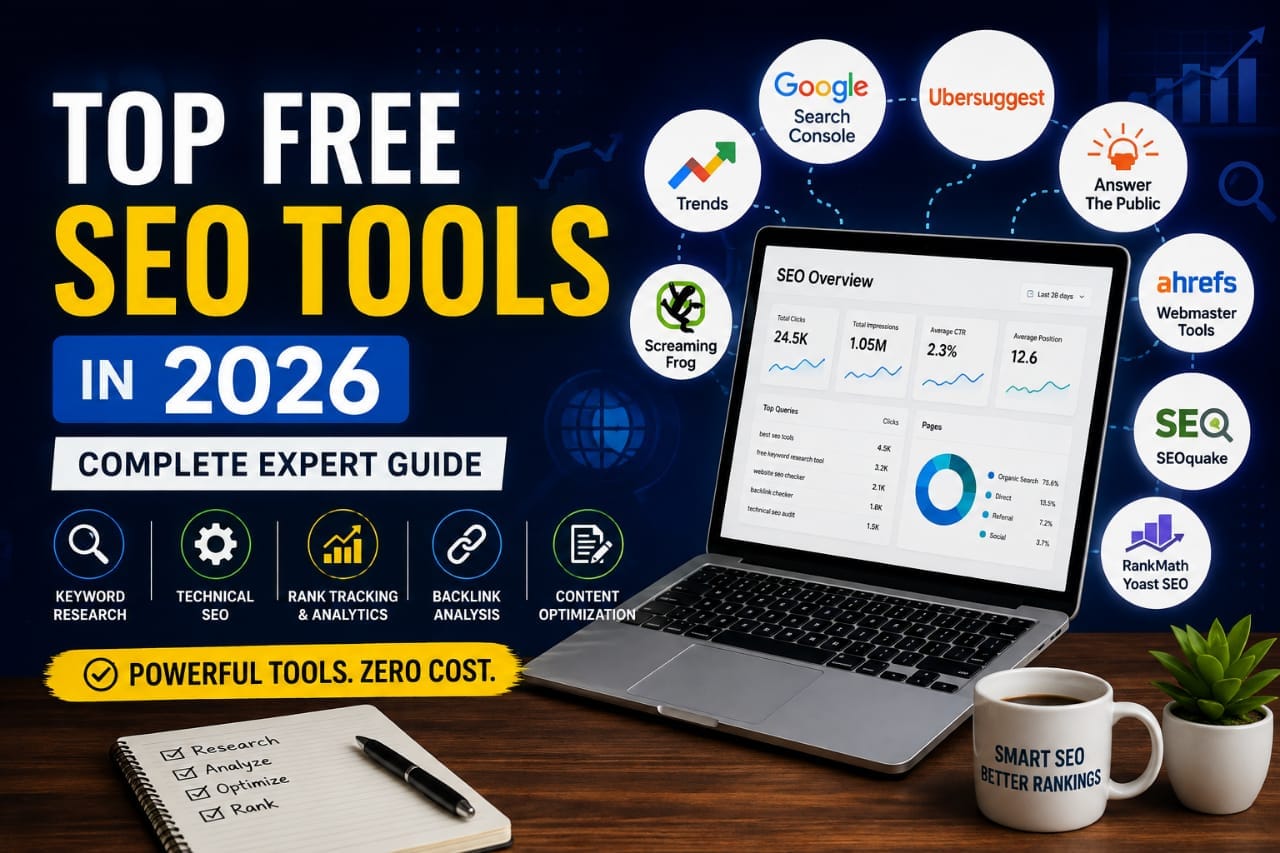
Free SEO tools can help you discover search topics, understand search demand, identify technical problems, monitor Google visibility, analyze backlinks, and improve content.They are particularly useful when you are building a new website and do not yet have the budget or need for an expensive all-in-one platform.However, every tool has limitations.
A keyword tool may provide limited data. A free crawler may restrict the number of URLs you can analyze. A browser extension may provide only surface-level information.That is why combining several specialized free tools is often more useful than expecting one tool to do everything.
Google Search Console: The Most Important Free SEO Tool
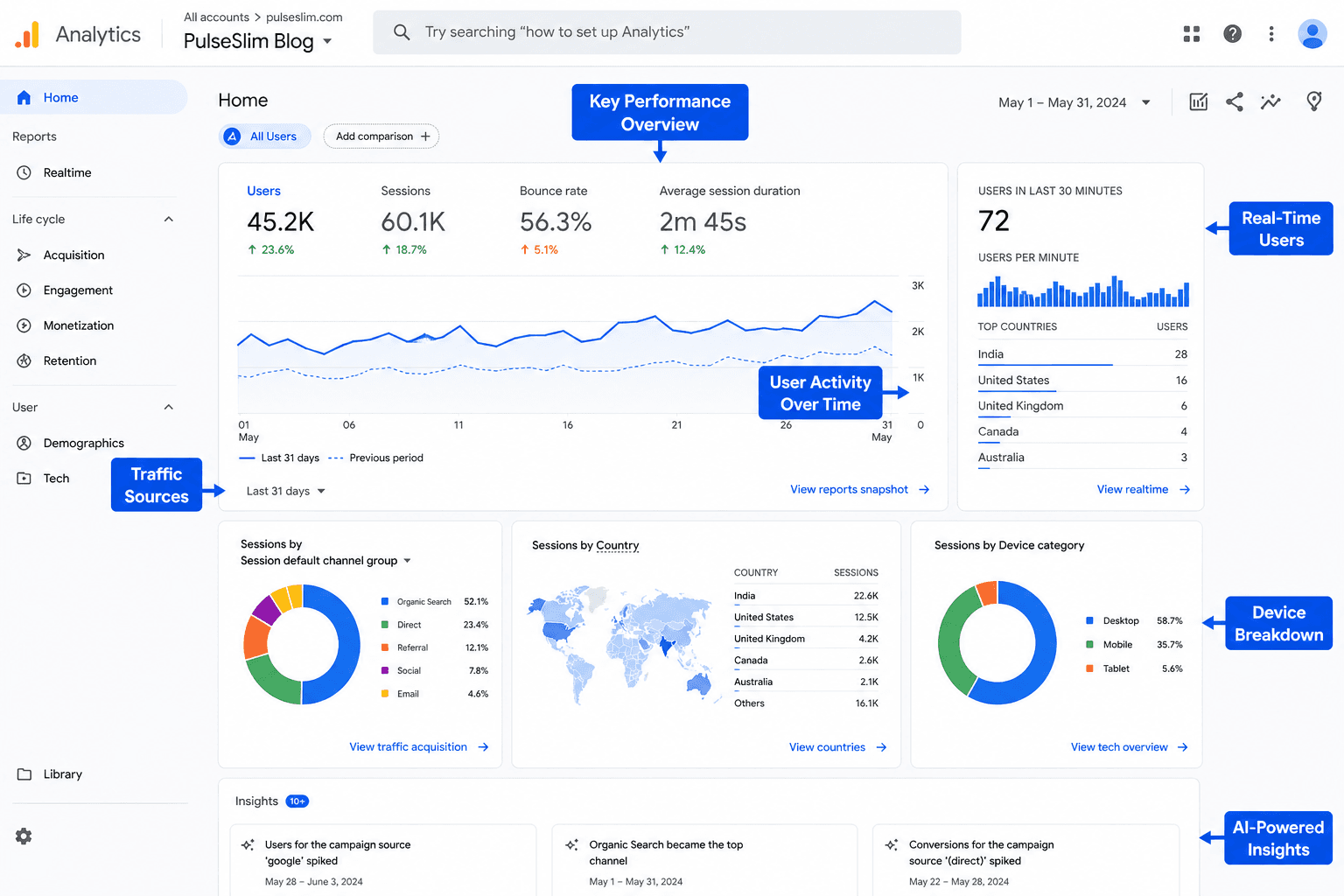
If you have a website that appears in Google Search, Google Search Console should be one of the first tools you use.It provides information about how your website performs in Google Search, including clicks, impressions, queries, pages, and other search-performance data. Google also recommends using Search Console to monitor performance and investigate indexing or crawling issues.
This makes it different from many third-party SEO tools.Third-party platforms often estimate search volume, rankings, backlinks, or traffic.Search Console gives you information about your own property's performance in Google.
What Should You Check?
Look at:-
Queries generating impressions
- Pages receiving clicks
- Pages receiving impressions without enough clicks
- Average position
- Indexing problems
- Core Web Vitals reports
- Search performance trends
The most valuable feature for many bloggers is the Performance report.For example, if an article receives significant impressions but very few clicks, you may have an opportunity to improve its title, search intent alignment, or ranking position.Google's URL Inspection tool can also show what Google knows about a specific URL and help troubleshoot indexing problems.
Use Search Console as your feedback system, not just a traffic dashboard.
Google Keyword Planner: Find Keyword Ideas
Google Keyword Planner is primarily designed for advertisers, but it can also be useful for SEO research.You can use it to discover related keyword ideas and understand the approximate level of search demand.The important thing is not to blindly select the keyword with the largest number.A huge keyword may be extremely competitive and broad.A more specific query may have less search demand but a much clearer purpose.
For a new website, that distinction matters.Use Keyword Planner to generate possibilities, then validate those topics using other research methods.
Google Trends: Understand Whether Interest Is Growing
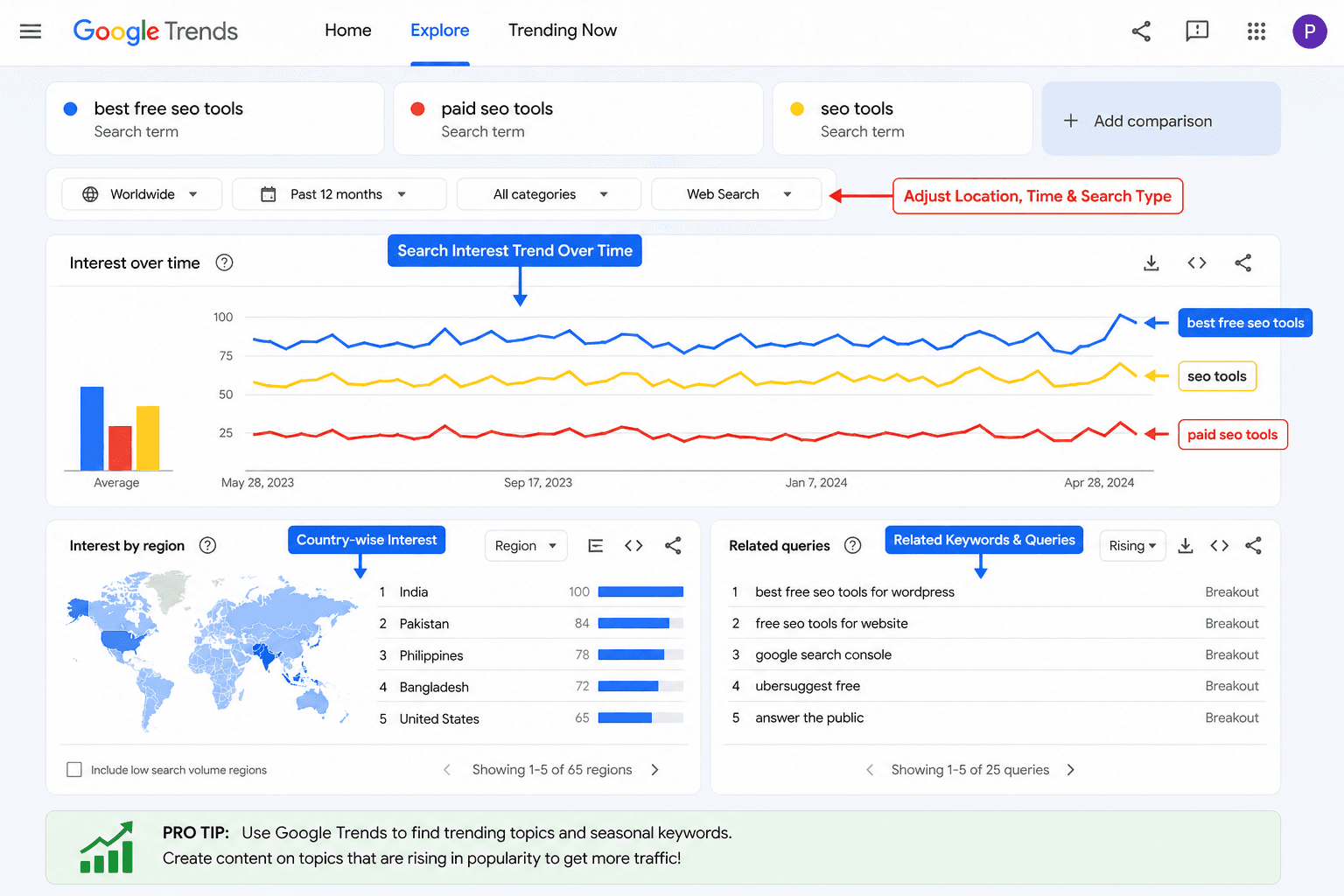
Google Trends is useful when you want to understand how interest in a topic changes over time.You can compare search terms, investigate regional interest, identify related searches, and explore current trends. Google Trends also allows comparisons between search terms and topics.
This is especially useful for content planning.Suppose you are deciding between two similar topics.One may have stable interest while another is rapidly increasing.That information can influence which topic you publish first.Google Trends also provides a Trending Now experience that covers recent search trends across many countries and regions.
Do Not Confuse Trends With Search Volume
A rising trend does not automatically mean it is a good SEO keyword.A topic can spike temporarily and disappear just as quickly.Use Trends to understand direction and seasonality, not as your only keyword research tool.
Ahrefs Webmaster Tools and Free SEO Tools
Ahrefs offers several free resources that can be useful for website owners.Its Webmaster Tools can provide information about your website's technical SEO and backlink profile after you connect your site.This can help identify issues that are difficult to notice manually.For example, you may discover broken links, technical warnings, or referring domains that you were previously unaware of.
The important distinction is that free tools generally provide only part of the data available in a full paid SEO platform.That is completely fine for many beginners.You do not need every advanced feature on day one.

Screaming Frog SEO Spider: Technical SEO Analysis
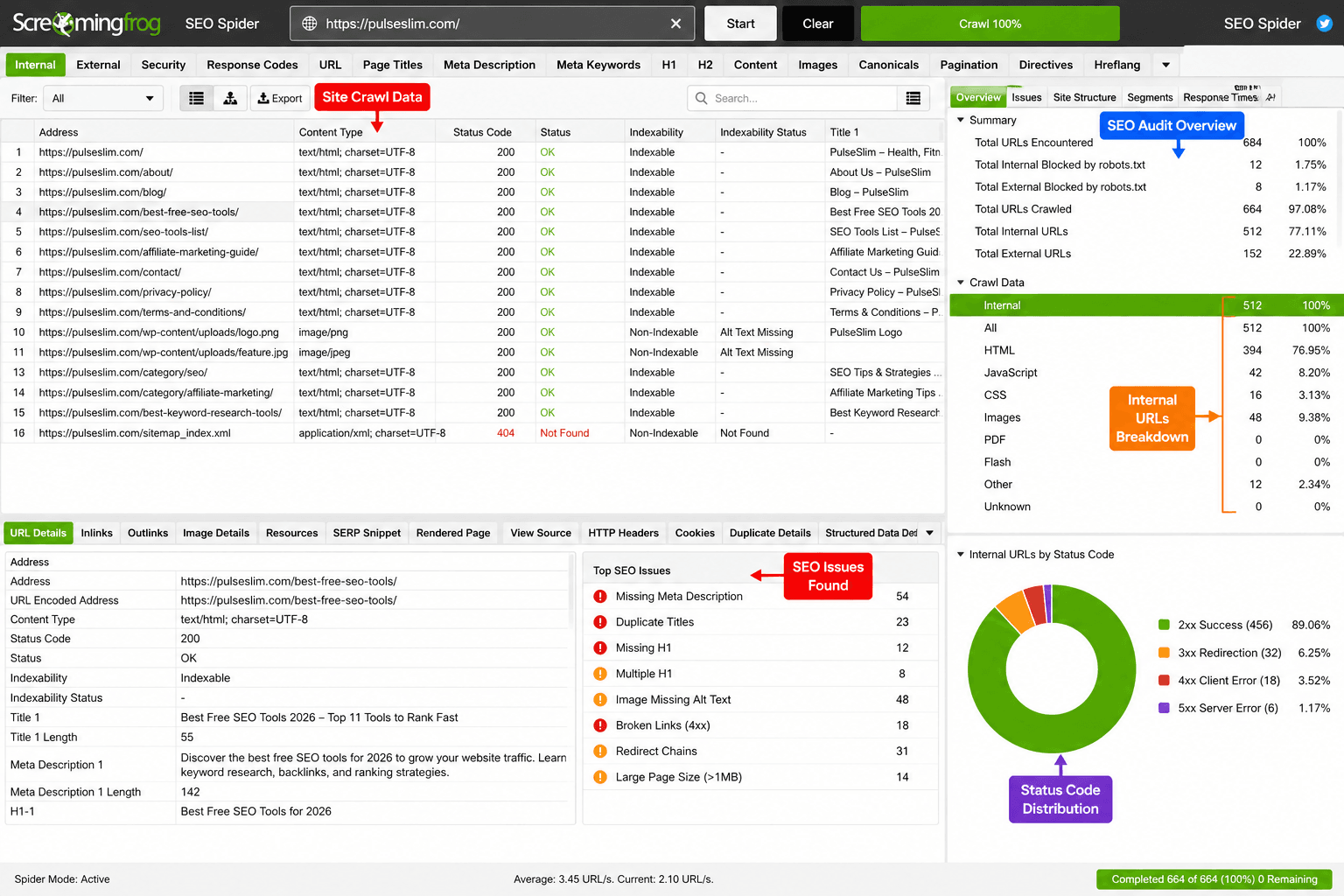
Screaming Frog SEO Spider is particularly useful when you want to crawl a website and inspect its technical structure.It can help identify issues involving:
- Broken links
- Redirects
- Missing or duplicate titles
- Meta descriptions- Status codes
- Page structure
- Canonical information
The free version has a crawl limit, so it may be more suitable for smaller websites or targeted audits.For a growing website, a crawler can reveal problems that are difficult to find by opening pages manually.Technical SEO becomes much easier when you can see the structure of the entire website at once.
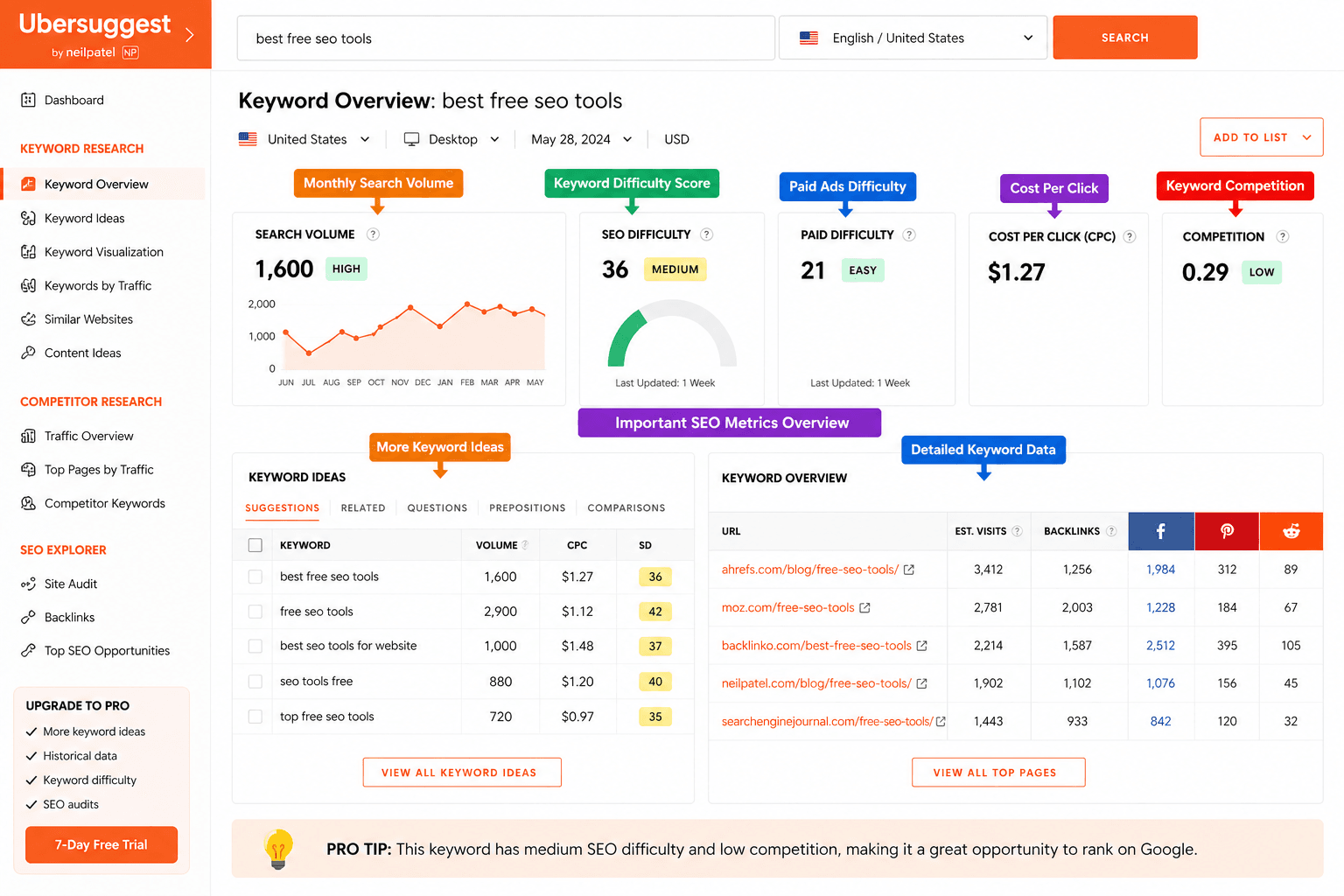
Ubersuggest: Beginner-Friendly Keyword Research
Ubersuggest is designed to make keyword and competitor research easier for beginners.It can provide keyword suggestions, content ideas, backlink information, and basic site-audit functionality.Its biggest advantage is simplicity.
If you are new to SEO and find large professional platforms overwhelming, a simpler interface can help you understand the fundamentals before moving into more advanced research.Do not treat its difficulty scores as absolute truth.Keyword difficulty is an estimate, not a guarantee of how easy or difficult a query will be for your particular website.
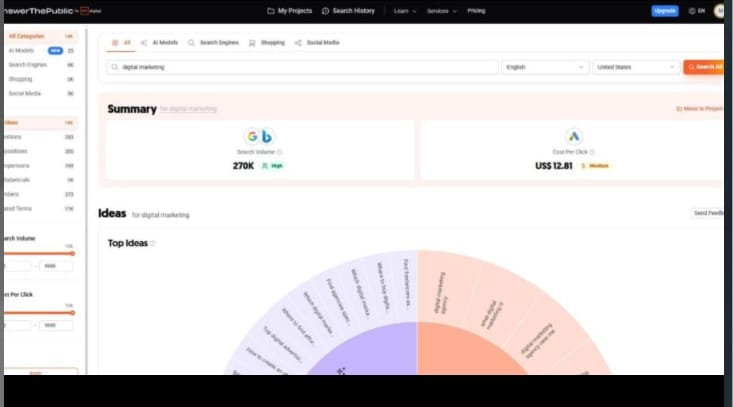
AnswerThePublic: Discover Questions People Ask
AnswerThePublic can be useful when you know your general topic but are struggling to turn it into specific article ideas.Question-based research can help you identify:
- Problems users are trying to solve
- Comparison queries
- “How” searches
- “Why” searches
- Related questions
- Long-tail content opportunities
These questions can also help you build article sections and FAQ content.However, do not create a separate article for every similar question.Sometimes several closely related questions belong on one comprehensive page.
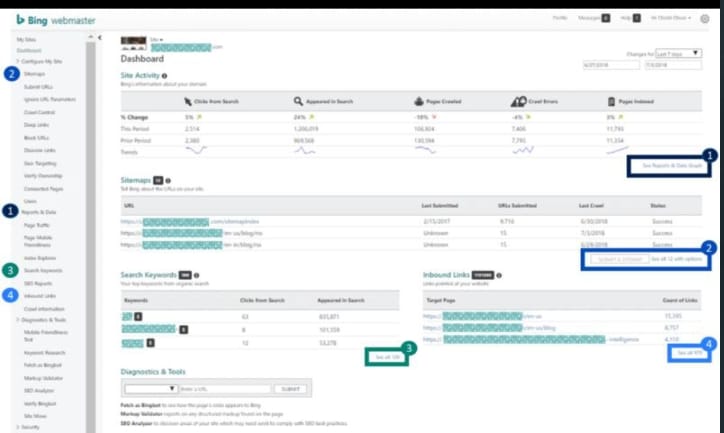
Bing Webmaster Tools: Don't Ignore Another Search Engine
Google may dominate your SEO strategy, but Bing Webmaster Tools can still provide useful information.It offers website-management and search-performance features that can help you understand how your site is discovered and presented in Bing.
It can also provide tools for technical investigation and keyword research.You do not need to completely change your SEO strategy for Bing.Simply connecting your website and checking the available data can give you another source of information.
SEOquake: Quick On-Page Research
SEOquake is a browser extension that can provide SEO information while you browse search results and websites.It can be useful when quickly examining competing pages.You can use it to investigate page-level information and get a quick overview without opening a full SEO platform.
But remember that browser-based metrics are useful for research, not proof that another website will outrank yours.Competitor analysis should help you identify opportunities.It should not become an exercise in copying competitors.
Rank Math or Yoast SEO for WordPress
If your website runs WordPress, an SEO plugin can simplify many optimization tasks.Rank Math and Yoast SEO are two popular choices.They can help with areas such as:
- SEO titles
- Meta descriptions
- XML sitemaps- Structured data
- On-page recommendations
- Search-engine settings
You do not need both.Choose one and learn how to use it properly.An SEO plugin can help you configure a page correctly, but it does not guarantee rankings.
SEO plugins assist optimization; they do not replace good content.
The Best Free SEO Tool Stack
Instead of trying to use every tool available, build a simple workflow.A practical free setup could look like this:
Keyword discovery → Google Keyword Planner
Trend validation → Google Trends
Content questions → AnswerThePublic
On-page optimization → Rank Math or Yoast
Technical crawling → Screaming Frog
Backlink and technical research → Ahrefs Webmaster
ToolsSearch performance → Google Search Console
User behavior → Google Analytics
Each tool has a different job.That is the important part.
How to Use These Tools Together
Start with a topic rather than a tool.Research the topic in Keyword Planner.Check its trend and seasonality in Google Trends.Look for questions and related problems using a question-research tool.Study the search results manually.Then create content that satisfies the actual intent behind the query.
After publishing, use Search Console to see whether Google is showing your page for the searches you expected.If unexpected queries appear, examine whether the article should be improved to address them.
If impressions increase but clicks remain low, investigate the title and search-result positioning.If the page is not appearing at all, use URL Inspection to investigate its indexing status. Google specifically recommends URL Inspection for understanding how Google sees an individual page. This creates a continuous SEO process rather than a one-time optimization exercise.
Common Mistakes When Using Free SEO Tools
The first mistake is using too many tools.More data does not automatically mean better decisions.Another mistake is treating keyword difficulty as a guarantee.A tool might label a keyword “easy,” but that does not mean your website will automatically rank for it.
Another problem is obsessing over exact keyword density.Search engines understand topics through context and related concepts. Repeating a phrase unnecessarily can make content less natural and can even create keyword-stuffing problems. Google's own documentation warns against repeated words and keyword stuffing.
The biggest mistake, however, is allowing tools to dictate the entire content strategy.Tools provide evidence. You still need judgment.
Are Free SEO Tools Enough in 2026?
For many beginners and small websites, yes.They can provide enough information to research topics, find technical problems, monitor Google visibility, study trends, and improve content.But “enough” does not mean “everything.
”Paid platforms can provide deeper competitor research, larger databases, historical data, more extensive backlink analysis, and advanced workflows.You should consider paying for those capabilities when your website or business actually needs them.Do not subscribe to an expensive platform simply because professional SEOs use it
Final Takeaway
You do not need a huge collection of SEO software to build a successful website.Start with the tools that provide the information you actually need.Use Google Search Console to understand your real search visibility.Use Keyword Planner and Google Trends to research topics.Use question-research tools to understand what people want to know.Use a crawler when you need to investigate technical problems.
Use a WordPress SEO plugin to manage important on-page and technical settings.Then connect everything into one workflow.The goal is not to collect SEO tools.The goal is to make better decisions about your website.[RED]Free tools can take you surprisingly far when you use them strategically.
]When your website grows and your SEO requirements become more advanced, you can add paid tools where their additional data genuinely saves time or improves your research.Until then, focus on what matters most: useful content, strong search intent, technical accessibility, internal linking, and consistent improvement.