Best Affiliate Programs for Bloggers in 2026: Choose the Right Programs for Your Niche
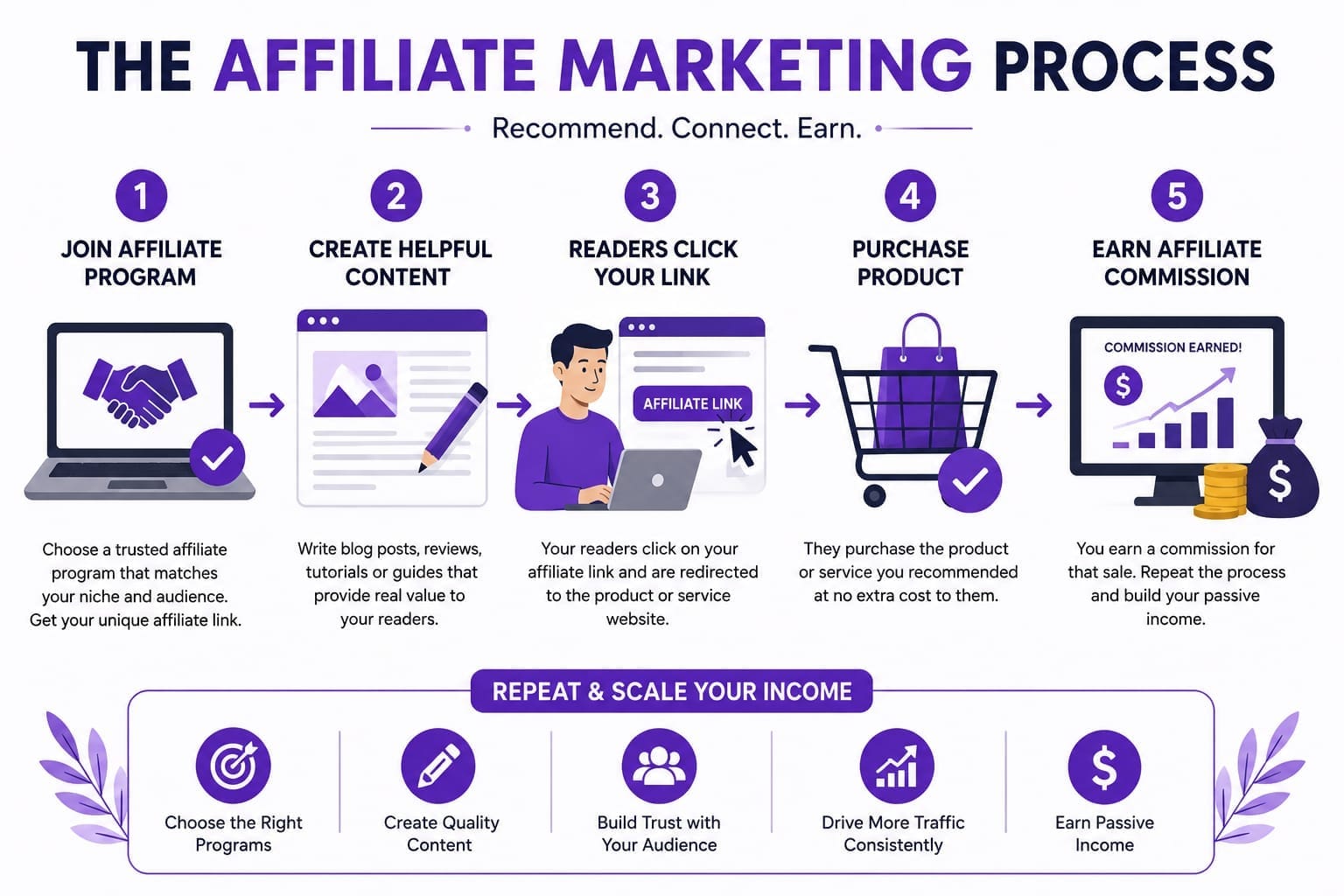
Affiliate marketing can be one of the most practical ways to monetize a blog.Instead of creating your own product, managing inventory, or handling customer support, you recommend products or services that are relevant to your audience. When a visitor completes a qualifying action through your affiliate link, you may receive a commission.
But joining affiliate programs is not the difficult part.Choosing the right programs is.A program offering a large commission can still perform poorly if the product does not match your audience.A lower-commission product can sometimes generate more revenue if your readers trust the recommendation and the product solves a problem they already have.
The best affiliate program is not necessarily the one with the highest commission. It is the one that matches your audience and content.This guide explains how bloggers should evaluate affiliate programs in 2026 and which types of programs are worth considering.

What Is an Affiliate Program?
An affiliate program allows publishers, bloggers, creators, or other partners to promote a company's products or services using a unique tracking link.When someone completes a qualifying action through that link, the affiliate may receive a commission.Depending on the program, the qualifying action could be:
- A product purchase
- A software subscription
- A hosting signup
- A free-trial conversion
- A qualified lead
- Another specified customer action
The commission structure varies significantly between programs.Some pay a percentage of a sale.Others pay a fixed amount.Some SaaS programs can offer recurring commissions for qualifying subscriptions.This is why comparing only the headline commission percentage can be misleading.
What Should Bloggers Look for in an Affiliate Program?
Before joining a program, examine more than the commission.
Product Relevance
The product should make sense for your audience.A WordPress blog might naturally promote hosting, WordPress themes, SEO tools, email marketing software, website security products, or productivity tools.A random product with a high payout is unlikely to perform well if your readers have no reason to buy it.
Commission Structure
Understand exactly how you get paid.Check whether the program offers:
- Percentage commissions
- Fixed commissions
- Recurring commissions
- Tiered commissions
- Lead-based payments
- Performance bonuses
Also check whether commissions differ by product, customer type, country, or subscription plan.
Cookie Duration
The cookie window determines how long a referral can potentially be attributed to you after someone clicks your affiliate link.A longer window can be useful for products that require research before purchase.
But cookie duration should not be considered independently.A product with a shorter cookie window can still outperform another program if it has stronger conversion rates and better audience fit.
Payment Rules
Before joining, check the minimum payout, payment method, payment schedule, supported countries, and tax requirements.
This is particularly important for international bloggers.A program may look attractive until you discover that its payment method or eligibility requirements are inconvenient in your country.
Amazon Associates: Best for Physical Products
Amazon Associates is one of the most recognizable affiliate programs for bloggers.Its major advantage is product variety.Amazon says its Associates program is designed for content creators, publishers, and bloggers and provides tools for linking audiences to products. Commission rates vary by product category and can reach up to 10% for qualifying purchases.
Amazon works particularly well for content such as:
- Product reviews
- Buying guides
- Comparisons
- “Best products” articles
- Accessories and equipment guides
The main challenge is commission economics.Physical products can have relatively modest commissions, meaning substantial traffic may be necessary to generate meaningful income.For a tech blog, however, Amazon can be useful when an article naturally recommends hardware, accessories, books, or other products.
Hosting Affiliate Programs: Strong Fit for Blogging Websites
Hosting is one of the most relevant affiliate categories for bloggers in the WordPress and blogging niche.A person reading an article about starting a blog may naturally need hosting.That creates a strong connection between the content and the commercial recommendation.
Hosting programs can also offer larger payouts than many physical
-product programs.
But don't recommend a hosting company simply because its affiliate commission is high.You should understand the service you are recommending.
Compare:
- Performance
- Pricing
- Renewal costs
- Support
- Backups
- Resource limits
- WordPress features
- Migration options
A genuine comparison is more useful than an article written primarily around the commission.
SEO and Marketing Software Affiliate Programs
SEO and marketing software can be particularly valuable for a site like Seovixo because the audience already has an interest in SEO, blogging, website growth, and digital marketing.Programs in this category can include SEO platforms, email marketing tools, website builders, analytics products, and other SaaS services.
The advantage is that software can have higher customer values than inexpensive physical products.Some programs also offer recurring commissions, although the exact structure varies by company and plan.The important thing is to create content around genuine user problems.
For example:
“How to track keyword rankings”
“Best SEO tools for small blogs”
“Rank Math vs Yoast”
“Best email marketing tools for bloggers”
These topics naturally create opportunities for relevant affiliate recommendations.
Shopify: Best for E-Commerce Content
Shopify is particularly relevant for bloggers writing about e-commerce, online stores, entrepreneurship, and digital businesses.Its affiliate program is designed for creators and educators who refer new merchants. Current program information published in 2026 lists commissions for eligible referrals and a 30-day cookie window.
The important point is audience intent.Someone reading a general blogging article may not need Shopify.Someone searching for “how to start an online store” has much stronger commercial intent.That difference can dramatically affect affiliate performance.
Fiverr: Useful for Freelancing Content
Fiverr can make sense for bloggers writing about freelancing, online businesses, digital services, and entrepreneurship.
A blogger could create useful content around:
- Logo design
- WordPress services
- SEO services
- Video editing
- Writing services
- Website development
The affiliate recommendation should appear naturally within the solution.Do not turn an informational article into a list of affiliate links.The content should solve the reader's problem first.
Affiliate Networks: Access Multiple Programs
You do not always need to apply separately to individual companies.Affiliate networks can provide access to multiple advertisers through one platform.Examples include networks such as CJ, Impact, Awin, and other specialized platforms.The advantage is discovery.You may find programs that are highly relevant to your niche but are difficult to discover through ordinary searches.
The disadvantage is that approval requirements, commission structures, payment terms, and tracking rules vary between advertisers.Joining a network does not guarantee approval for every program inside it.
Best Affiliate Programs for Bloggers Compared
How to Choose Affiliate Programs for a Small Blog
If your blog is still growing, do not join dozens of programs immediately.Start with a small number of highly relevant offers.For example, a technology and blogging website could begin with hosting, SEO software, WordPress products, and a carefully selected marketplace program.
Then create content around genuine buying decisions.Comparison articles are particularly useful because the reader is already evaluating alternatives.Tutorials can also work when the recommended product is directly related to the problem being solved.Reviews can be effective when they contain genuine testing, screenshots, observations, and limitations.
Commercial intent matters more than simply placing more affiliate links.
Why Affiliate Links Alone Don't Make Money
Adding an affiliate link to an article does not create revenue automatically.You need visitors.Then you need the right visitors.Then those visitors need enough trust to click.Finally, the product needs to satisfy their needs well enough for them to convert.
This means affiliate revenue is influenced by several factors:Traffic × commercial intent × click-through rate × conversion rate × commission.A website with fewer visitors but highly relevant commercial traffic can sometimes outperform a site with much larger but less targeted traffic.
That is why publishing “best” and “comparison” content can be valuable, but only when the articles genuinely help people make decisions.
Affiliate Marketing Mistakes Bloggers Should Avoid
Do not promote products you know nothing about simply because they offer high commissions.Do not place affiliate links in every paragraph.Do not make unsupported claims about products.Do not hide important limitations.Do not copy another affiliate site's review.
Do not assume a high commission means high earnings.And never treat affiliate marketing as guaranteed passive income.Trust is an asset.Once readers believe you recommend products only because you get paid, your conversion potential can decline.

How to Build an Affiliate Content Strategy
Start by identifying the problems your audience already has.Then identify products or services that genuinely solve those problems.Create informational content to attract people who are researching.Create comparison and review content for people closer to a purchase.Connect those pages with internal links.
For example:
Informational article → Tutorial → Comparison → Detailed review → Affiliate CTA.This creates a natural journey instead of forcing an affiliate offer into every article.
Final Takeaway
There is no single best affiliate program for every blogger.Amazon can be useful for physical-product content.Hosting programs can fit blogging and WordPress audiences.SEO and SaaS programs can be valuable for digital-marketing websites.Shopify is more relevant to e-commerce audiences.Fiverr can fit freelancing and digital-service content.
Affiliate networks can help you discover additional relevant programs.But the strongest strategy is not joining as many programs as possible.It is choosing a small group of relevant products and building genuinely useful content around them.
Recommend products because they help your reader—not because the commission looks attractive.
]When your content earns trust, answers buying questions, demonstrates real knowledge, and reaches visitors with commercial intent, affiliate marketing becomes a much more realistic monetization strategy.
The program is only one part of the equation.Your audience, content, traffic, trust, and conversion process matter just as much..