Shared Hosting vs VPS Hosting: Which Is Better for Your Website in 2026?
Choosing the right hosting is one of the most important decisions you make when building a website.At first, shared hosting looks like the obvious choice. It is inexpensive, easy to manage, and usually provides everything a beginner needs to launch a WordPress website.Then your website starts growing.Traffic increases. You install more plugins.
Your pages become heavier. You start monitoring Core Web Vitals and server response time.That is when VPS hosting starts becoming interesting.But does VPS automatically make your website faster?Does VPS improve Google rankings?And should a beginner move away from shared hosting?
The answer is more nuanced than simply saying VPS is better.
The right hosting depends on your website's traffic, resource requirements, technical needs, budget, and growth plans—not simply on the hosting label.
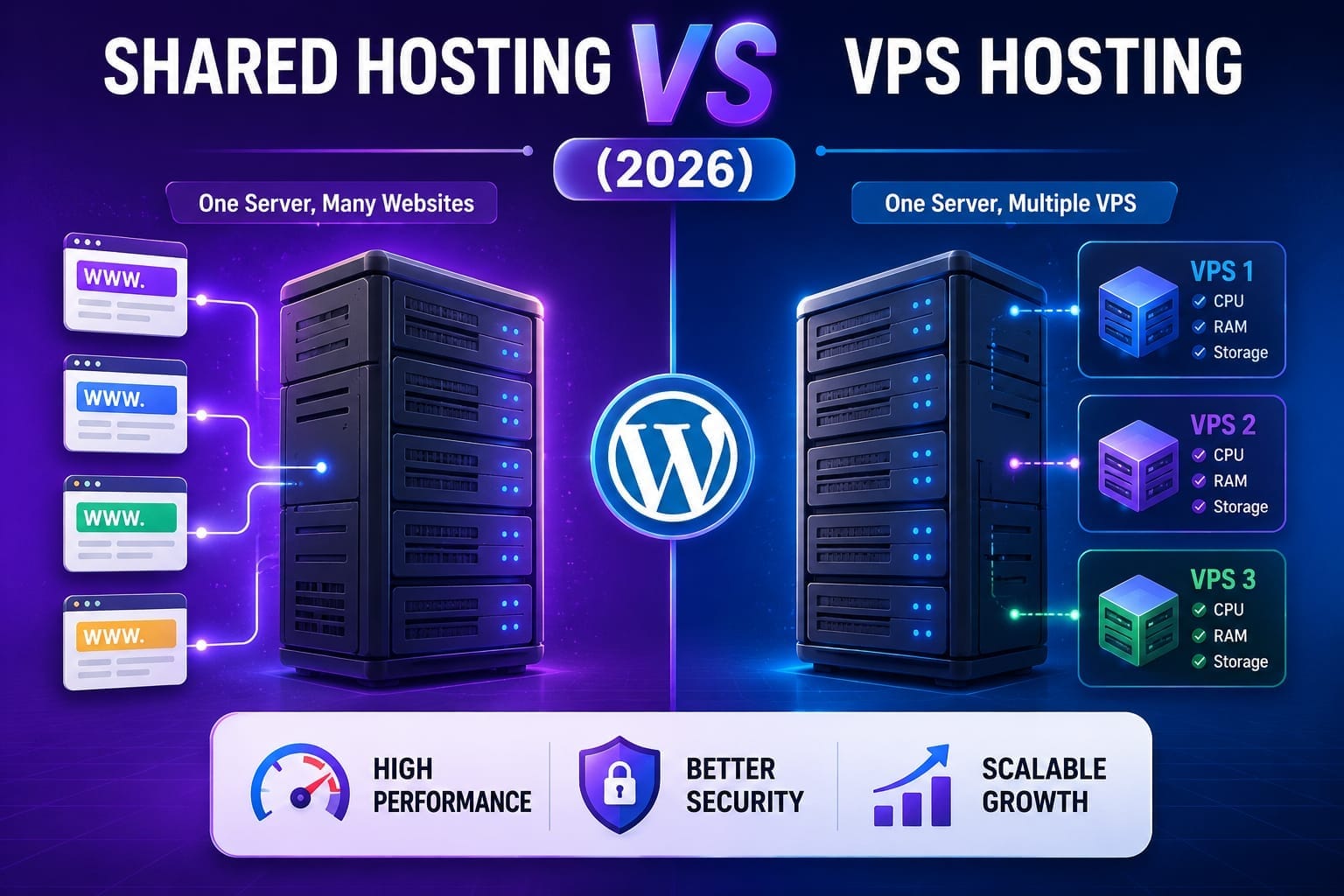
What Is Shared Hosting?
Shared hosting means multiple websites use resources on the same physical server.The hosting company manages the underlying server and divides its resources between customers.This shared infrastructure is one of the main reasons shared hosting can be inexpensive. In a multitenant environment, multiple customers can use the same underlying computing resources while remaining logically separated.
For a beginner, this arrangement can be convenient.You normally do not need to manage the operating system, configure server software manually, or handle many of the tasks associated with running your own server.
Advantages of Shared Hosting
Shared hosting is attractive because it is:
- Affordable
- Beginner
-friendly
- Easy to manage
- Suitable for smaller websites
- Usually supported by managed hosting dashboards
- Available with WordPress-focused features
For a new blog with relatively low traffic, shared hosting can be perfectly adequate.
The mistake is assuming that every shared-hosting plan performs the same way.The quality of the hosting provider, server configuration, resource limits, caching system, storage technology, network, and workload on the platform can all affect the real-world experience.
What Is VPS Hosting?
VPS stands for Virtual Private Server.A VPS uses virtualization to create an isolated virtual server environment on physical infrastructure.Instead of treating your hosting account like a small space inside a general shared hosting environment, a VPS gives you a virtual machine with more control over its allocated environment.
Cloudflare explains that virtualization allows multiple virtual machines to operate on the same physical hardware while remaining isolated from one another.
This gives VPS hosting a major advantage:You have considerably more control over the server environment.But that control also creates responsibility.
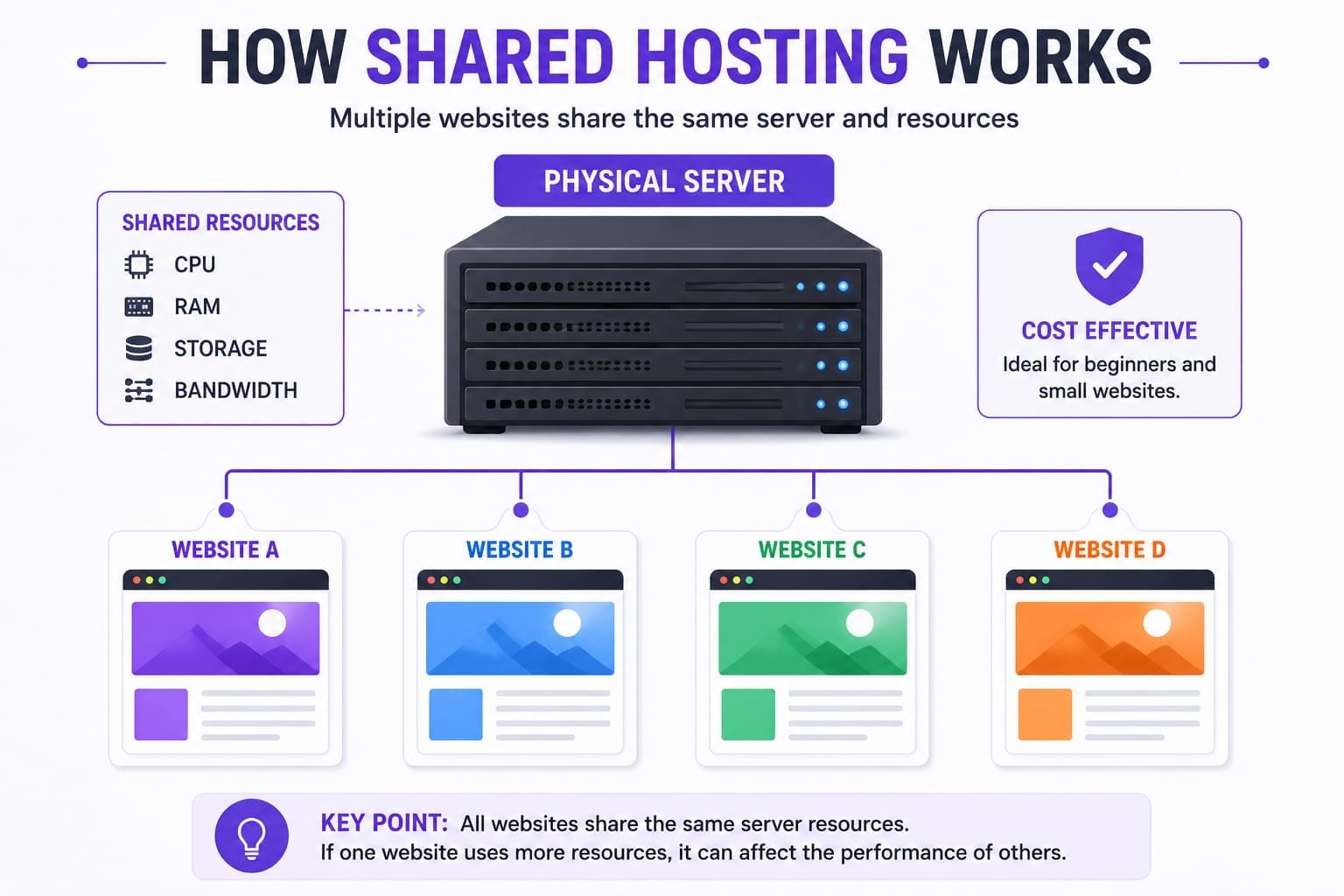
Advantages of VPS Hosting
A VPS can provide:
- Greater resource control
- More predictable performance
- More configuration flexibility- Better scalability
- Greater server
-level control
- A suitable environment for growing applications
The exact resources and isolation depend on the VPS provider and plan.A poorly configured or overloaded VPS is not automatically better than a well-managed shared hosting account.
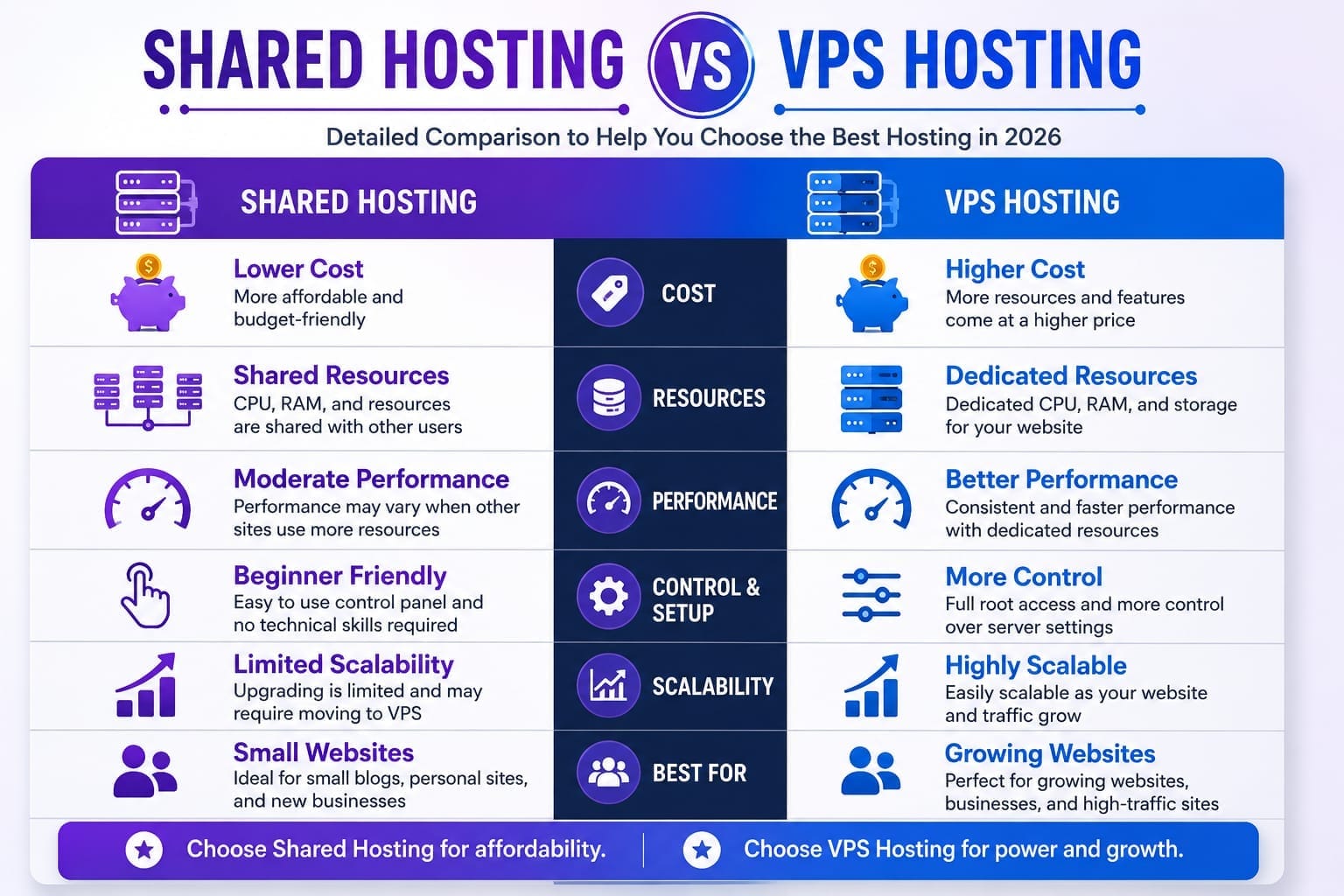
Shared Hosting vs VPS Hosting Compared
Is VPS Faster Than Shared Hosting?
Often, VPS hosting can provide more predictable resources and greater control, but "VPS is faster" is not a universal rule.Consider two hypothetical websites.
Website A uses high-quality shared hosting with optimized WordPress, caching, a lightweight theme, optimized images, and a nearby server.Website B uses a cheap VPS with poor configuration, unnecessary services, weak caching, and an inefficient database setup.Website A could easily feel faster.Performance depends on the complete hosting stack.Important factors include:
- CPU resources
- RAM
- Storage technology
- Server software
- Database performance
- Caching
- Network quality
- Server location
- CDN configuration
- Website optimization
Therefore, upgrading to VPS should not be your first response to every slow website.First determine what is actually causing the slowdown.
Does VPS Hosting Improve SEO Rankings?
This is one of the biggest misconceptions in hosting comparisons.Moving from shared hosting to VPS does not automatically increase rankings.Google's systems use many signals to determine search rankings, and hosting type by itself is not a magic ranking factor.However, hosting can indirectly affect SEO.A reliable server can reduce availability problems.
Better server capacity can help handle traffic spikes.Improved server response can contribute to a better page experience.And a stable infrastructure can make it easier for Googlebot to access your content.
Google notes that server speed can affect how quickly Googlebot can crawl and process URLs, particularly when infrastructure changes are involved.
VPS can support better SEO infrastructure, but VPS itself is not an SEO shortcut.
Which Hosting Is Better for Core Web Vitals?
Core Web Vitals measure important aspects of real-world page experience.Hosting can influence loading performance, particularly server response and the time required before the browser can begin receiving the page.
But hosting is only one part of the equation.Your WordPress theme, plugins, images, JavaScript, fonts, caching, CDN, database queries, and third-party scripts can all affect performance.
If your Largest Contentful Paint is poor, for example, moving to a VPS may help if server response is genuinely the bottleneck.But if the problem is a huge hero image or excessive JavaScript, changing hosting will not solve the underlying issue.That is why you should diagnose the problem before upgrading.
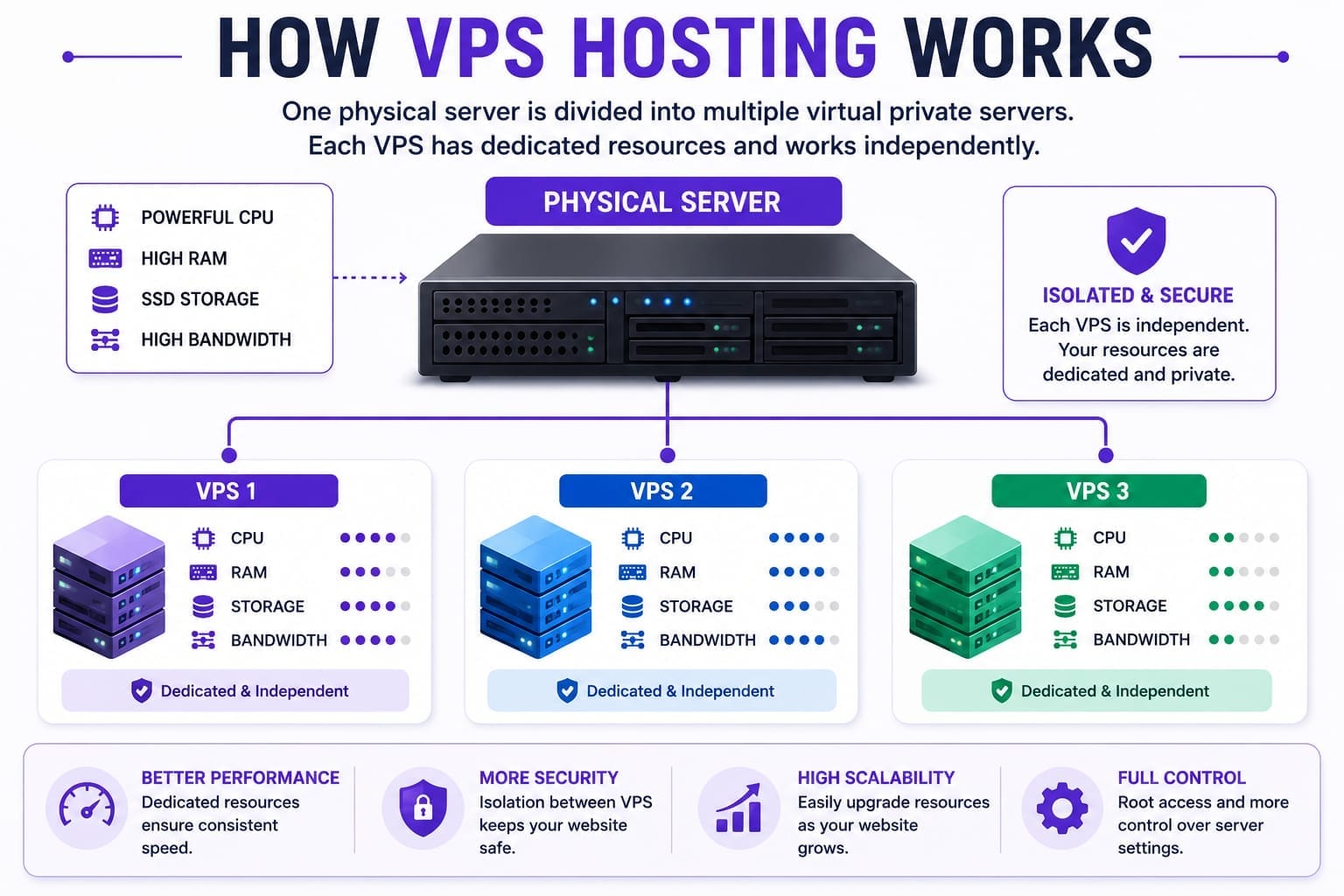
Shared Hosting vs VPS for Beginners
For most beginners, shared hosting is easier.You can focus on:
Writing contentBuilding your websiteLearning SEOGrowing traffic
Creating internal links
Improving your pagesYou do not necessarily need to learn Linux administration, server security, firewalls, software updates, backups, and server configuration.
A managed VPS can reduce some of this responsibility, but the exact level of management depends on the provider.If you choose an unmanaged VPS, you may be responsible for considerably more.
When Should You Upgrade From Shared Hosting to VPS?
There is no universal traffic number at which every website should move to VPS.Instead, look for actual symptoms.Consider an upgrade when:
Your site regularly reaches resource limits.Traffic spikes cause slowdowns.Your hosting environment cannot provide the resources your application requires.
You need server-level configuration.You need more predictable resources.Your website has outgrown the limitations of your current plan.You are running resource-intensive applications.Do not upgrade simply because another blogger says VPS is more professional.
Upgrade because your website has a measurable requirement—not because VPS sounds more powerful.
When Should You Stay With Shared Hosting?
Stay with shared hosting if your website:
- Has relatively low traffic
- Is primarily a blog
- Uses a standard WordPress setup
- Does not require custom server software
- Performs well
- Rarely reaches resource limits
- Does not need advanced server-level control
If your website is working properly, there is no SEO requirement that says you must move to VPS.Your money may be better spent on improving content, creating useful resources, optimizing performance, or developing your site's audience.
Security: Shared Hosting vs VPS
Security deserves careful consideration.A VPS provides stronger environmental isolation than a basic shared hosting arrangement, but it does not automatically make a website secure.Security also depends on:
- Operating
-system updates
- Firewall configuration
- WordPress updates
- Plugin quality
- User permissions
- Backups- Malware protection
- SSH security
- Server configuration
An unmanaged VPS can actually create more security responsibility for the website owner.With shared hosting, much of the server infrastructure is managed by the hosting provider.
Therefore, beginners should consider management quality as carefully as technical specifications.
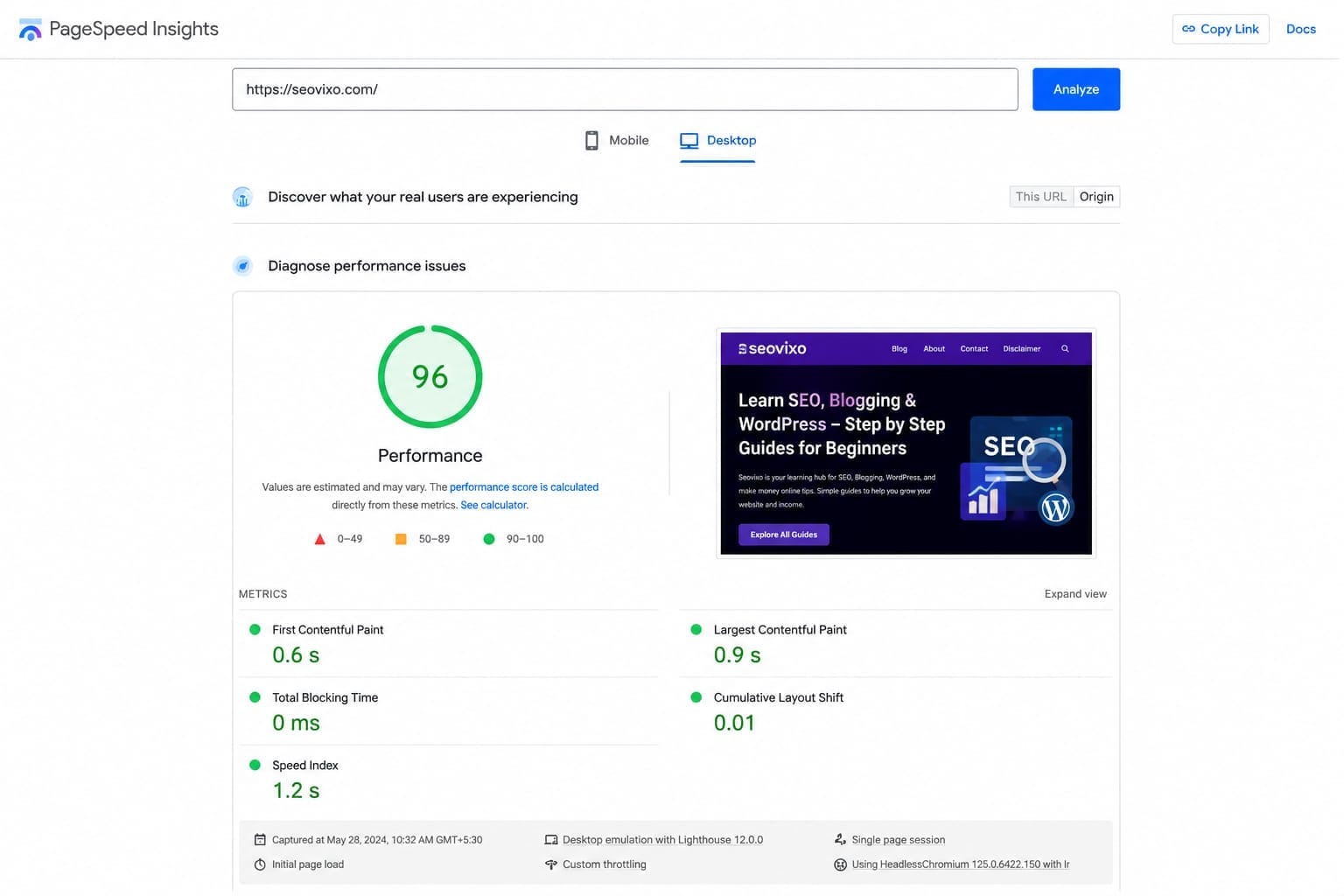
Scalability and Future Growth
VPS becomes more attractive when your website or application needs greater resources.A growing website may eventually need more CPU, memory, storage, database capacity, or server-level customization.A VPS can make scaling more flexible depending on the provider.
But you should also consider cloud hosting and managed WordPress hosting when comparing growth options.The hosting market is no longer simply:
Shared → VPS → Dedicated.
Modern hosting offers many combinations of managed services, virtual machines, cloud infrastructure, containers, and specialized WordPress platforms.
The SEO Factors That Matter More Than Hosting Type
Before spending more money on hosting, examine the fundamentals.
Is your website indexable?
Are important pages actually indexed?
Are your internal links working?
Does your content satisfy search intent?
Are your pages fast enough?
Are your images optimized?
Is your website mobile-friendly?
Are there serious server errors?
Are your redirects configured correctly?
Is your site secure?
Google's documentation emphasizes crawlability, server capacity, and technical accessibility as important infrastructure considerations, but hosting should be viewed as one part of the overall system.
Shared Hosting vs VPS: Which Should You Choose?
Choose shared hosting if you want:
- Lower cost
- Simpler management
- Easy WordPress hosting
- A solution for a small or growing blog
- Minimal server administration
Choose VPS hosting if you need:
- Greater resource control
- More predictable infrastructure
- Server-level customization
- Greater scalability
- An environment for more demanding applications
For a beginner blog, shared hosting is often the sensible starting point.For a website that has genuinely outgrown shared hosting, VPS can be a logical next step.
Final Verdict
So, is VPS better than shared hosting?Technically, VPS provides more control and can offer a more isolated and predictable environment.But that does not make it automatically better for every website.A well-managed shared hosting plan can be more than sufficient for a small WordPress blog.
A VPS becomes more compelling when your website has higher resource requirements, needs greater control, or has outgrown the limitations of shared hosting.And from an SEO perspective, the most important lesson is simple:
Do not buy VPS because you expect a ranking boost. Buy better hosting when your website actually needs better infrastructure.
Before upgrading, measure your current performance, check your hosting resource usage, investigate server-response problems, and determine whether hosting is actually the bottleneck.If it is, moving to a better hosting environment can be a smart investment.
If it is not, your money may be better spent elsewhere.The best hosting is ultimately the one that gives your website the resources, reliability, performance, security, and management level it actually needs.