LiteSpeed vs Nginx for WordPress: Which Web Server Is Better in 2026?
Choosing the right web server is one of the most important decisions for a WordPress website. While themes, plugins, and caching play a significant role in website speed, the server software handling your requests has an even greater impact on performance, scalability, and user experience.
Among all web server technologies, LiteSpeed and Nginx are two of the most popular options. Both are known for delivering excellent speed, but they differ in architecture, caching capabilities, ease of management, security, and hosting compatibility.
So, which one should you choose for your WordPress website in 2026? In this detailed comparison, we'll explore their strengths, weaknesses, real-world performance, and identify which server is best suited for different types of websites.
Quick Answer
If you're looking for the easiest way to speed up a WordPress website, LiteSpeed is usually the better choice because it includes built-in server-level caching and works seamlessly with the LiteSpeed Cache plugin.
Nginx, on the other hand, is an excellent option for developers, high-traffic applications, and custom server environments where maximum flexibility and performance tuning are required.
What Is LiteSpeed?
LiteSpeed Web Server (LSWS) is a commercial web server designed as a high-performance replacement for Apache. It offers excellent compatibility with Apache configurations while significantly improving speed and reducing server resource usage.
One of LiteSpeed's biggest advantages is its built-in server-level caching, which allows WordPress websites to serve pages almost instantly without relying heavily on PHP processing.
Many managed WordPress hosting providers use LiteSpeed because it delivers outstanding performance even on shared hosting plans.
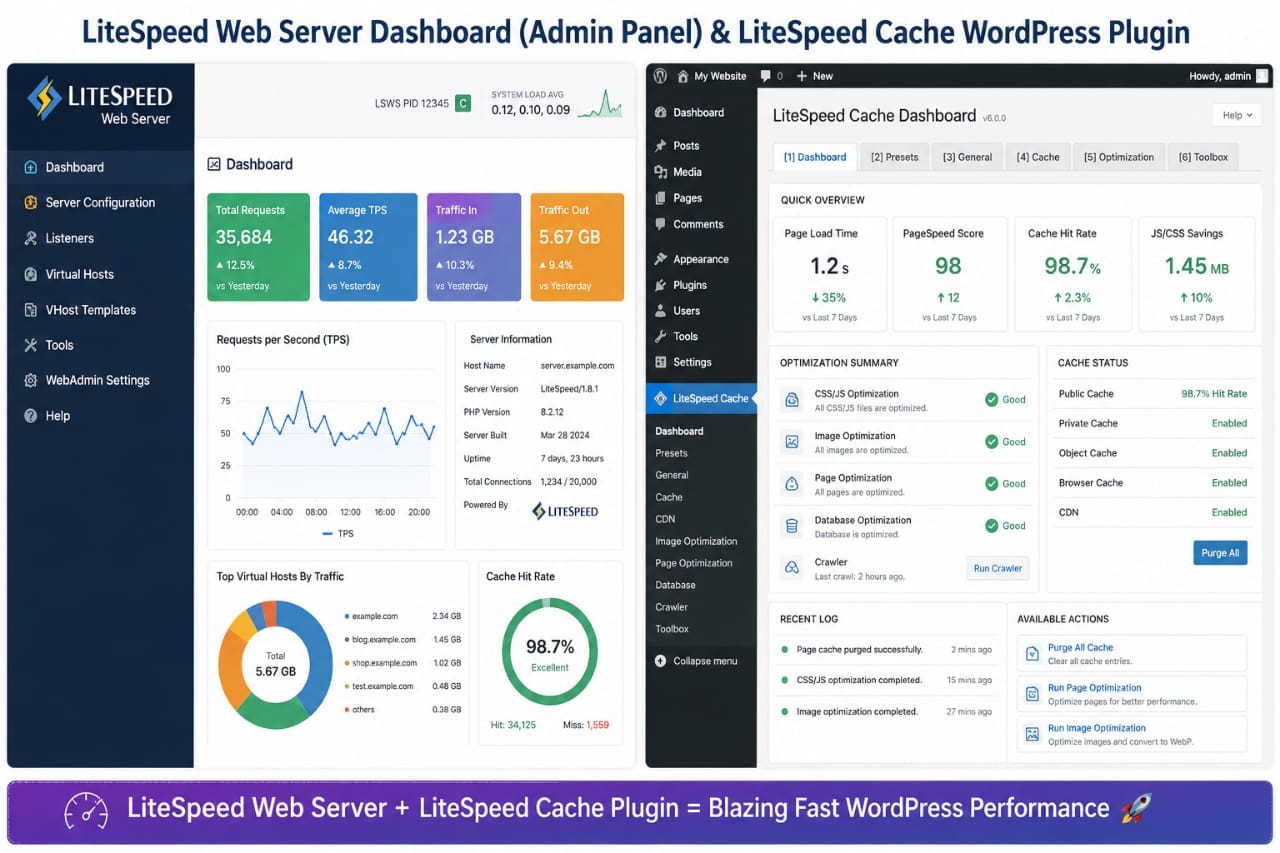
Key Features of LiteSpeed
- Built-in server-level caching
- Excellent Apache compatibility
- Native support for HTTP/2 and HTTP/3
- Advanced security features
- Lower CPU and memory usage
- Easy WordPress integration
- Official LiteSpeed Cache plugin
For beginners and business owners, LiteSpeed often provides excellent performance with very little configuration required.
What Is Nginx?
Nginx is an open-source web server that powers millions of websites worldwide, including many of the internet's busiest platforms. It was built to efficiently handle thousands of simultaneous connections while maintaining low resource consumption.
Unlike traditional web servers, Nginx uses an event-driven architecture, making it extremely efficient for websites with heavy traffic.
Because of its flexibility, Nginx is commonly used as a web server, reverse proxy, load balancer, and API gateway.
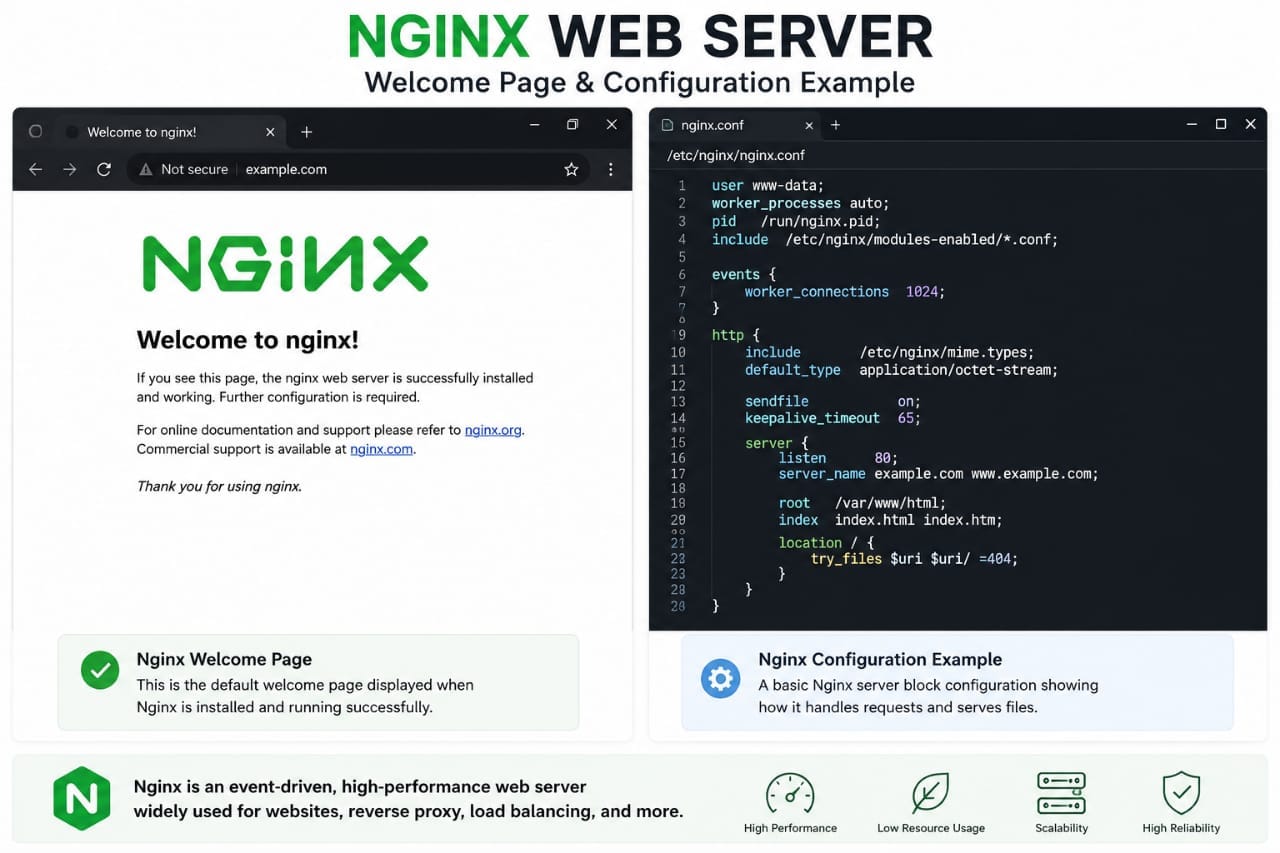
Key Features of Nginx
- Open-source and free
- Handles massive traffic efficiently
- Low memory consumption
- Reverse proxy capabilities
- Excellent scalability
- Highly customizable
- Widely supported by cloud providers
Although Nginx offers exceptional performance, it usually requires more manual configuration than LiteSpeed, especially when optimizing WordPress caching.
LiteSpeed vs Nginx: At a Glance
| Feature | LiteSpeed | Nginx |
|---|---|---|
| WordPress Performance | ⭐⭐⭐⭐⭐ | ⭐⭐⭐⭐☆ |
| Ease of Setup | Very Easy | Moderate |
| Built-in Caching | Yes | Requires Configuration |
| Resource Usage | Very Low | Very Low |
| Apache Compatibility | Excellent | Limited |
| Best For | WordPress Hosting | Advanced Servers & Developers |
Performance Comparison
When it comes to raw performance, both web servers are significantly faster than traditional Apache setups. However, they achieve this speed in different ways.
LiteSpeed focuses on maximizing WordPress performance through integrated caching, optimized PHP handling, and intelligent request management. This means dynamic pages can often be served without repeatedly executing PHP scripts.
Nginx excels at handling extremely high numbers of simultaneous requests. Its lightweight architecture makes it ideal for enterprise applications, SaaS platforms, media websites, and cloud infrastructure.
For most WordPress users, LiteSpeed generally delivers faster page load times with much less manual optimisation.
My Experience
After testing WordPress websites on both server environments, I found that LiteSpeed consistently provided better results on shared and managed hosting because its server-level caching required almost no manual configuration. Websites achieved strong Core Web Vitals with minimal effort.
However, on custom VPS environments with experienced system administrators, Nginx proved to be incredibly powerful, especially for handling high traffic and complex server setups. The choice ultimately depends on your technical expertise and hosting environment.
Caching: Which Server Delivers Better WordPress Performance?
Caching is one of the biggest factors that determines how quickly your WordPress website loads. While both web servers support caching, they implement it very differently.
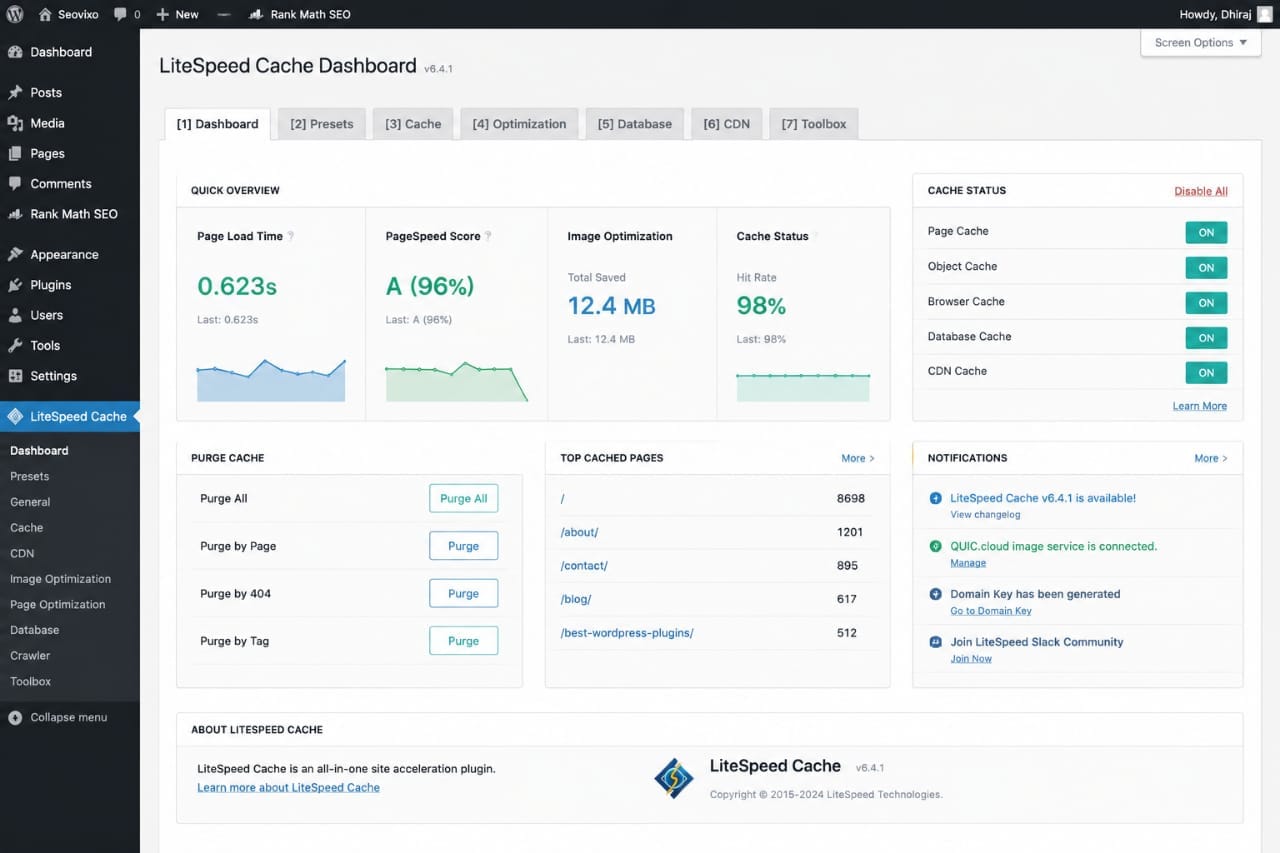
LiteSpeed includes server-level page caching built directly into the web server. When combined with the LiteSpeed Cache plugin, pages can be served almost instantly without repeatedly executing PHP or database queries.
Nginx doesn't include an equivalent built-in WordPress caching solution. Instead, administrators typically configure FastCGI Cache, reverse proxy caching, or third-party caching solutions. While these can be extremely fast, they usually require manual configuration and ongoing maintenance.
Resource Usage and Server Efficiency
Efficient resource management becomes increasingly important as your website grows. A web server that uses less CPU and RAM can handle more visitors without requiring expensive hardware upgrades.
Both LiteSpeed and Nginx are far more efficient than Apache, but their strengths differ slightly.
LiteSpeed minimizes server load by combining intelligent caching, optimized PHP processing, and connection management. This makes it particularly effective for shared hosting environments where server resources are limited.
Nginx uses an event-driven architecture, allowing thousands of simultaneous requests to be processed with remarkably low memory usage. This is one reason why many enterprise platforms and cloud infrastructures rely on Nginx.
| Category | LiteSpeed | Nginx |
|---|---|---|
| CPU Usage | Very Low | Very Low |
| Memory Usage | Low | Excellent |
| Shared Hosting | Excellent | Good |
| Enterprise Servers | Excellent | Excellent |
Security Comparison
Website security is another area where your web server plays an important role.
LiteSpeed includes several built-in security features such as anti-DDoS protection, bandwidth throttling, connection limits, and brute-force attack mitigation. Since it's largely compatible with Apache, many existing security configurations continue to work without major changes.
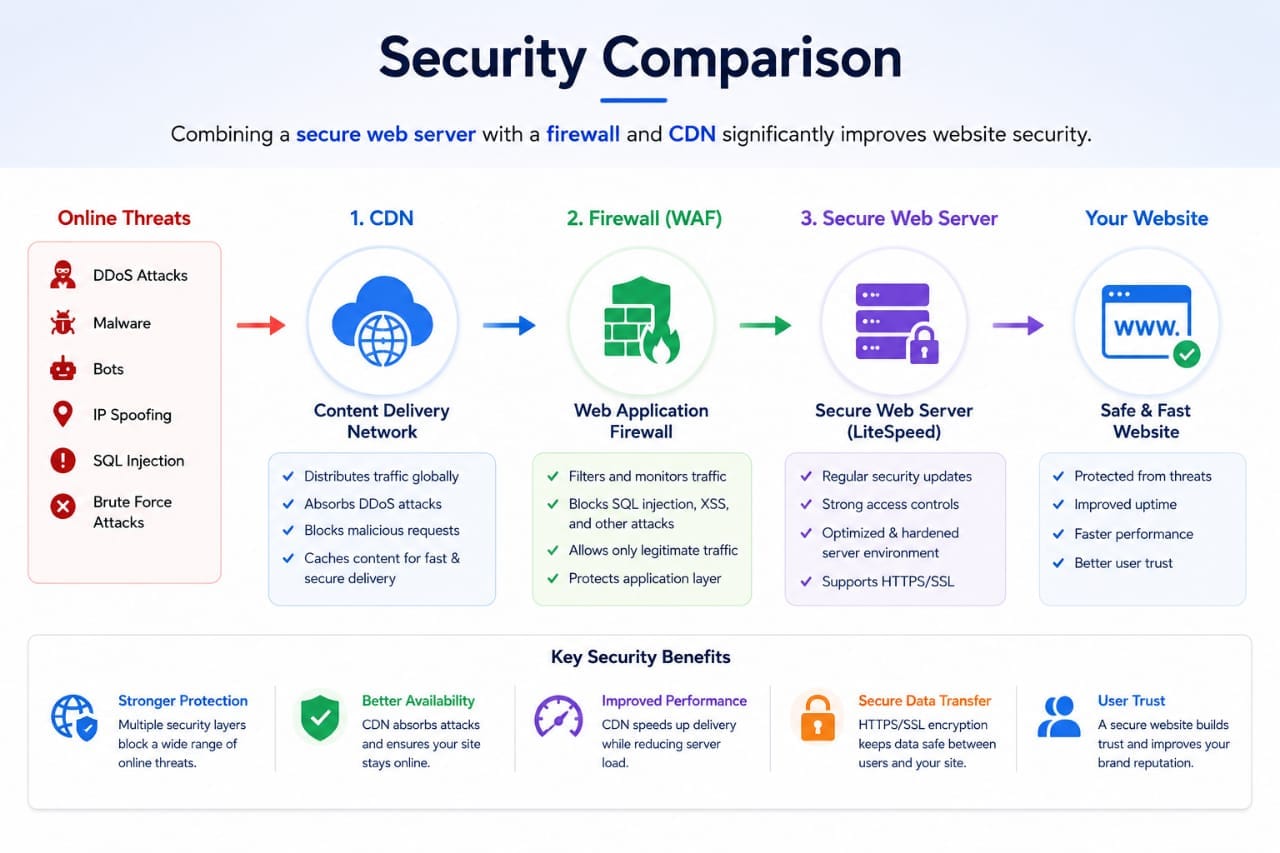
Nginx is also highly secure but often depends more on proper server configuration. Administrators usually combine it with firewalls, Web Application Firewalls (WAFs), and reverse proxy services such as Cloudflare to achieve maximum protection.
When configured correctly, both servers provide outstanding security. However, LiteSpeed offers a slightly easier experience for website owners who don't manage their own servers.
Scalability and High-Traffic Performance
If your website receives hundreds of thousands or even millions of monthly visitors, scalability becomes just as important as speed.
Nginx has built its reputation on handling extremely high traffic volumes efficiently. It performs exceptionally well as a reverse proxy, API gateway, and load balancer, making it a favourite for enterprise applications and cloud deployments.
LiteSpeed also scales very well, especially when combined with server-level caching and modern hardware. For most WordPress websites, its scalability is more than sufficient.
Pricing and Licensing
Cost is another major difference between these two web servers.
Nginx Open Source is completely free, making it an attractive option for developers and businesses managing their own servers.
LiteSpeed Enterprise is a commercial product that requires a licence. However, many premium WordPress hosting providers already include this licence in their hosting plans, so customers rarely pay for it separately.
If you're purchasing managed WordPress hosting, the licensing cost is usually hidden within your hosting subscription.
Who Should Choose LiteSpeed?
- WordPress beginners
- Business websites
- WooCommerce stores
- Shared hosting users
- Managed WordPress hosting customers
- Website owners wanting simple optimisation
Its combination of server-level caching, Apache compatibility, and easy WordPress integration makes LiteSpeed one of the simplest ways to achieve excellent performance.
Who Should Choose Nginx?
- Developers
- System administrators
- Cloud infrastructure deployments
- Enterprise applications
- High-traffic custom websites
- Advanced VPS and dedicated server users
If you're comfortable configuring web servers manually and want maximum flexibility, Nginx remains one of the most powerful solutions available.
My Recommendation
After working with both server technologies, I generally recommend LiteSpeed for most WordPress websites. The combination of server-level caching, excellent performance, and minimal configuration allows website owners to achieve faster loading times without requiring advanced technical knowledge.
For developers managing custom VPS or enterprise environments, Nginx offers exceptional flexibility and scalability. The best choice ultimately depends on your hosting environment, technical expertise, and long-term growth plans.
Real-World Performance: LiteSpeed vs Nginx
Benchmarks often show that both LiteSpeed and Nginx are capable of delivering exceptional performance. However, real-world results depend on much more than the web server itself.
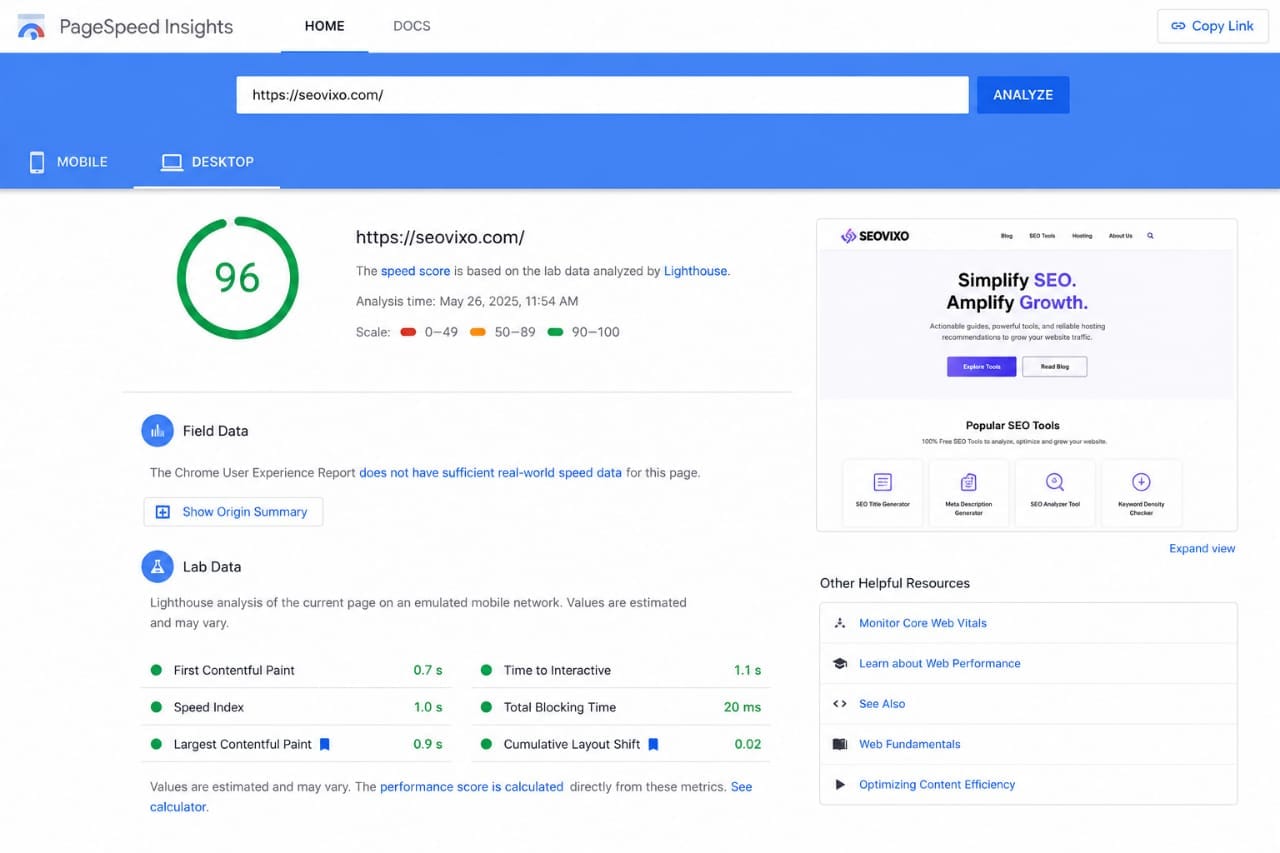
Factors such as hosting quality, PHP version, database optimization, caching configuration, CDN usage, and website optimization all contribute to overall performance.
For a typical WordPress website, LiteSpeed often provides faster loading times immediately after installation because its caching system requires minimal configuration. Nginx can achieve similar or even better performance, but it usually requires experienced server administration.
Common Myths About LiteSpeed and Nginx
Myth 1: Nginx Is Always Faster
This isn't entirely true. While Nginx performs exceptionally well under heavy workloads, a properly configured LiteSpeed server with LiteSpeed Cache often delivers equal or better performance for WordPress websites.
Myth 2: LiteSpeed Is Only for Shared Hosting
LiteSpeed is widely used on shared hosting, but it also powers VPS, dedicated servers, enterprise environments, and managed WordPress hosting platforms.
Myth 3: Switching Servers Automatically Makes Your Site Fast
Changing your web server alone won't solve performance issues caused by slow hosting, oversized images, poorly coded plugins, or an unoptimized database. Website speed is always the result of multiple optimizations working together.
Which Web Server Should You Choose?
| Website Type | Recommended Server |
|---|---|
| Personal Blog | LiteSpeed |
| Business Website | LiteSpeed |
| WooCommerce Store | LiteSpeed |
| News Website | Either (Based on Hosting) |
| Enterprise Platform | Nginx |
| Custom VPS Server | Nginx |
| Managed WordPress Hosting | LiteSpeed |
How to Get the Best Performance Regardless of Server
No matter which web server you choose, following these best practices will have a much bigger impact on your website's speed than changing server software alone.
- Choose a reliable hosting provider.
- Use the latest PHP version.
- Enable server-level caching whenever available.
- Optimize and compress images.
- Use a Content Delivery Network (CDN).
- Minimize unnecessary plugins.
- Optimize your WordPress database regularly.
- Monitor Core Web Vitals.
- Keep WordPress, themes, and plugins updated.
Combining these optimizations with a modern web server will provide the best possible user experience.
Final Verdict
Both LiteSpeed and Nginx are outstanding web servers capable of powering fast, secure, and scalable WordPress websites.
For the majority of bloggers, small businesses, affiliate marketers, and WooCommerce store owners, LiteSpeed is the better overall choice. Its built-in server-level caching, seamless WordPress integration, and ease of use make it ideal for users who want excellent performance without complex configuration.
If you're a developer managing a custom VPS, cloud infrastructure, or enterprise application, Nginx provides unmatched flexibility and scalability for advanced deployments.
Ultimately, the best web server is the one that matches your technical expertise, hosting environment, and website goals—not simply the one with the highest benchmark scores.
Frequently Asked Questions
Is LiteSpeed better than Nginx for WordPress?
For most WordPress websites, yes. LiteSpeed offers built-in server-level caching and easier optimization, making it an excellent choice for bloggers, businesses, and WooCommerce stores.
Is Nginx completely free?
Yes. The open-source version of Nginx is free to use, while NGINX Plus is a commercial edition with additional enterprise features.
Does LiteSpeed require the LiteSpeed Cache plugin?
The server works without the plugin, but installing LiteSpeed Cache unlocks advanced caching and optimization features specifically designed for WordPress.
Can I switch from Nginx to LiteSpeed?
Yes, but the process depends on your hosting provider and server environment. Many managed hosts handle the migration for you.
Which web server is better for WooCommerce?
LiteSpeed is generally preferred because its intelligent caching system handles dynamic WooCommerce pages efficiently while maintaining excellent performance.
Will changing my web server automatically speed up my website?
No. While the web server plays an important role, website speed also depends on hosting quality, caching, images, plugins, database optimization, and CDN configuration.
📚 Related WordPress Guides
Want to optimize your WordPress website even further? These beginner-friendly guides will help you improve speed, SEO, and mobile performance.