Best Blogging Niches With Low Competition (2026 Guide)
Choosing the right blogging niche is one of the most important decisions you'll make as a blogger. Even the best-written articles can struggle to rank if you enter a niche that's already dominated by large authority websites with thousands of backlinks and years of established trust.

On the other hand, selecting a niche with low competition and steady search demand gives new bloggers a much better opportunity to gain visibility, attract organic traffic, and build authority over time.
A common misconception is that low competition means low traffic. In reality, many smaller niches receive consistent monthly searches and have excellent monetization potential because they target specific audiences with clear needs.
After researching and publishing content across different websites, I've found that blogs focusing on solving practical problems usually perform better than blogs trying to cover every topic. Instead of competing with huge websites on broad keywords, targeting underserved sub-niches often leads to faster growth.
In this guide, you'll discover some of the best blogging niches with relatively low competition, learn how to evaluate a niche before investing your time, and understand what makes a niche profitable in 2026.
The best low-competition blogging niches combine consistent search demand, clear audience problems, and multiple monetization opportunities. Instead of chasing highly competitive broad topics, focus on specialized niches where you can build expertise and publish helpful content consistently.
What Makes a Blogging Niche Profitable?
A profitable niche isn't simply one with high search volume. The best niches attract readers who are actively looking for solutions, products, or services.
Before choosing a niche, ask yourself:
- Does it solve real problems?
- Can you publish content consistently?
- Are there affiliate products or services available?
- Will people continue searching for this topic over the next few years?
- Can you build topical authority within the niche?
If the answer to most of these questions is yes, you've likely found a niche with long-term potential.
Why Low Competition Matters
Competing against established websites like major news publications or industry giants can be difficult, especially for a new blog.
Low-competition niches allow you to:
- Rank faster for long-tail keywords.
- Build authority more easily.
- Gain organic traffic with fewer backlinks.
- Create topical expertise.
- Grow consistently over time.
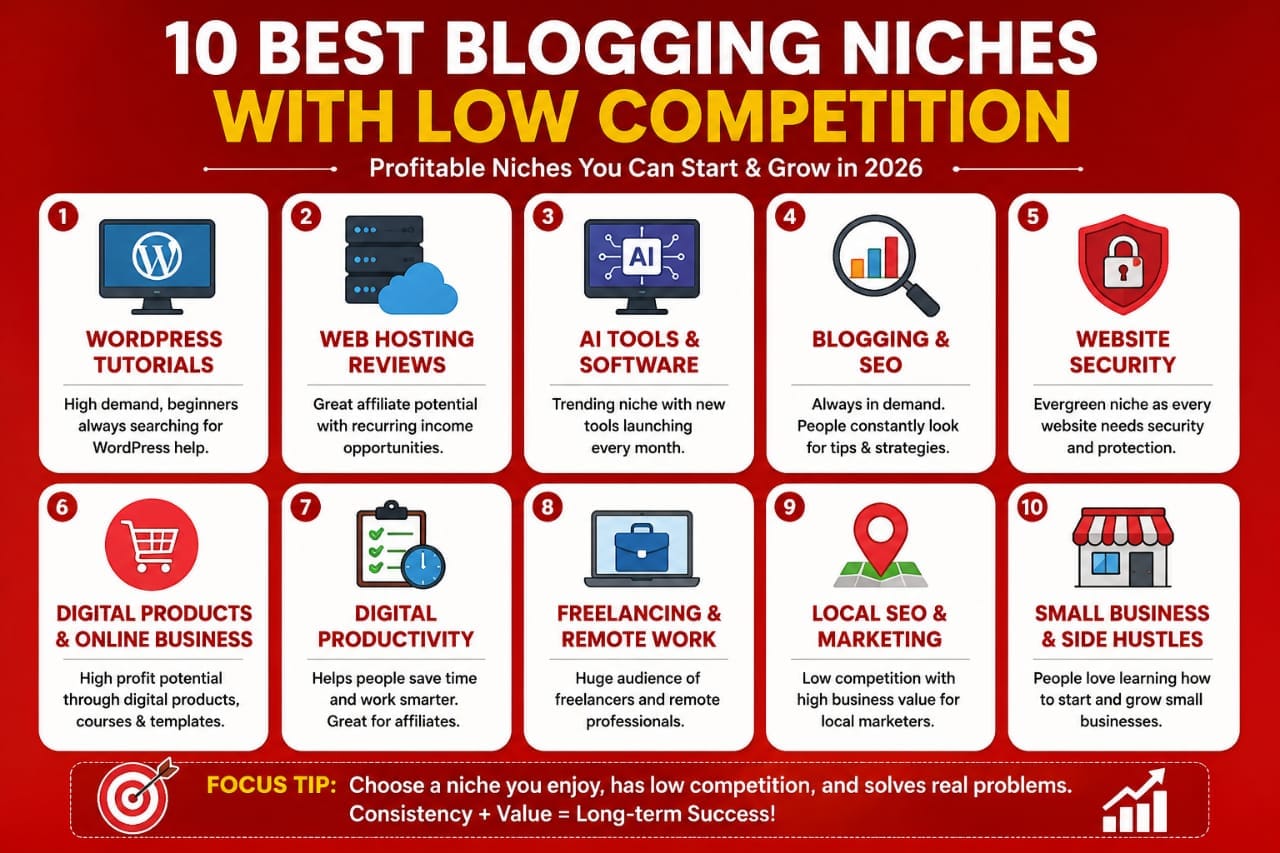
Rather than trying to outrank websites that have been publishing for years, you can focus on becoming a trusted resource within a smaller, more specific niche.
How to Evaluate a Blogging Niche
Not every niche that appears easy to rank is worth pursuing.
When evaluating a niche, consider these factors:
- Search Demand – Are people actively searching for information?
- Competition Level – Can a newer website realistically compete?
- Monetization – Are there affiliate programs, digital products, or advertising opportunities?
- Evergreen Potential – Will the content remain useful for years?
- Content Ideas – Can you write at least 100 high-quality articles?
A niche that performs well across these areas is much more likely to support long-term blog growth.
1. WordPress Tutorials
WordPress powers millions of websites, and new users constantly search for tutorials, troubleshooting guides, plugin recommendations, and performance tips.
Instead of targeting broad keywords like "WordPress," focus on solving specific problems.
Examples include:
- Speed optimization.
- Hosting comparisons.
- Theme tutorials.
- Plugin reviews.
- Technical troubleshooting.
This niche also offers excellent opportunities for affiliate marketing through hosting companies, premium plugins, and WordPress tools.
2. AI Tools for Small Businesses
Artificial intelligence continues to grow rapidly, but many small business owners are still learning how to use these tools effectively.
Instead of covering general AI news, focus on practical applications such as:
- AI writing tools.
- Image generation.
- Email automation.
- Customer support assistants.
- Marketing automation.
Because new AI products are released frequently, this niche provides a steady stream of fresh content ideas.
3. Blogging and SEO
The blogging niche remains highly competitive overall, but there are still many underserved long-tail topics.
Instead of writing generic SEO advice, create detailed guides that solve specific problems.
Examples include:
- Improving click-through rates.
- Fixing indexing issues.
- Content planning.
- Technical SEO.
- Keyword research workflows.
Since bloggers frequently purchase SEO tools and online services, this niche offers strong monetization opportunities.
4. Website Speed Optimization
Website performance has become increasingly important as search engines and users expect faster loading times.
This niche includes topics such as:
- Core Web Vitals.
- Image optimization.
- CDN configuration.
- Caching plugins.
- Hosting performance.
- Database optimization.
Speed optimization also pairs naturally with hosting reviews, making it a valuable niche for affiliate marketing.
5. Digital Productivity
People are constantly looking for ways to save time, organize tasks, and improve their workflow.
This niche includes:
- Note-taking apps.
- Task management tools.
- Productivity software.
- Automation workflows.
- Time management techniques.
Many productivity tools offer recurring affiliate commissions, making this niche attractive for long-term monetization.
| Niche | Competition | Monetization |
|---|---|---|
| WordPress Tutorials | Low–Medium | ★★★★★ |
| AI Tools | Medium | ★★★★★ |
| Blogging & SEO | Medium | ★★★★★ |
| Website Speed | Low | ★★★★☆ |
| Digital Productivity | Low–Medium | ★★★★☆ |
My Experience
One of the biggest mistakes I made early on was trying to cover too many unrelated topics. Publishing content across multiple niches made it difficult to build authority. Once I focused on a specific area and consistently answered the questions my audience was searching for, planning content became easier and the website developed a much clearer direction.
6. Web Hosting Reviews and Tutorials
As more people launch websites, blogs, and online businesses, the demand for reliable web hosting continues to grow.
Rather than creating generic "best hosting" articles, focus on solving specific hosting-related problems.

Examples include:
- Shared Hosting vs VPS Hosting
- How to Choose Web Hosting
- Cloud Hosting Explained
- Hosting for Beginners
- Hosting Performance Comparisons
- Hosting Troubleshooting Guides
This niche offers excellent affiliate commissions because hosting companies often reward publishers for qualified referrals.
7. Website Security
Website owners are increasingly concerned about protecting their websites from hackers, malware, spam, and data breaches.
This creates opportunities to write practical security-focused articles such as:
- WordPress Security Tips
- SSL Certificate Guides
- How to Prevent Malware
- Cloudflare Security Setup
- Website Backup Solutions
- Two-Factor Authentication
Security is an evergreen niche because websites will always require protection.
8. Digital Products and Online Business
Many creators are shifting from physical products to selling digital downloads.
This niche includes:
- Ebooks
- Templates
- Online Courses
- Printable Products
- Canva Templates
- Digital Marketing Resources
Since readers are already interested in starting or growing an online business, the niche also supports affiliate marketing, email marketing, and premium product recommendations.
9. Freelancing and Remote Work
Remote work has become a long-term trend rather than a temporary change.
Instead of writing general career advice, focus on practical topics that help freelancers solve everyday challenges.
Examples include:
- Finding freelance clients
- Portfolio creation
- Productivity tips
- Freelance contracts
- Remote work tools
- Time management
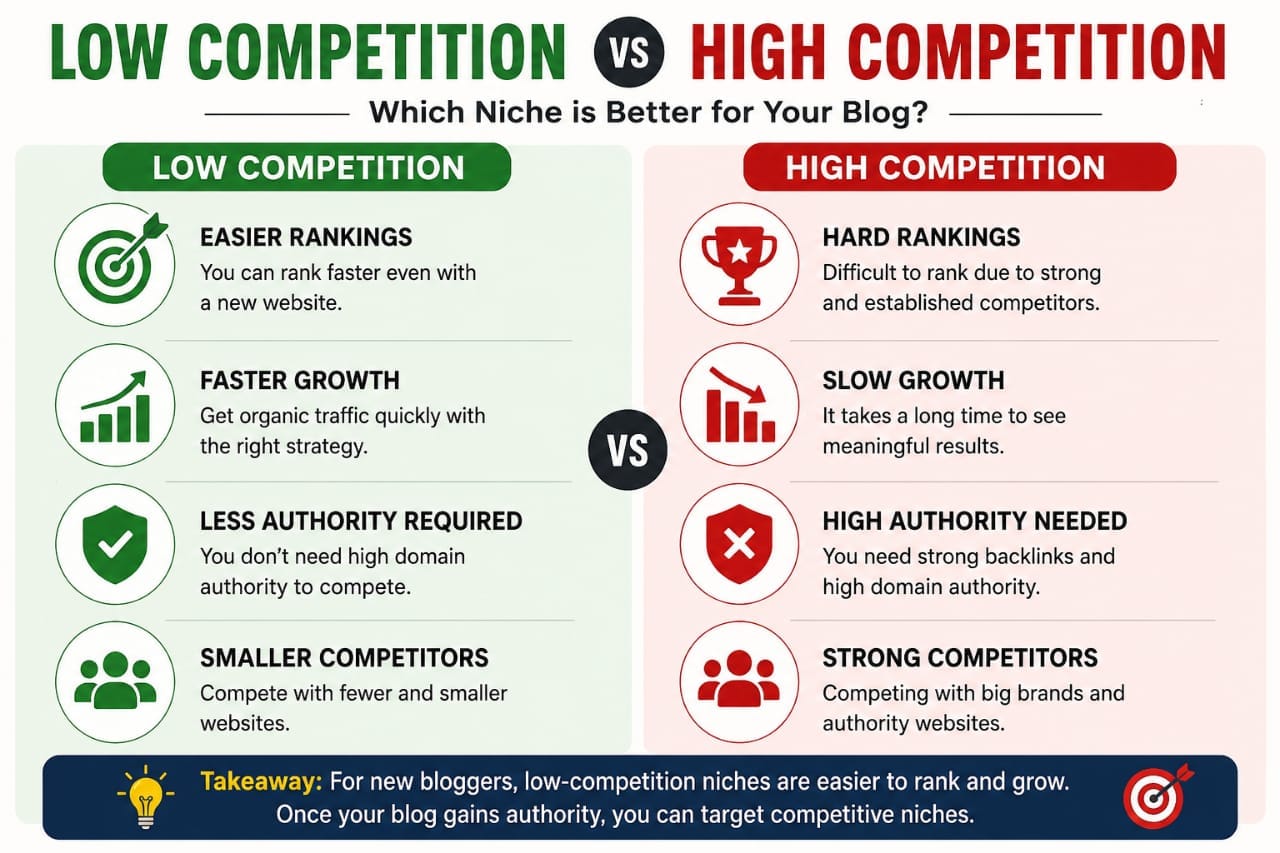
This niche appeals to professionals who are often willing to invest in tools, software, and educational resources.
10. Local Business Marketing
Many local businesses still struggle to build an online presence, making this an underrated blogging niche.
You can create content around:
- Local SEO
- Google Business Profile optimization
- Online reviews
- Lead generation
- Small business websites
- Local advertising strategies
Businesses searching for this information often become clients or purchase services, making this niche valuable for consultants and agencies.
How to Validate a Blogging Niche Before Starting
Before investing months creating content, validate your niche carefully.
A few hours of research can save months of frustration.
Ask yourself:
- Can I write at least 100 helpful articles on this topic?
- Are people actively searching for solutions?
- Do affiliate products or services exist?
- Can I offer unique insights?
- Will this niche still be relevant in five years?
If the answer is yes, you've likely found a sustainable niche.
Profit Potential Comparison
| Niche | Traffic Potential | Income Potential |
|---|---|---|
| Web Hosting | ★★★★★ | ★★★★★ |
| WordPress | ★★★★★ | ★★★★★ |
| Website Security | ★★★★☆ | ★★★★☆ |
| AI Tools | ★★★★★ | ★★★★★ |
| Freelancing | ★★★★☆ | ★★★★☆ |
| Digital Products | ★★★★☆ | ★★★★★ |
Common Mistakes When Choosing a Blogging Niche
- Choosing a niche only because it has high search volume.
- Trying to cover every topic instead of focusing on one specialty.
- Ignoring monetization opportunities.
- Following short-term trends without long-term value.
- Selecting a niche with very limited content ideas.
- Publishing without understanding search intent.
- Copying competitors instead of offering unique value.
A successful blog isn't built by publishing hundreds of random articles. It's built by consistently solving problems for a specific audience.
My Recommendation
If you're starting your first blog, choose a niche that combines personal interest, evergreen demand, and strong monetization opportunities. You'll be creating content for months or even years, so selecting a topic you genuinely enjoy will make consistency much easier while helping you build expertise over time.
Evergreen vs Trending Niches
One of the biggest decisions bloggers face is whether to build a website around evergreen content or focus on the latest trends.
Both approaches have advantages, but they produce very different long-term results.
| Evergreen Niches | Trending Niches |
|---|---|
| Steady long-term traffic | Traffic spikes quickly |
| Content stays useful for years | Requires constant updates |
| Predictable growth | Unpredictable traffic |
| Excellent for SEO | Good for short-term visibility |
| Higher long-term value | Higher maintenance |
For most bloggers, the best strategy is combining both approaches. Build your website around evergreen pillar content while occasionally publishing articles about relevant industry trends.
How to Choose the Right Niche for You
The most profitable niche isn't always the best niche for every blogger.
Before making your final decision, consider these questions:
- Can you write about this topic every week for several years?
- Do you enjoy learning about the subject?
- Does the niche solve real problems?
- Are there products or services you can genuinely recommend?
- Can you create better content than what's already available?
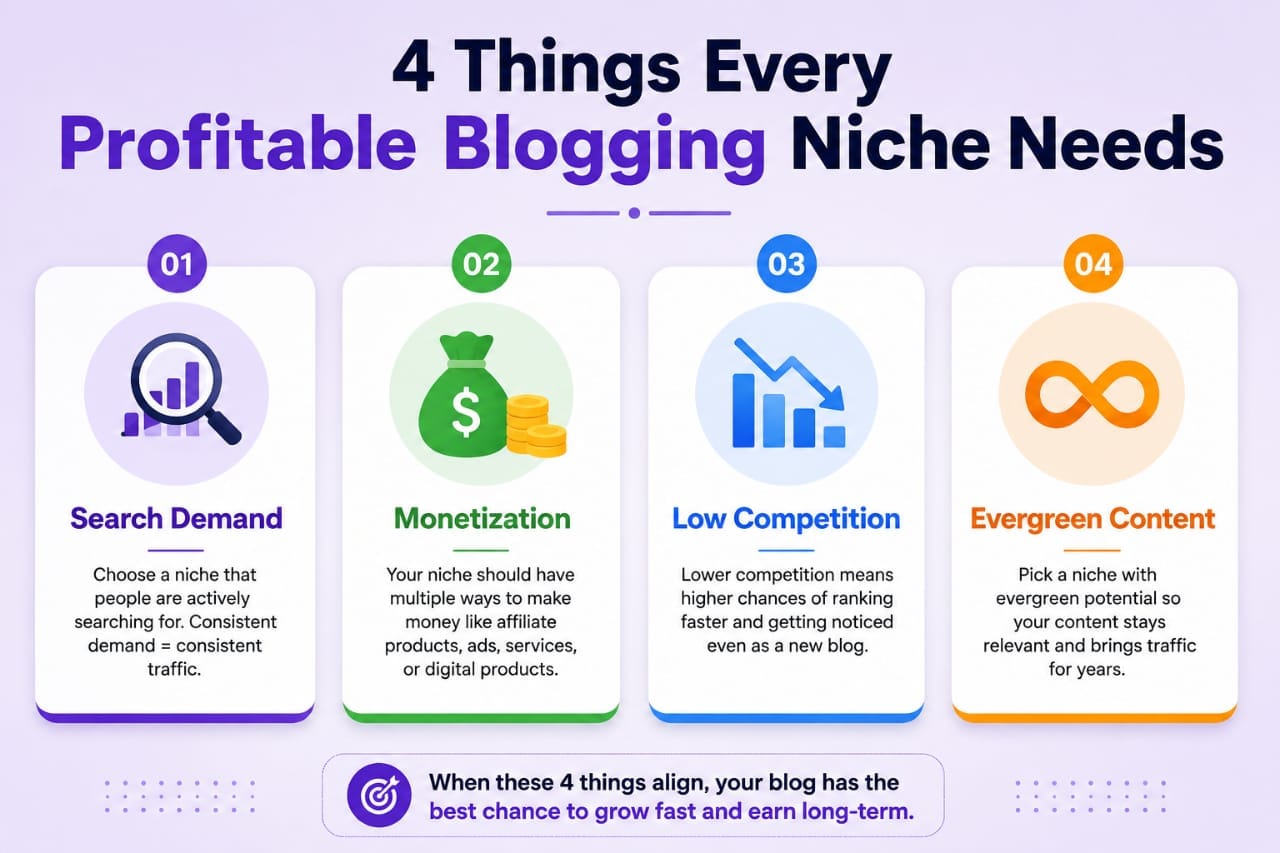
If you answer "yes" to most of these questions, you've likely found a niche with long-term potential.
Niche Selection Checklist
Before launching your blog, use this checklist to evaluate your idea.
- ✔ Clear target audience.
- ✔ Consistent monthly search demand.
- ✔ Low to medium competition.
- ✔ Strong monetization opportunities.
- ✔ At least 100 article ideas.
- ✔ Evergreen content potential.
- ✔ Opportunities for affiliate marketing.
- ✔ Room to build topical authority.
- ✔ Personal interest in the subject.
- ✔ Long-term growth potential.
If your niche satisfies most of these points, you're building on a much stronger foundation than choosing topics at random.
Can You Change Your Niche Later?
Yes, but changing your niche after publishing dozens or hundreds of articles often requires significant work.
You may need to:
- Update existing content.
- Change website structure.
- Modify categories.
- Rewrite internal links.
- Rebuild topical authority.
- Adjust your SEO strategy.
Choosing a focused niche from the beginning usually makes long-term growth much easier than making a major transition later.
Final Verdict
The best blogging niche isn't necessarily the one with the highest search volume—it's the one where you can consistently create valuable content, solve real problems, and build trust with your audience.
Low-competition niches provide new bloggers with a realistic opportunity to gain visibility without competing directly against the largest websites on the internet. By focusing on specific problems instead of broad topics, you can establish authority more quickly and create content that remains valuable for years.
Whether you choose WordPress, web hosting, AI tools, website security, or another specialized niche, success ultimately comes from publishing consistently, understanding your audience, and improving your content over time.
Instead of chasing every trend, focus on becoming a trusted resource within one niche. That's how sustainable blogging businesses are built.
Frequently Asked Questions
What is the best blogging niche for beginners?
Niches such as WordPress tutorials, website hosting, AI tools, and digital productivity offer a good balance of search demand, manageable competition, and monetization opportunities.
Is a low-competition niche always profitable?
Not necessarily. A niche should have consistent search demand and viable monetization options. Low competition alone doesn't guarantee success.
How many blog posts should I plan before choosing a niche?
A good benchmark is being able to identify at least 100 useful article ideas. This indicates that the niche has enough depth for long-term growth.
Can I earn money from a low-competition blog?
Yes. Many low-competition niches generate income through affiliate marketing, display advertising, digital products, sponsorships, and consulting services.
Should I choose a niche based only on passion?
Passion is important, but it should be combined with audience demand, search interest, and realistic monetization opportunities.
How long does it take to grow a niche blog?
Growth varies depending on your content quality, SEO strategy, competition, and consistency. Most successful blogs take several months to build meaningful organic traffic.
📚 Related WordPress Guides
Want to optimize your WordPress website even further? These beginner-friendly guides will help you improve speed, SEO, and mobile performance.