How to Make a Blog Article More Useful for AI Search
Search is changing.People are no longer using Google only to find a list of blue links and then opening several websites to find the answer themselves. AI-powered search experiences can summarize information, compare sources, answer follow-up questions, and help users make decisions directly within the search experience.That creates a new challenge for bloggers.
You are no longer writing only for a reader who clicks your headline and reads the article from beginning to end.Your content may also need to provide clear, extractable, trustworthy information that search systems can understand and use as part of an answer.But this does not mean you need to write articles specifically for machines.In fact, the better approach is almost the opposite.
Make your article so useful, clear, original, and well-structured that both people and search systems can understand its value.
AI search does not create a completely separate form of SEO. Many of the fundamentals remain the same: useful content, clear information architecture, crawlable pages, descriptive links, accurate information, and genuine expertise.The difference is that conversational search makes clarity and completeness even more important.

What Is AI Search?
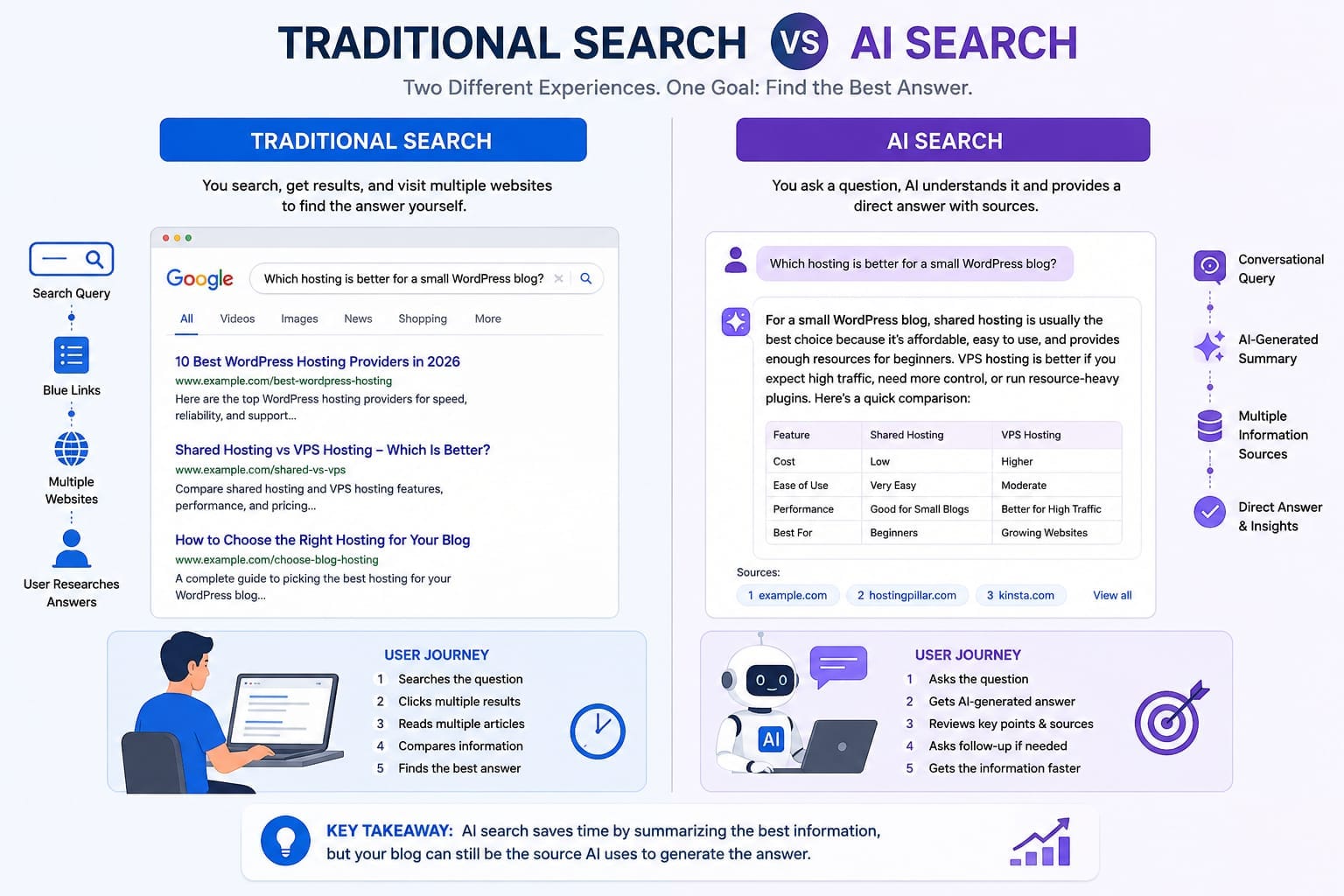
AI search refers to search experiences that use artificial intelligence to understand queries and generate or organize answers.Instead of simply matching words in a query with words on a webpage, modern search systems can interpret meaning, context, relationships, and the underlying intent behind a question.A user might search:
"Which hosting is better for a small WordPress blog?
"A traditional search experience may return hosting comparison pages.
An AI-powered experience may summarize the important differences between hosting types and providers, explain which option fits a beginner, and provide supporting sources.This changes what makes content valuable.An article should not simply contain keywords related to the question.It should contain the *actual information needed to answer the question*.
Does AI Search Mean Traditional SEO Is Dead?
No.This is one of the biggest misconceptions about AI search.Google still needs to discover, crawl, understand, and retrieve web content.Technical SEO therefore remains important.Your pages still need to be accessible.Your important content should be crawlable.
Your site should have a logical structure.Your internal links should help users and search engines discover related pages.Your titles and headings should accurately describe the content.And your content should provide value.Google's guidance consistently emphasizes creating helpful, reliable, people-first content rather than producing pages primarily to manipulate search rankings.AI search makes these principles more important—not obsolete.
Do not replace SEO with "AI SEO." Build strong SEO fundamentals and make your content easier for modern search systems to understand.
Start With the Question Behind the Keyword
One of the biggest mistakes bloggers make is writing around a keyword instead of answering the underlying question.Consider the keyword:"shared hosting vs VPS"A weak article may define both terms, repeat the keyword throughout the page, and finish with a generic conclusion.A stronger article asks:
Who is comparing these options?
What are they trying to decide?
What problems are they worried about?
Do they care about price, speed, SEO, scalability, security, or technical difficulty?What would change the recommendation?This produces much more useful content.
Think in Search Intent Layers
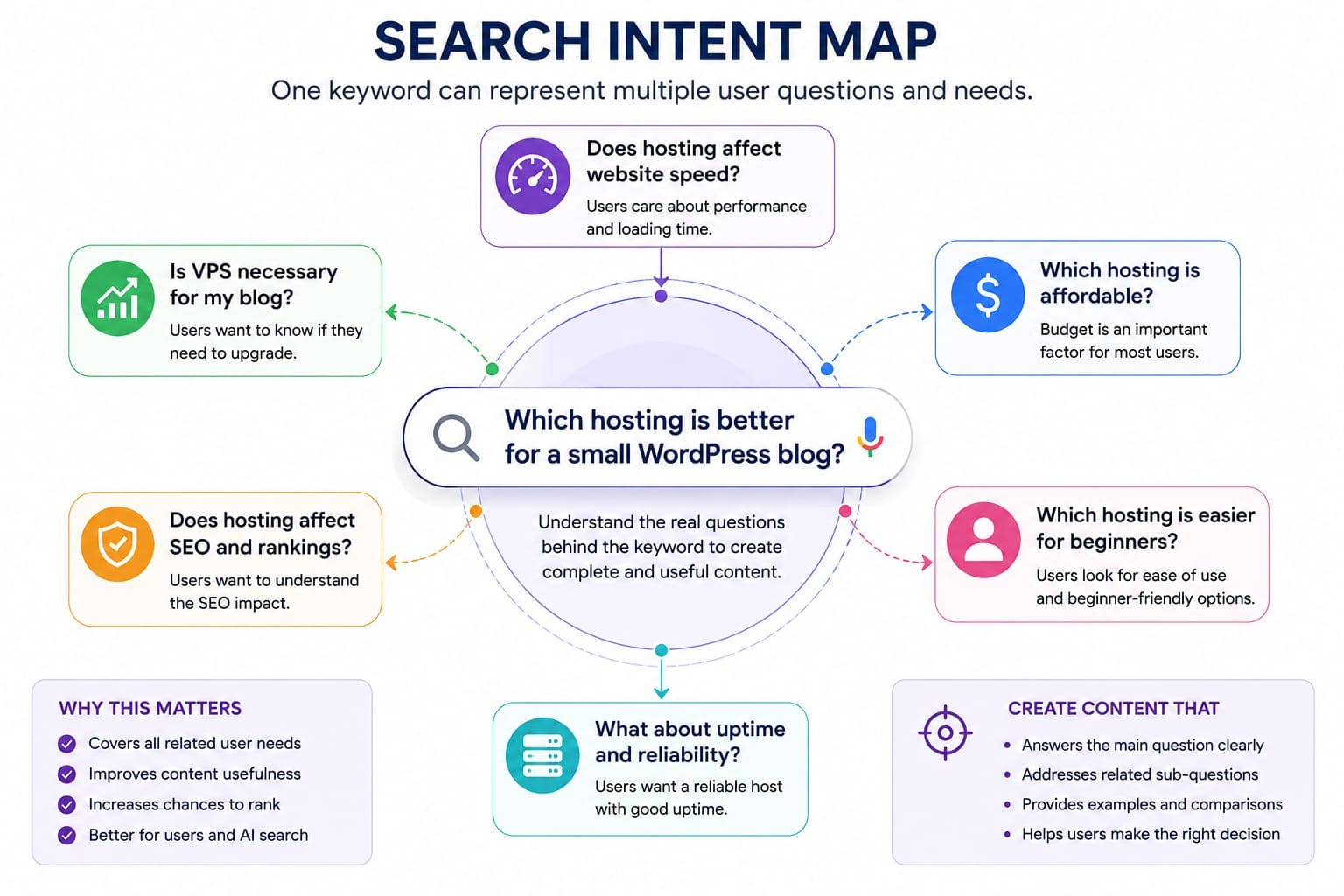
A single query can contain multiple questions.
For example:
"Is VPS better for SEO?"
The user may actually want to know:
Does hosting affect rankings?
Does server speed matter?
Will VPS improve Core Web Vitals?
When should a website upgrade?
Is VPS worth the additional cost?
A strong article addresses those connected questions naturally.This is more useful than repeating the exact phrase "VPS better for SEO" throughout the article.
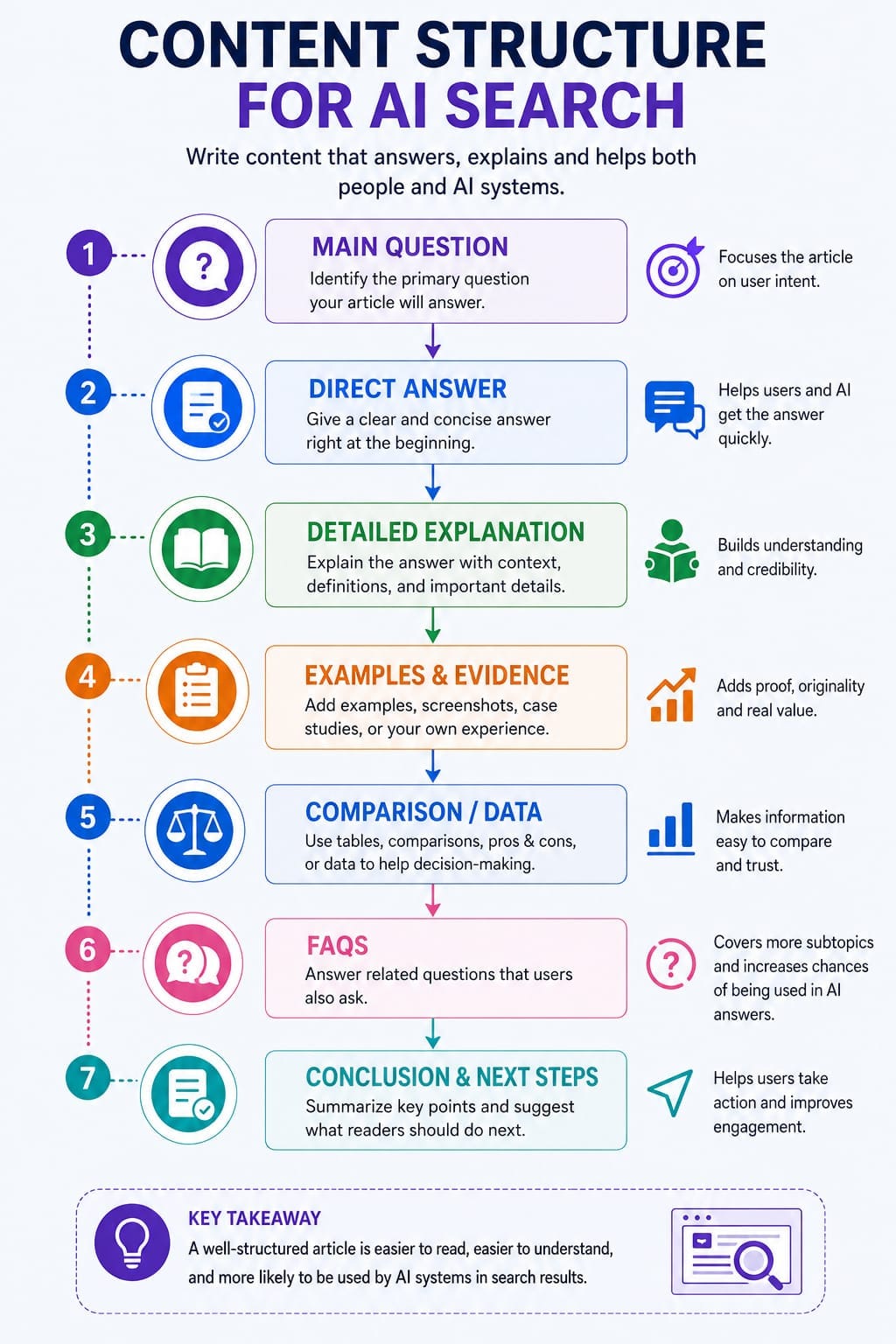
Put the Direct Answer Near the Top
AI search systems and human readers both benefit from clear answers.Do not make readers go through a thousand words before discovering your conclusion.
If your article answers a question, give the basic answer early.
Then explain it.For example:
"VPS does not automatically improve Google rankings. It can provide more predictable resources and server-level control, which may help when hosting limitations are causing performance or reliability problems."
That is much stronger than beginning with several paragraphs about the history of VPS hosting.The opening answer gives the reader orientation.The rest of the article provides evidence, context, exceptions, and practical advice.
Use Clear H2 and H3 Headings
Good headings make long articles easier to understand.Instead of vague headings such as:
"Things You Should Know"
use:
"Does Hosting Speed Affect SEO?"
"How to Find Broken Internal Links"
"When Should You Upgrade to VPS?"
"How Much Traffic Can Shared Hosting Handle?"
A strong heading tells the reader exactly what the following section is about.It also creates a logical structure for search systems trying to understand the relationships between different parts of your content.
Make Each Section Answer One Main Question
Avoid combining unrelated ideas under one heading.For example, a section called "Hosting Performance" should not suddenly discuss affiliate commissions, keyword research, and WordPress themes.Keep topical boundaries clear.This improves readability and makes the article easier to navigate.
Write Complete Answers, Not Just Long Articles
Longer does not automatically mean better.A two-thousand-word article can be less useful than a well-written thousand-word article if half of its content is repetition.AI search increases the importance of information density.Instead of asking:
"How can I make this article longer?"
ask:
"What information would help the reader make a better decision?"
For a product comparison, that might include:
- Who should choose each option
- Important differences
- Limitations
- Pricing considerations
- Performance differences
- Ease of use
- Best use cases
- Alternatives
- Common mistakes
For a tutorial, it might include:
- Prerequisites
- Exact steps
- Expected results
- Common errors
- Troubleshooting
- Alternative methods
Depth means covering the important parts of a topic—not stretching the same point into more paragraphs.
Add Original Information
This is one of the most important ways to make your content valuable.If your article simply combines information already available on ten other websites, there may be little reason for users—or search systems—to prefer it.Add something genuinely yours.That could be:
Your own testingScreenshotsPerformance observationsExperimentsExamplesOriginal comparisonsData collected from your websiteA detailed explanation of a confusing conceptA real workflowLessons learned from implementationFor example, instead of saying:"Page speed is important."
Show what happened when you optimized an actual WordPress page.Before optimization:Large imagesUnnecessary pluginsPoor cachingHigh server response timeAfter optimization:Compressed imagesBetter cachingReduced scriptsImproved response timeThat creates evidence rather than generic advice.
Use Facts Carefully
AI-generated search experiences make accuracy especially important.If your article contains outdated pricing, unsupported claims, statistics, product specifications, or incorrect SEO advice, the content becomes less trustworthy.Check important claims.Use primary sources when possible.
For technical SEO, official documentation from search engines can be particularly valuable.For products, use the manufacturer's current documentation.For statistics, identify the original research.Do not publish a claim simply because several blogs repeat it.
Make Comparisons Easy to Understand
Comparison content is particularly suitable for conversational search because users frequently ask AI systems to compare options.A useful comparison should not simply say:
"Tool A is better."
Explain why.
For example:
Tool A may be better for beginners because it is easier to configure.Tool B may be better for advanced users because it provides greater customization.Tool A may be cheaper.Tool B may offer stronger enterprise features.That gives the reader a decision framework.
Use Tables When They Improve Understanding
A comparison table can quickly communicate differences between products, services, strategies, or approaches.Useful columns might include:
Feature
Option A
Option B
Best forMain limitationBut do not turn every article into a table.Use tables where structured comparison genuinely makes the information easier to understand.
Build Strong Internal Links
Internal links help users discover related information and help search engines understand relationships between pages.Imagine your website has these articles:How to Start a Blog Best Hosting for BeginnersWordPress SEO GuideFree SEO Audit Tools
How to Fix Broken Internal Links
These pages can support one another.A hosting article can link to the beginner blogging guide.An SEO audit article can link to the internal-linking guide.The internal-linking article can link back to the SEO audit article.This creates a connected topical structure.
Google recommends descriptive anchor text that gives users and search engines meaningful context about the destination page.Do not use vague anchors such as "click here" when a descriptive phrase would be more useful.
Make Important Information Easy to Extract
AI systems need to understand your content.That does not mean writing robotic paragraphs.It means making important information obvious.Use:
Short paragraphs
Descriptive headings
Bullet lists
Comparison tables
Definitions
Examples
Clear conclusions Step-by-step instructionsRelevant internal linksThis also improves the human reading experience.
Good structure serves both audiences.
Add FAQs Based on Real Questions
FAQs can make an article more comprehensive when they address questions that naturally arise from the topic.Do not add random questions simply because you want more keywords.For an article about AI search, useful questions might include:
Does AI search replace Google SEO?
How does AI search choose information?
Does AI-generated content rank in search?
How can a small website appear in AI search results?
These questions extend the topic rather than repeating the main article.The answers should be concise but genuinely useful.
Final Verdict
Making a blog article more useful for AI search does not require abandoning traditional SEO.It requires improving the quality and usefulness of your content.
Start with search intent.Answer the main question early.Build a logical structure.Cover related questions.Use descriptive headings.Add original research and experience.
Support important claims with reliable information.Create useful internal links.Use tables and lists when they improve comprehension.Keep information accurate and updated.
And most importantly, write for humans.AI search systems are becoming better at understanding content, but that does not mean bloggers should chase every new optimization theory.