Blogging Mistakes That Kill SEO (And How to Avoid Them)
Many bloggers publish dozens of articles and still struggle to get traffic from Google. They spend hours writing content, optimizing images, and sharing posts on social media, yet their rankings remain stagnant. The reason is often not a lack of effort but a series of SEO mistakes that quietly damage their site's performance.
SEO is not just about keywords. It involves content quality, site structure, user experience, technical optimization, and consistency. Even small mistakes can prevent your blog from reaching its full potential.
In this guide, you'll learn the most common blogging mistakes that hurt SEO, why they matter, and how to fix them before they impact your rankings.
📑 Table of Contents
- Why SEO Matters for Bloggers
- Mistake #1: Writing Without Keyword Research
- Mistake #2: Keyword Stuffing
- Mistake #3: Publishing Thin Content
- Mistake #4: Ignoring Search Intent
- Mistake #5: Poor Title Tags
- Mistake #6: Neglecting Meta Descriptions
- Mistake #7: Weak Internal Linking Structure
- Mistake #8: Slow Website Speed
- Mistake #9: Ignoring Mobile Optimization
- Mistake #10: Poor Image Optimization
- Mistake #11: Not Using Heading Structure Properly
- Mistake #12: Publishing Duplicate Content
- Mistake #13: Not Updating Old Content
- Mistake #14: Forgetting About User Experience
- Mistake #15: Ignoring Backlinks Completely
- Mistake #16: Poor Website Architecture
- Mistake #17: Not Building Topical Authority
- Mistake #18: Publishing AI Content Without Editing
- Mistake #19: Ignoring EEAT Signals
- Mistake #20: Giving Up Too Early
- Quick SEO Checklist for Bloggers
- Final Thoughts
- Frequently Asked Questions
Why SEO Matters for Bloggers
Search engine optimization helps your content appear in Google search results when people are looking for information. Unlike social media traffic, which often disappears quickly, SEO can bring consistent visitors for months or even years.
When done correctly, SEO can:
- Increase organic traffic
- Improve brand authority
- Generate affiliate commissions
- Grow email subscribers
- Create long-term passive traffic
However, many bloggers unknowingly sabotage their own growth by making avoidable SEO mistakes.
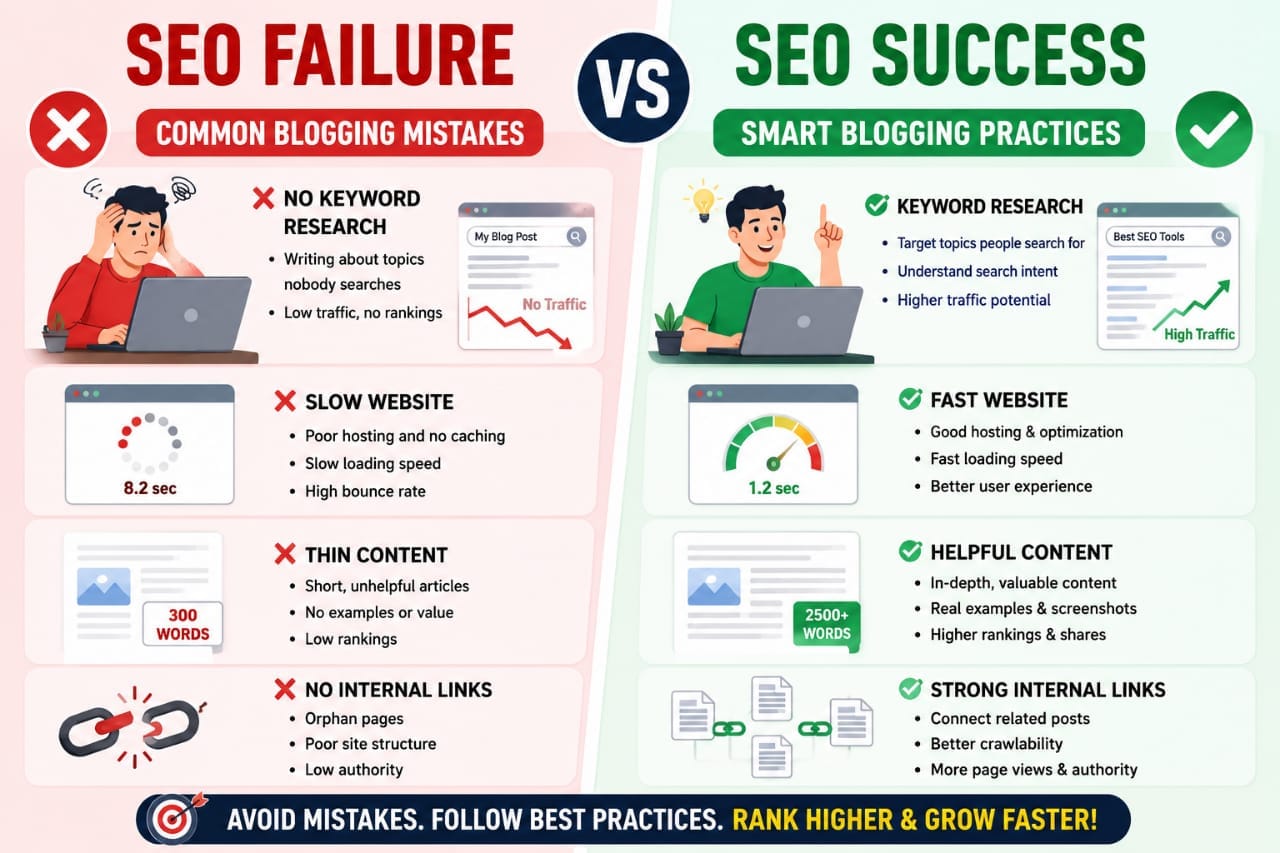
Mistake #1: Writing Without Keyword Research
One of the biggest mistakes bloggers make is publishing content based purely on personal ideas without checking whether people are actually searching for those topics.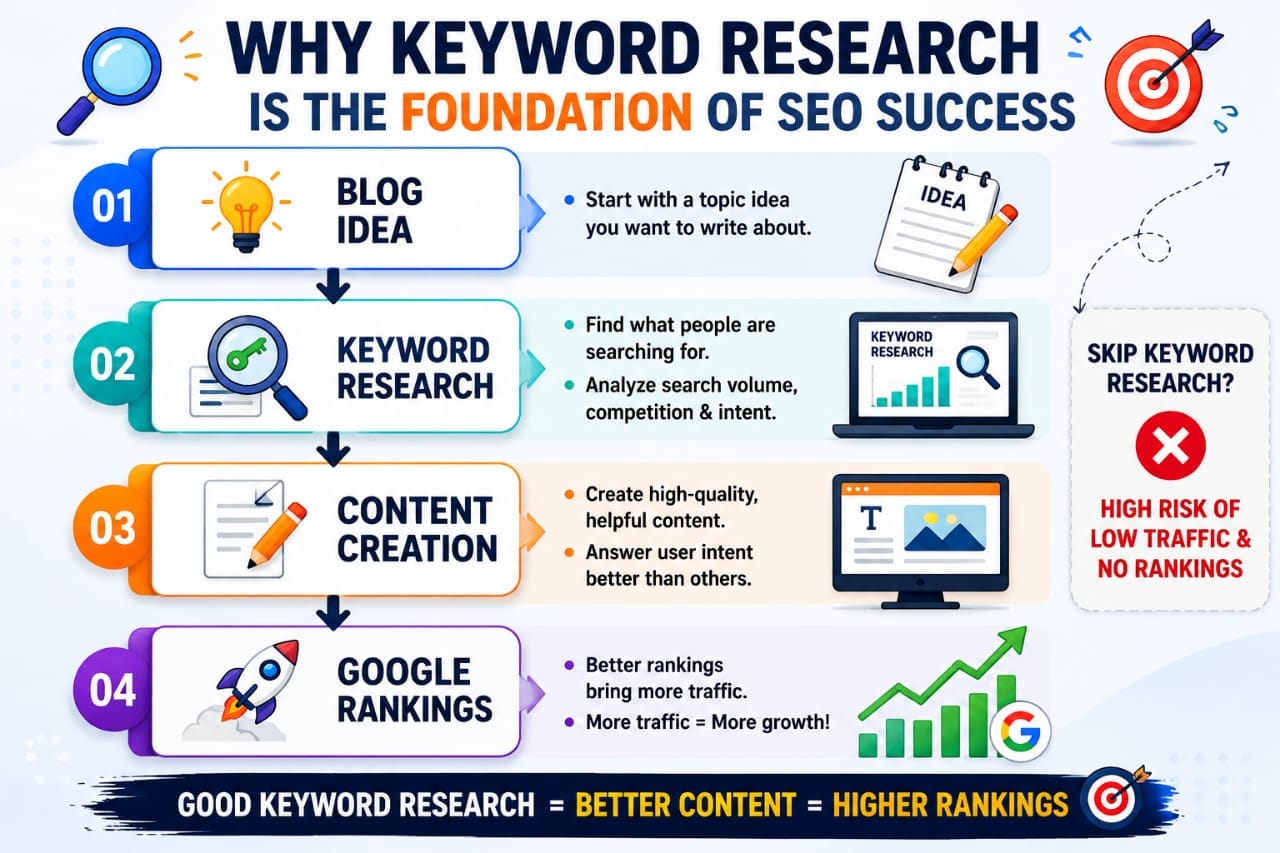
You may write an excellent article, but if nobody searches for that topic, Google has little reason to send traffic to it.
Why It's a Problem
Keyword research helps you understand:
- What your audience wants
- How people search
- Search volume
- Competition levels
- User intent
Ignoring keyword research often results in content that never receives impressions or clicks.
How to Fix It
Use keyword research tools such as:
- Google Keyword Planner
- Semrush
- Ahrefs
- Ubersuggest
- Your own SEO tools on Seovixo
Focus on long-tail keywords that have clear intent and lower competition.
Mistake #2: Keyword Stuffing
Years ago, repeating a keyword multiple times could improve rankings. Today, this strategy can actually hurt your SEO.
Keyword stuffing happens when bloggers force keywords unnaturally into content just to rank higher.
Bad Example
"Best SEO tools are the best SEO tools because best SEO tools help bloggers find the best SEO tools."
This sounds unnatural and creates a poor user experience.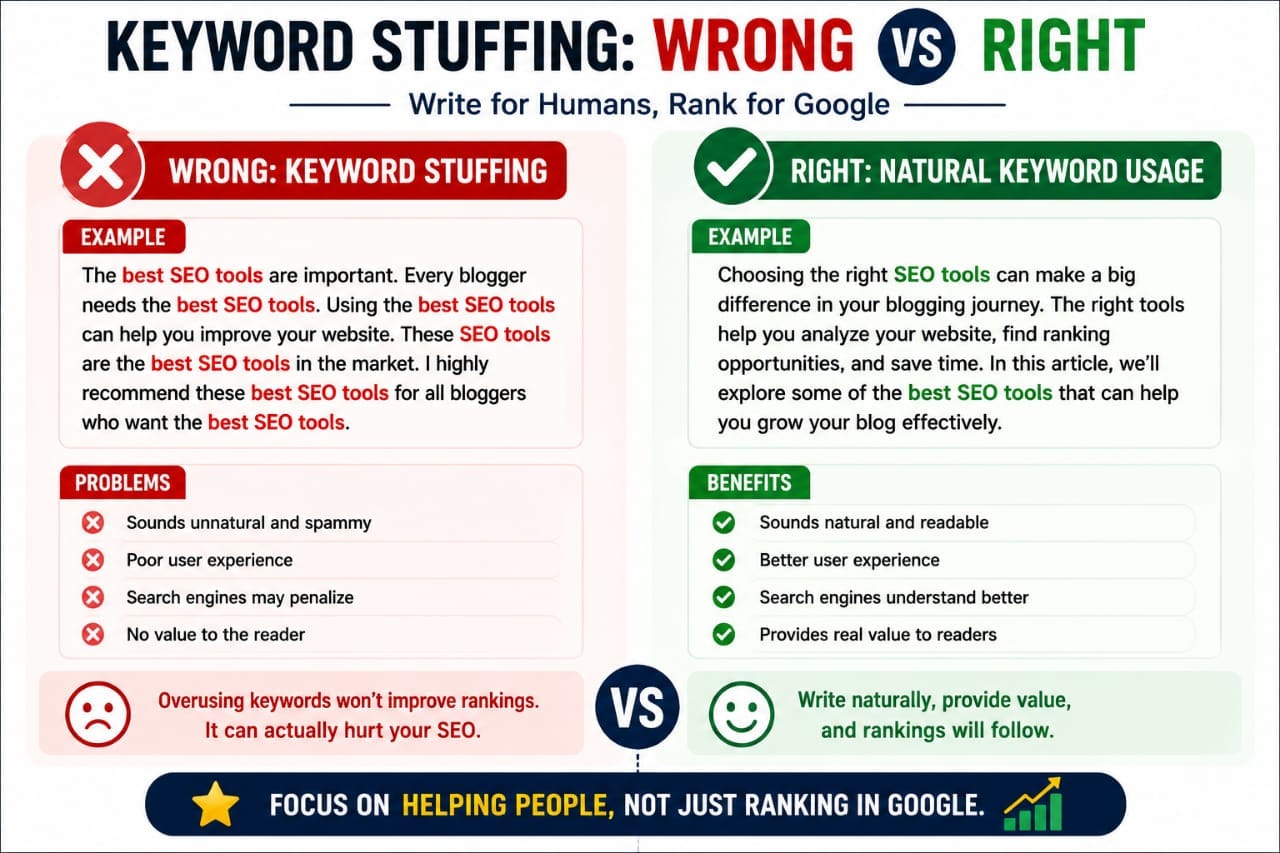
How to Fix It
- Use keywords naturally
- Add related terms and synonyms
- Write for readers first
- Focus on topical relevance
Modern search engines understand context and semantic relationships.
Mistake #3: Publishing Thin Content
Thin content refers to articles that provide very little value or information.
Examples include:
- 300-word articles on competitive topics
- AI-generated content without editing
- Duplicate articles
- Pages with almost no useful information
Google wants to rank content that fully answers user questions.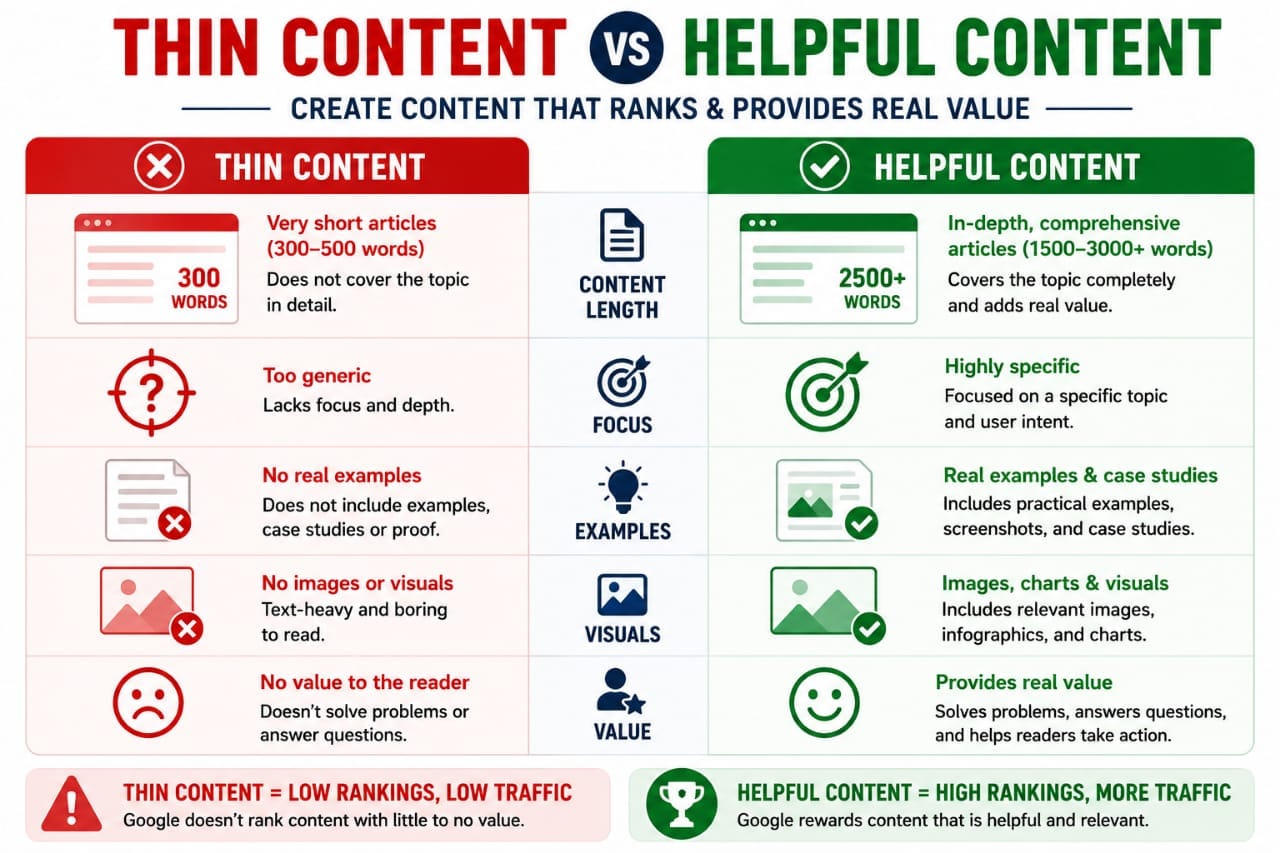
How to Fix It
Create comprehensive articles that include:
- Practical examples
- Real experiences
- Step-by-step instructions
- Visuals and screenshots
- Frequently asked questions
Quality almost always beats quantity.
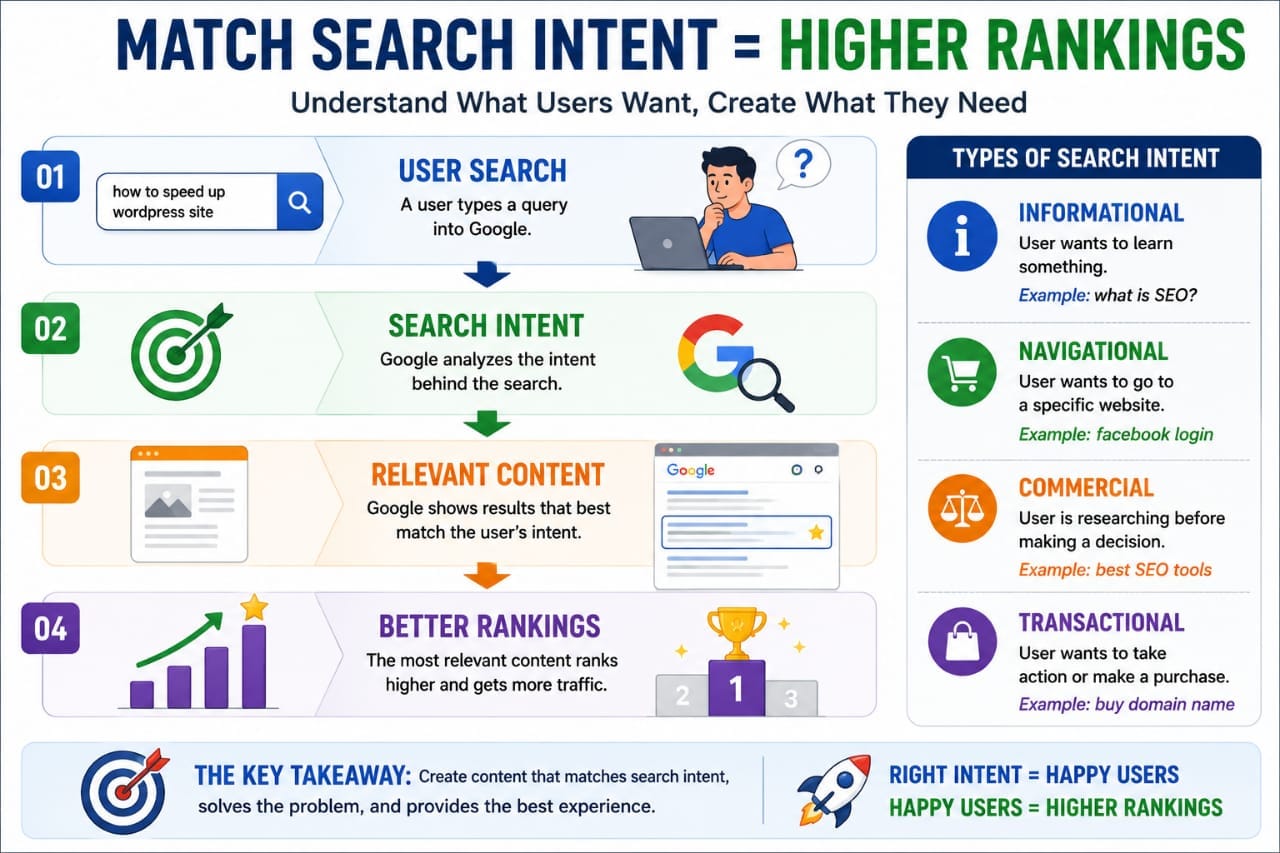
Mistake #4: Ignoring Search Intent
Many bloggers target keywords but fail to understand what users actually want.
For example, someone searching for "best hosting for beginners" expects recommendations and comparisons, not a technical explanation of web servers.
Types of Search Intent
- Informational
- Navigational
- Commercial
- Transactional
Matching content with intent is critical for ranking success.
How to Fix It
Before writing, search your target keyword in Google and analyze the top-ranking pages.
Ask yourself:
- What format is ranking?
- What questions are being answered?
- What user problem is being solved?
Then create something better.
Mistake #5: Poor Title Tags
Your title tag is one of the first things users see in search results.
A weak title can reduce click-through rates even if your page ranks well.
Common Problems
- Titles too short
- Titles too long
- Missing keywords
- Boring headlines
- Clickbait promises
Better Example
Instead of:
"Hosting Review"
Use:
"Best Hosting for Beginners in 2026: Tested & Compared"
A stronger title improves visibility and clicks.
Mistake #6: Neglecting Meta Descriptions
Although meta descriptions are not a direct ranking factor, they significantly influence click-through rates.
A poorly written description can cause users to ignore your result.
Best Practices
- Keep under 160 characters
- Include primary keywords
- Highlight benefits
- Use action-oriented language
Think of your meta description as an advertisement for your content.
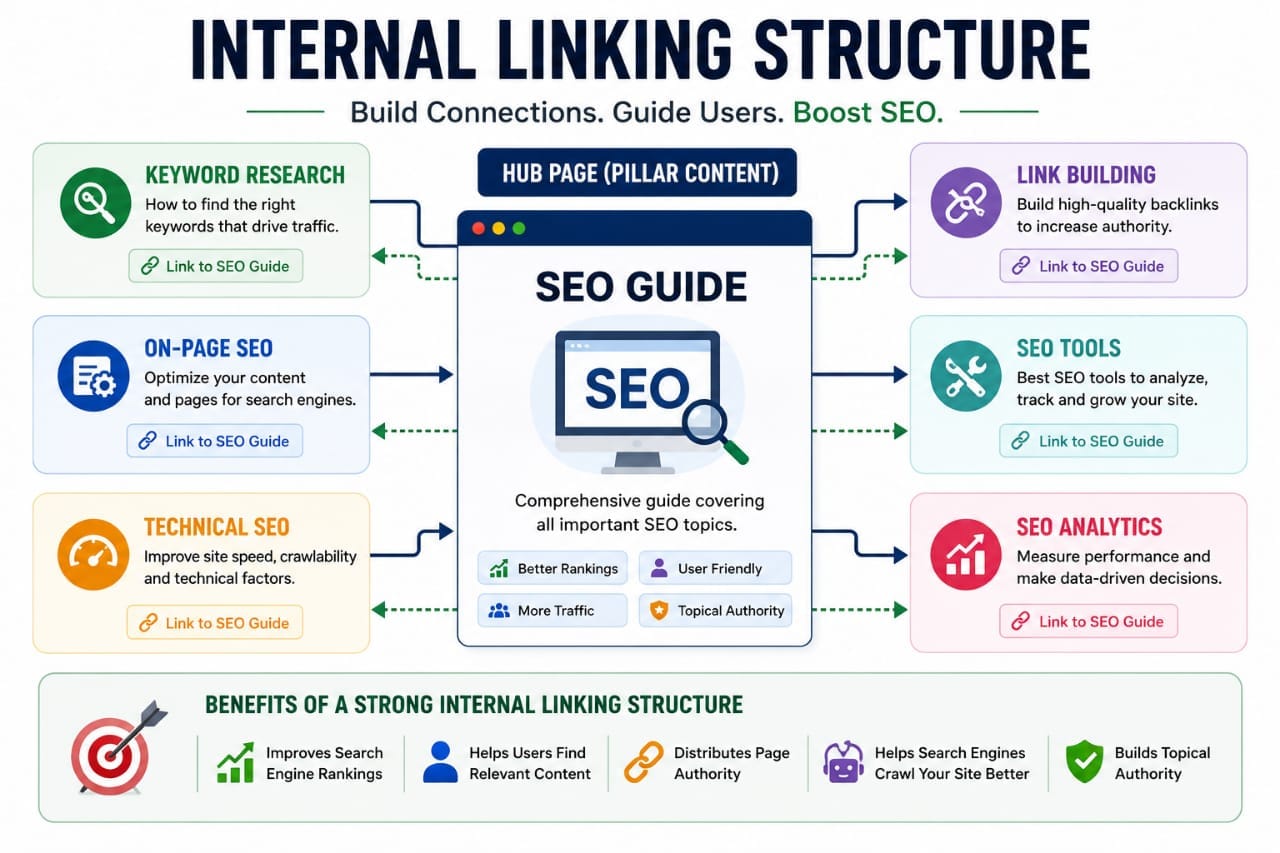
Mistake #7: Weak Internal Linking Structure
Internal links are one of the most overlooked SEO opportunities for bloggers. Many website owners publish content regularly but fail to connect related articles together.
Internal linking helps Google understand your website structure and distributes authority throughout your site.
Why It's Important
- Helps Google discover pages faster
- Improves crawlability
- Increases page views
- Reduces bounce rate
- Builds topical authority
How to Fix It
Whenever you publish a new article, link it to relevant existing content.
For example, if you write about hosting, you can link to:
- Best Hosting For Beginners
- Hostinger Review
- Cheap Hosting vs Premium Hosting
- WordPress Setup Guide
Create content clusters around major topics instead of publishing isolated articles.
Mistake #8: Slow Website Speed
Website speed directly impacts user experience and SEO performance.
If your site takes too long to load, visitors leave before reading your content.
Google considers page experience and loading speed when evaluating websites.
Common Causes
- Cheap hosting
- Large images
- Too many plugins
- Heavy themes
- No caching system
How to Fix It
- Use quality hosting
- Enable caching
- Compress images
- Use a CDN like Cloudflare
- Remove unnecessary plugins
Even a one-second improvement can increase engagement and reduce bounce rates.
Mistake #9: Ignoring Mobile Optimization
Most website traffic now comes from mobile devices.
If your blog looks great on desktop but performs poorly on smartphones, you're losing visitors and rankings.
Common Mobile Issues
- Tiny fonts
- Buttons too close together
- Slow loading pages
- Broken layouts
- Poor navigation
How to Fix It
- Use responsive themes
- Test pages on mobile devices
- Improve touch navigation
- Optimize images
- Reduce intrusive popups
Always design with mobile users in mind first.
Mistake #10: Poor Image Optimization
Images improve user experience, but they can also damage SEO if not optimized correctly.
Common Image SEO Mistakes
- Large file sizes
- Missing alt text
- Generic file names
- Uncompressed images
How to Fix It
Before uploading images:
- Compress files
- Use descriptive filenames
- Add alt text
- Choose modern formats such as WebP
Instead of:
IMG12345.jpg
Use:
best-wordpress-hosting-comparison.webp
This helps search engines understand your content better.
Mistake #11: Not Using Heading Structure Properly
Many bloggers use headings only for visual design instead of content organization.
Search engines rely on headings to understand page structure.
Correct Structure
- One H1 tag per page
- Multiple H2 headings
- H3 tags under H2 sections
- Logical hierarchy
Example
H1: Blogging Mistakes That Kill SEO
H2: Slow Website Speed
H3: Common Causes
H3: Solutions
A clean structure improves readability and SEO.
Mistake #12: Publishing Duplicate Content
Duplicate content occurs when similar content appears on multiple URLs.
This confuses search engines and can dilute ranking signals.
Common Sources
- Copied articles
- Category archives
- Tag pages
- Printer-friendly URLs
- HTTP and HTTPS duplicates
How to Fix It
- Use canonical URLs
- Redirect duplicate pages
- Create unique content
- Monitor indexing issues
Every article should provide original value.
Mistake #13: Not Updating Old Content
Many bloggers publish articles and never touch them again.
SEO is not a one-time activity.
Search engines prefer fresh and accurate information.
What to Update
- Statistics
- Screenshots
- Broken links
- Outdated recommendations
- SEO opportunities
Refreshing old content often produces faster ranking improvements than publishing new articles.
Mistake #14: Forgetting About User Experience
Google increasingly rewards websites that provide a great user experience.
If visitors struggle to navigate your site, rankings may suffer over time.
Poor UX Examples
- Too many ads
- Cluttered layouts
- Difficult navigation
- Popups everywhere
- Poor readability
How to Improve UX
- Use clean layouts
- Increase font readability
- Improve navigation menus
- Add clear calls-to-action
- Reduce distractions
The easier your content is to consume, the better users and search engines will respond.
In Part 3, we'll cover advanced SEO mistakes including backlinks, indexing problems, EEAT, content strategy, AI content risks, and a complete SEO checklist for bloggers.