How to Compare SEO Tools Without Bias: A Practical Guide
Choosing an SEO tool can be confusing. Some platforms offer keyword research, backlink analysis, rank tracking, competitor research, and technical SEO audits. Others focus on only a few features but may provide better value for a particular type of website.
The problem is that many SEO tool comparisons focus on brand popularity, affiliate commissions, or the number of features instead of actual usefulness.The best SEO tool isn't necessarily the most expensive or the one with the biggest feature list. It is the tool that provides reliable data, fits your workflow, and helps you make better SEO decisions.
In this guide, you'll learn how to compare SEO tools without bias, evaluate their features fairly, and choose software based on your actual requirements.
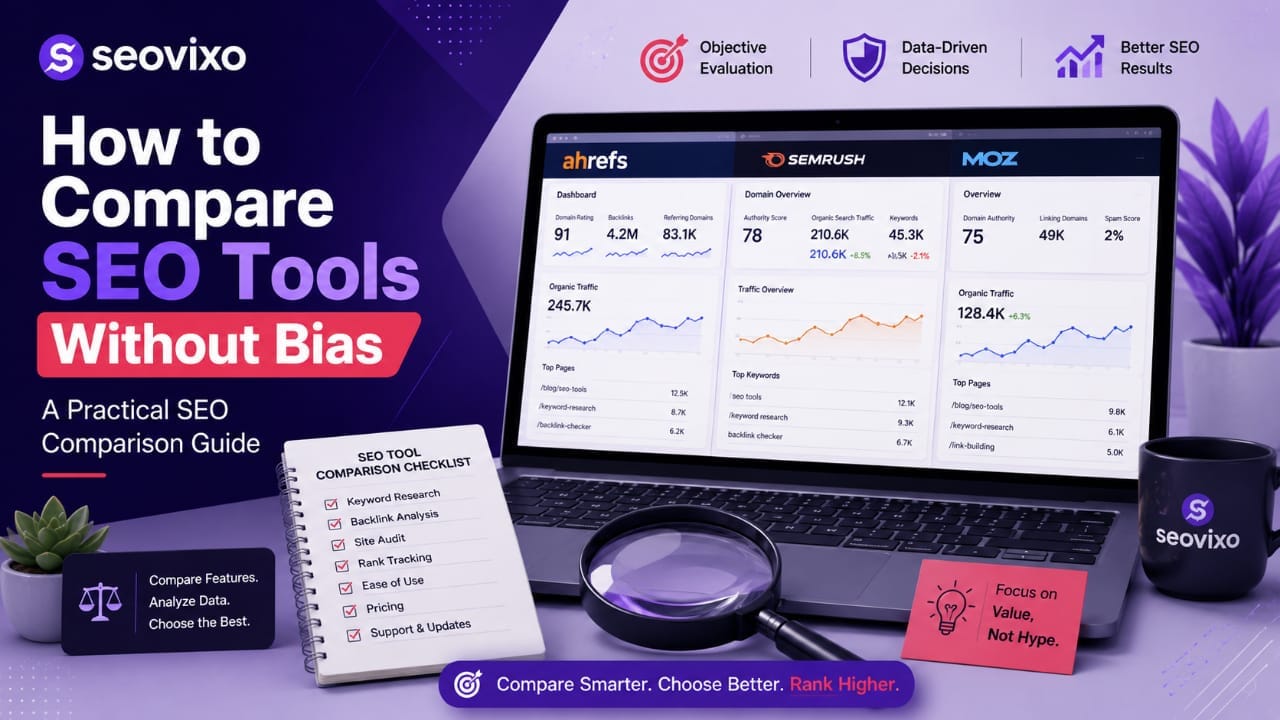
Why SEO Tool Comparisons Are Often Biased
An SEO platform can look impressive in a promotional video but feel very different when you use it for everyday work.Some comparisons focus heavily on features while overlooking data limitations, subscription restrictions, and additional costs.
Others declare one platform the winner without explaining how the tools were tested.A fair comparison should consider more than the number of features. It should examine data quality, ease of use, pricing, reporting, and whether the platform solves your specific SEO problems.You should also separate personal preferences from measurable results.
A tool that works well for an agency managing hundreds of websites may not be the best choice for a beginner running one blog.
Define Your SEO Requirements First
Before comparing platforms, identify what you actually need.
For example, a beginner blogger might prioritize keyword research, basic site audits, and affordable pricing. An SEO professional may need backlink analysis, competitor research, and advanced reporting.Write down your main requirements before starting a free trial or purchasing a subscription.
Consider these questions:
-Do you mainly need keyword research or technical SEO analysis?
- How many websites and keywords do you manage?
- Do you need competitor backlink data?
- How often do you track keyword rankings?
- What is your monthly budget?
This prevents you from paying for advanced features that you rarely use.
Which SEO Features Should You Compare?
Evaluate the features that directly support your SEO workflow instead of comparing every feature listed on a pricing page.
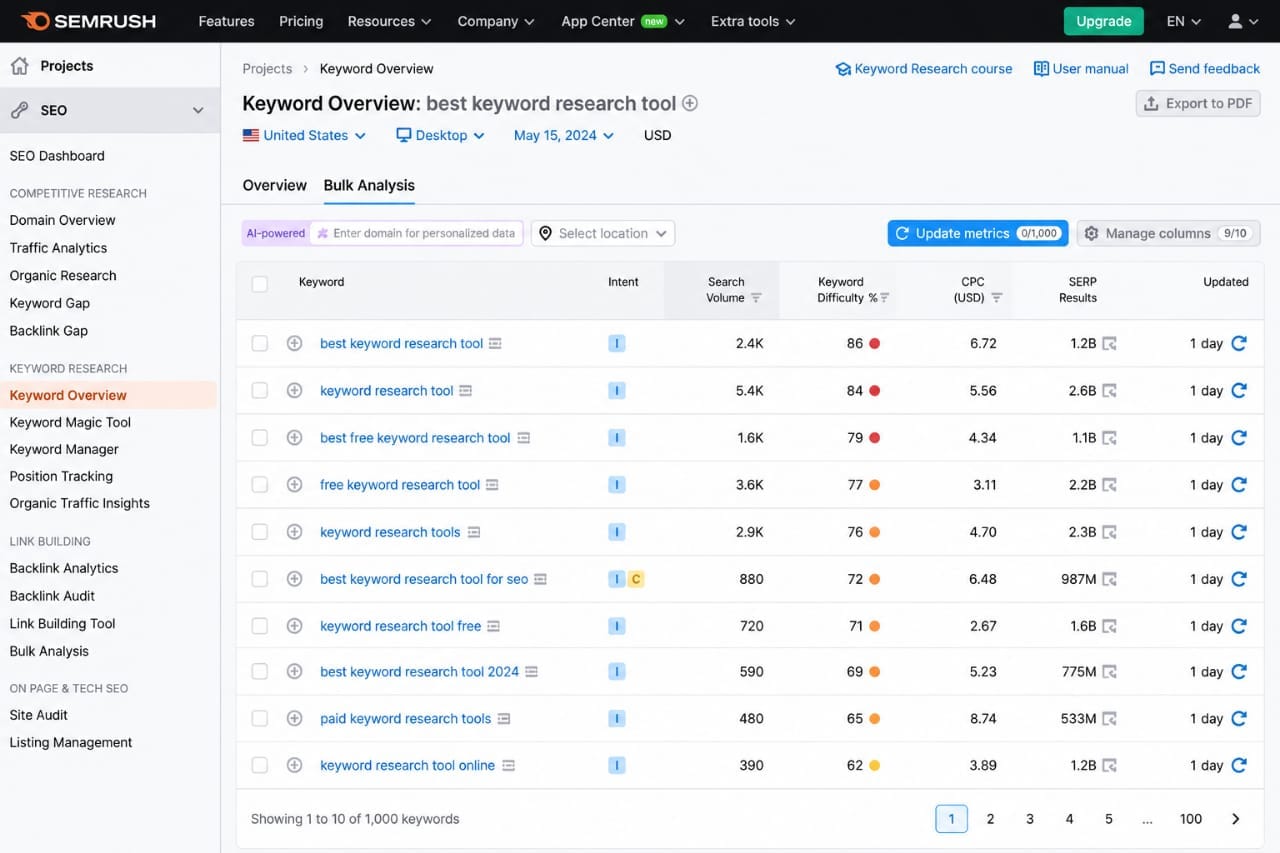
Keyword research: Check keyword suggestions, search volume, keyword difficulty, search intent, and location-based data. Use the same keywords in every platform.
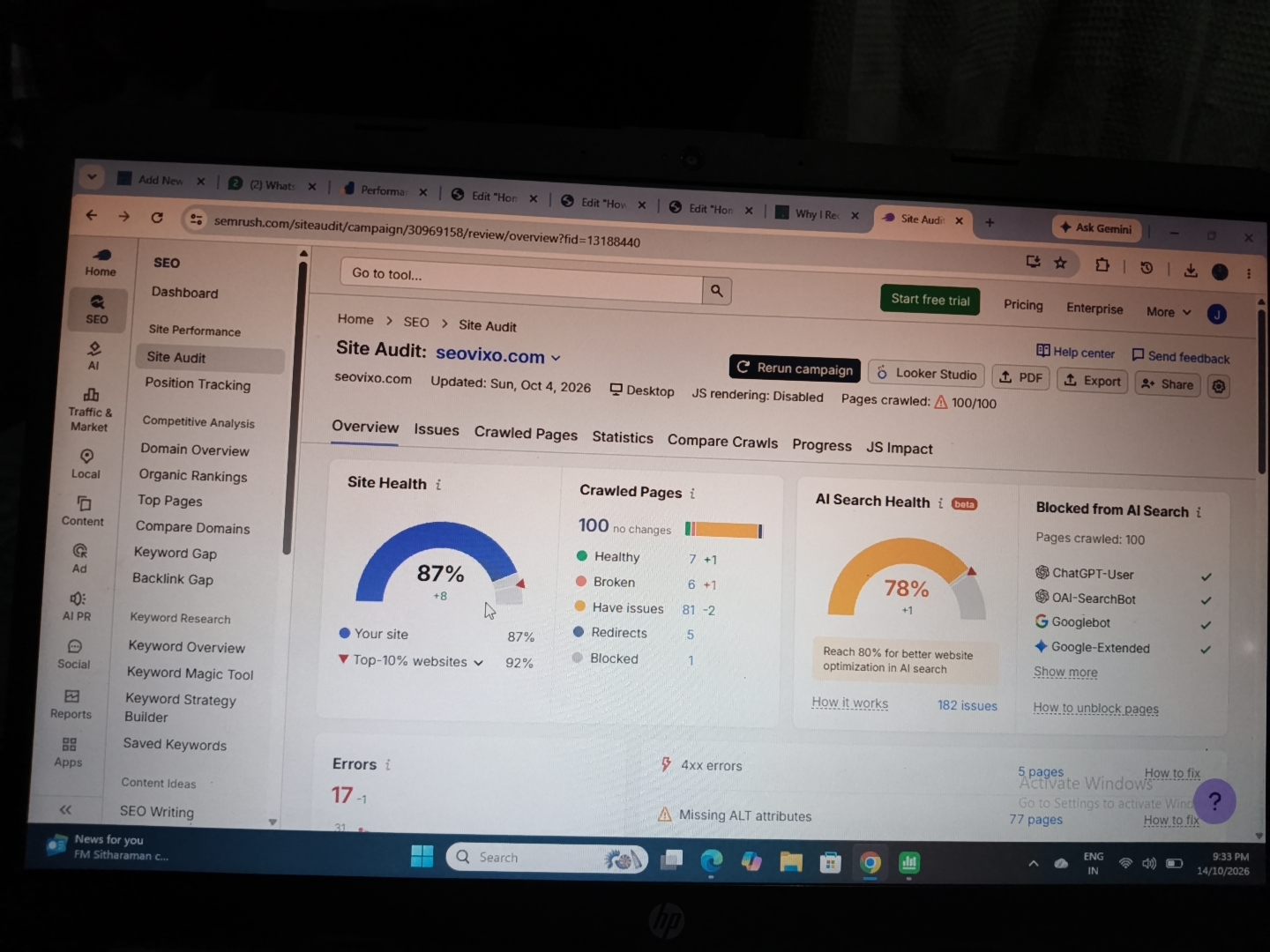
Site audits: Check whether the tool identifies important technical issues, explains their impact, and provides useful recommendations. A long list of warnings is not automatically a better audit.
Backlink analysis: Compare referring domains, backlink history, link attributes, and available filtering options. Remember that backlink databases differ between providers.
Rank tracking: Check location and device settings, update frequency, keyword limits, and historical ranking reports.
Competitor research: See whether you can discover competing pages, keywords, traffic estimates, and backlink opportunities.
Usability: Consider the dashboard, navigation, report clarity, and time required to complete common tasks.
How to Compare SEO Tools Using the Same Tests
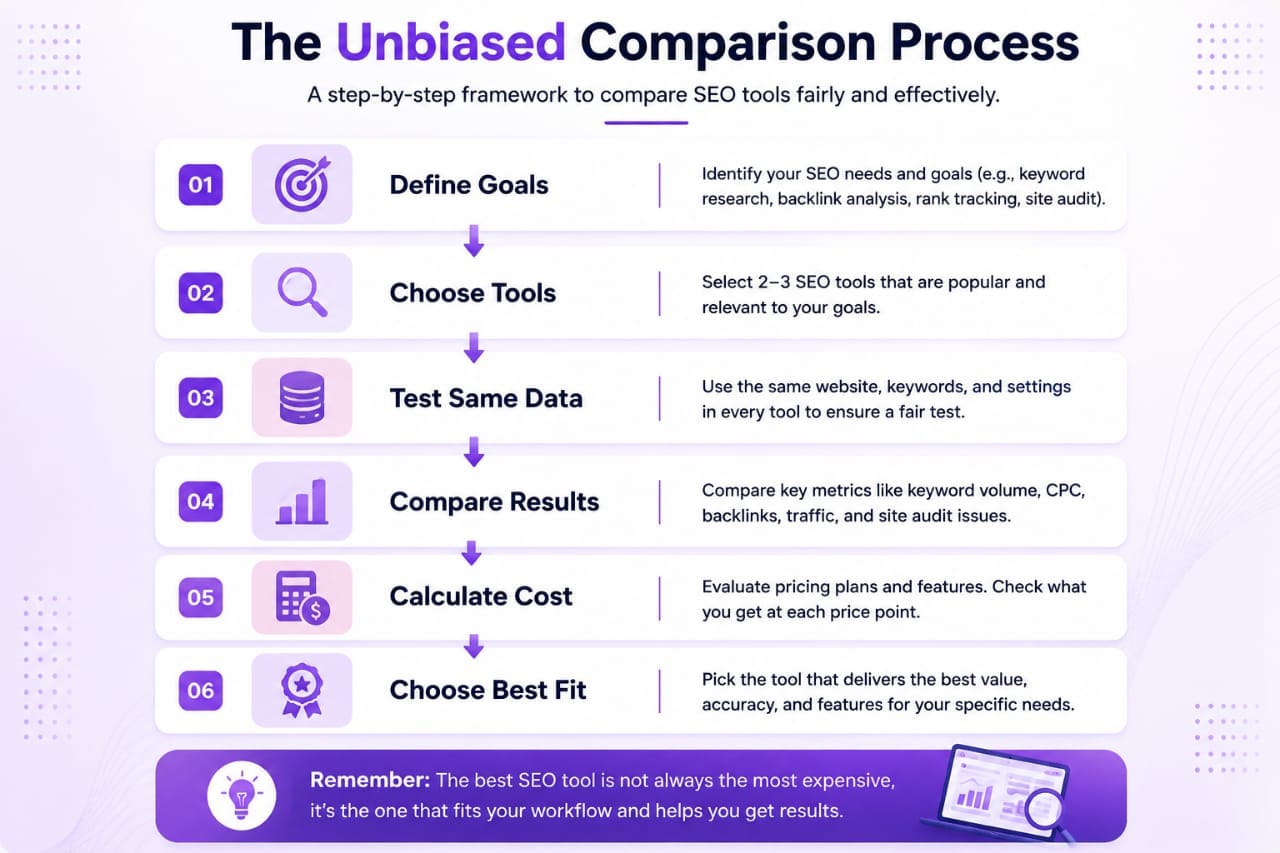
One of the fairest ways to compare SEO platforms is to give each tool the same inputs and evaluate the results using the same criteria.
For example, choose one website, a list of relevant keywords, and two or three competitors. Run the same research tasks in every platform.Record the testing date, subscription plan, country, device settings, and any usage restrictions.
These details matter because results and available features can vary by plan and configuration.Don't compare keyword volumes from different countries or rank-tracking results with different location settings. That would make the comparison unreliable.
Also, remember that third-party SEO platforms use different databases and estimation methods. Their numbers should be treated as separate estimates, not exact measurements of Google's data.
How to Compare SEO Tool Pricing Fairly
The cheapest subscription isn't always the best value.Look beyond the advertised monthly price and check what each plan actually includes.
Compare the number of projects, tracked keywords, keyword reports, backlink rows, site audit limits, and available users. Check whether essential features require a more expensive plan.Also consider annual billing, renewal pricing, add-ons, and limits that could affect your workflow.
A useful comparison should answer one question: How much does this tool cost for the work you actually need to complete?For example, a beginner managing one website may not need an expensive plan designed for a large agency.
SEO Tool Comparison Scorecard
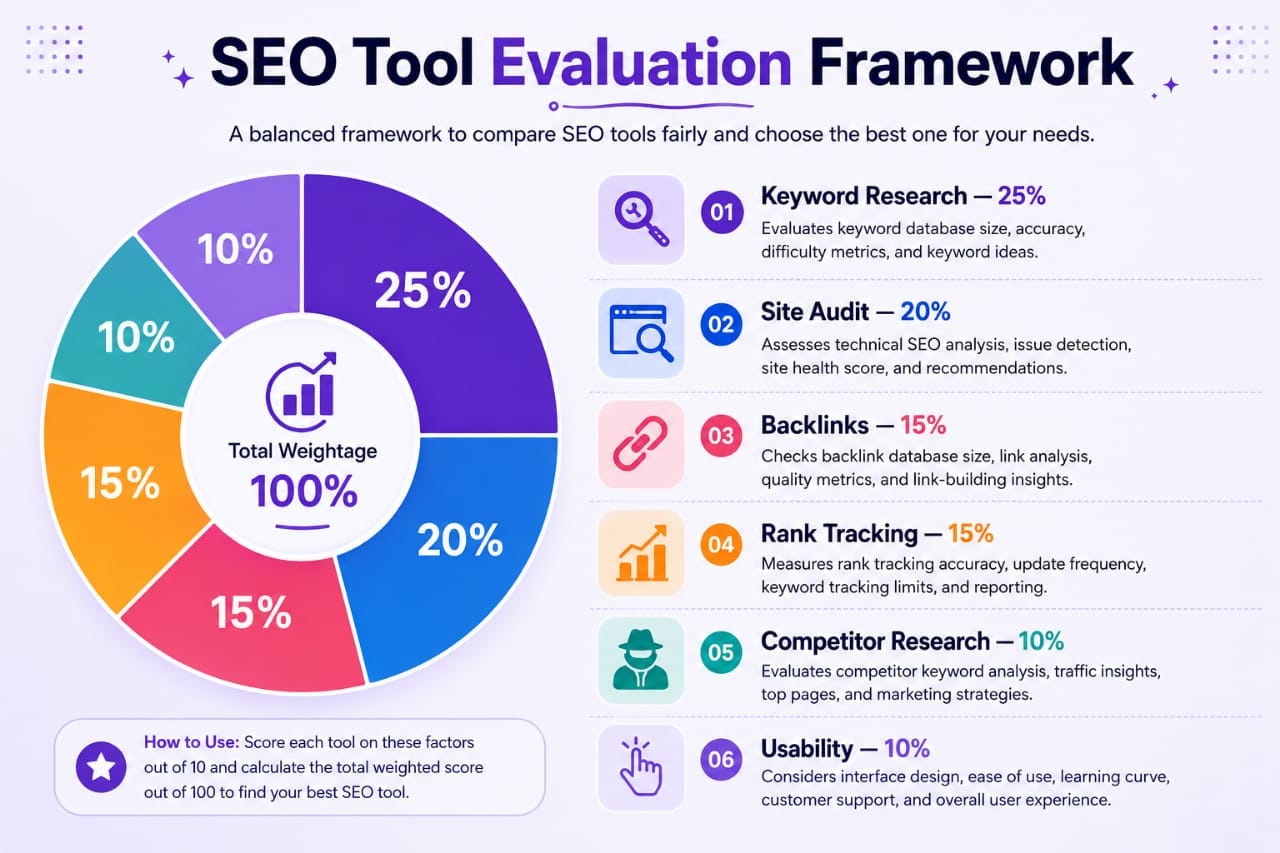
A weighted scorecard helps you compare platforms using consistent criteria instead of choosing a winner based on brand recognition.Use the following framework. Give each category a score from 1 to 10 after testing the same tasks in every platform.
Calculate each category's contribution by multiplying its score by its weight. For example, a keyword research score of 8 out of 10 contributes 2 points because its weight is 25%.
Add all category contributions to get the final score out of 10.
These weights are a suggested starting framework, not a universal industry standard. Adjust them when your website has different priorities.
Create a Simple Comparison Record
How to Avoid Affiliate Bias
Some SEO websites earn commissions when readers purchase recommended tools. Affiliate marketing is not automatically a problem, but undisclosed financial incentives can affect how comparisons are presented.
A trustworthy comparison should clearly disclose affiliate relationships and explain the basis for its recommendations.Avoid declaring a platform the winner simply because it offers a higher commission. Include limitations, pricing restrictions, and situations where another tool may be more suitable.
At Seovixo, the goal of an SEO tool recommendation should be to help readers choose software that matches their website, experience, and budget—not to suggest that one platform is best for everyone.
Final Recommendation
There is no single SEO tool that is perfect for every website.A beginner blogger, an affiliate marketer, and an SEO agency may have completely different requirements.
The right choice depends on the tasks you perform, the quality of information you need, and the amount you can reasonably spend.Use the same tests, compare the same features, check subscription limits, and record your findings before making a decision.
You can also explore our "SEO Analyzer" (https://seovixo.com/seo-analyzer-tool/) for a basic website review and browse our "SEO tools collection" (https://seovixo.com/tools/) for additional resources.
The most useful SEO tool is the one that helps you make informed decisions and consistently improves your workflow.