Cheap Hosting vs Premium Hosting: Does It Matter for Google Rankings in 2026?
Choosing web hosting can feel like an SEO decision.Hosting companies often advertise faster servers, better performance, stronger security, and premium infrastructure.
At the same time, budget hosting plans promise to give beginners everything they need for a fraction of the price.This creates an important question:
Does paying more for hosting actually help your website rank higher on Google?
The short answer is no—not directly.Google does not give your website a ranking advantage simply because you purchased an expensive hosting plan.However, hosting can affect several technical factors that influence how well your website performs.A cheap hosting plan that regularly struggles with server response, downtime, resource limits, or poor infrastructure can create problems.
A premium hosting plan can provide better infrastructure and management, but paying more does not automatically fix slow images, excessive JavaScript, poor content, or a badly configured WordPress website.
The real SEO question is not whether your hosting is cheap or expensive. It is whether your hosting provides the infrastructure your website actually needs.
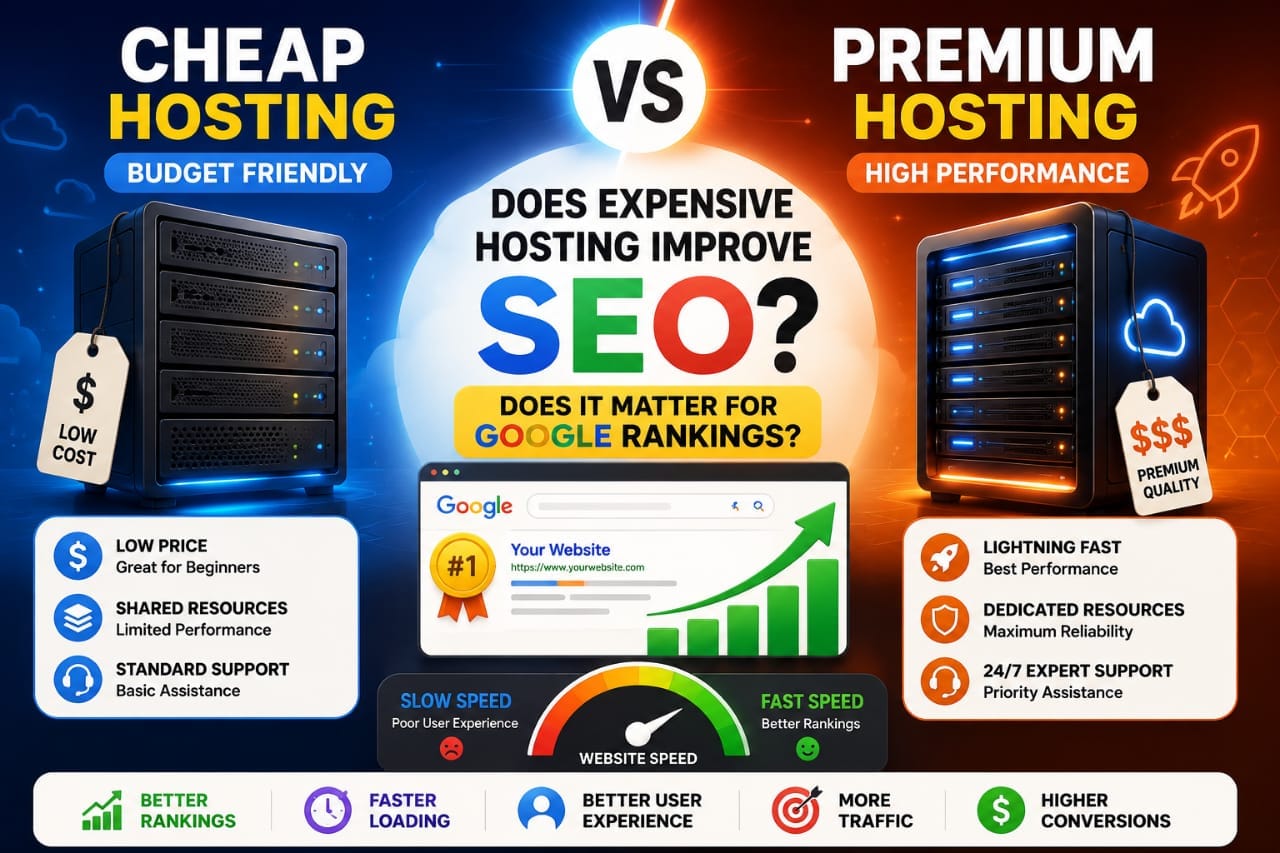
Does Cheap Hosting Hurt Google Rankings?
Not necessarily.
A low-cost hosting plan can still run a perfectly healthy website.If your website is accessible, reliable, reasonably fast, secure, and capable of handling its normal traffic, there is no SEO requirement saying you must use premium hosting.
This distinction is important because many hosting comparisons make the mistake of treating price as a direct measurement of SEO quality.It is not.
Two hosting companies can charge very different prices while providing adequate performance for a small blog.Likewise, an expensive server can still deliver a poorly optimized website if the website itself is badly configured.
What Does Hosting Actually Affect?
Hosting primarily affects the technical environment in which your website operates.Important factors include:
- Server response time
- Server availability
- Resource capacity
- CPU and memory availability
- Storage performance
- Network quality
- Server location
- Security infrastructure
- Backup systems
- Scalability
- Server configuration
These factors can influence how quickly and reliably your pages are delivered.Google's crawling documentation recognizes that server capacity matters because Googlebot needs to be able to retrieve URLs from your website successfully.
If a server repeatedly struggles to respond, crawling can be affected.But that does not mean buying the most expensive hosting plan automatically improves rankings.
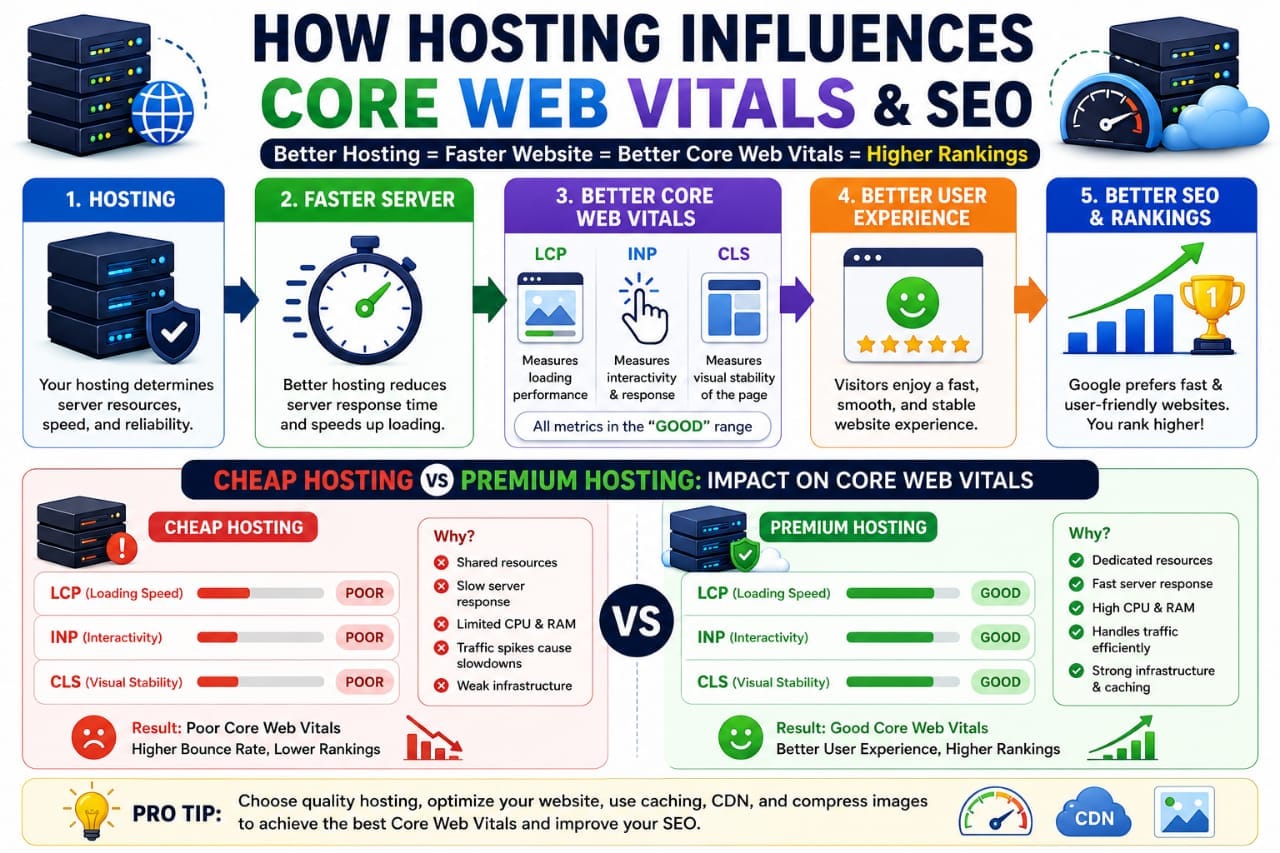
Cheap Hosting vs Premium Hosting Compared
Server Speed and Google SEO
Server performance can matter, but it is only one part of page speed.When someone visits a page, the server needs to respond before the browser can begin receiving the document.
A slow server can therefore contribute to a slow loading experience.But improving server response is not enough if the page contains enormous images, unnecessary JavaScript, poorly optimized fonts, excessive plugins, or third-party scripts.
This is why moving from cheap hosting to premium hosting does not guarantee a dramatic performance improvement.You need to identify the bottleneck first.If your server is slow, better hosting may help.If your website is poorly optimized, hosting may not be the main problem.
Does Premium Hosting Improve Core Web Vitals?
It can help, but indirectly.Core Web Vitals currently focus on:
- Largest Contentful Paint
- Interaction to Next Paint
- Cumulative Layout Shift
These measure different aspects of the user experience.Hosting can influence loading performance, particularly the time required to begin delivering a page.However, Core Web Vitals also depend heavily on what your website sends to the browser and how that content behaves.
For example, a huge hero image can hurt loading performance regardless of whether the website uses budget or premium hosting.Similarly, excessive JavaScript can affect responsiveness.
Better hosting can remove an infrastructure bottleneck, but it cannot optimize your entire website for you.
What About Server Uptime?
Reliability is one area where hosting quality can matter substantially.If your website is frequently unavailable, visitors cannot access your content.
Search engines can also encounter problems when attempting to retrieve pages during periods of repeated server failure.A website that is consistently available provides a much healthier technical foundation.
This does not mean premium hosting is the only way to achieve reliability.A reasonably priced hosting provider with dependable infrastructure may be completely adequate for a small website.The important metric is actual reliability—not the word “premium” in the hosting plan.
Shared Resources Can Become a Problem
Many inexpensive hosting plans place multiple websites on the same infrastructure.That is not automatically bad.The problem occurs when your website regularly reaches its allocated limits or the hosting environment cannot provide enough resources during periods of increased demand.You might notice:
Slow WordPress dashboardSlow page loadingDatabase errorsCPU or memory warningsTemporary downtimePerformance deterioration during traffic spikesIf these problems occur regularly, upgrading your hosting may be justified.
But first check your resource usage.Do not pay for resources you do not actually need.
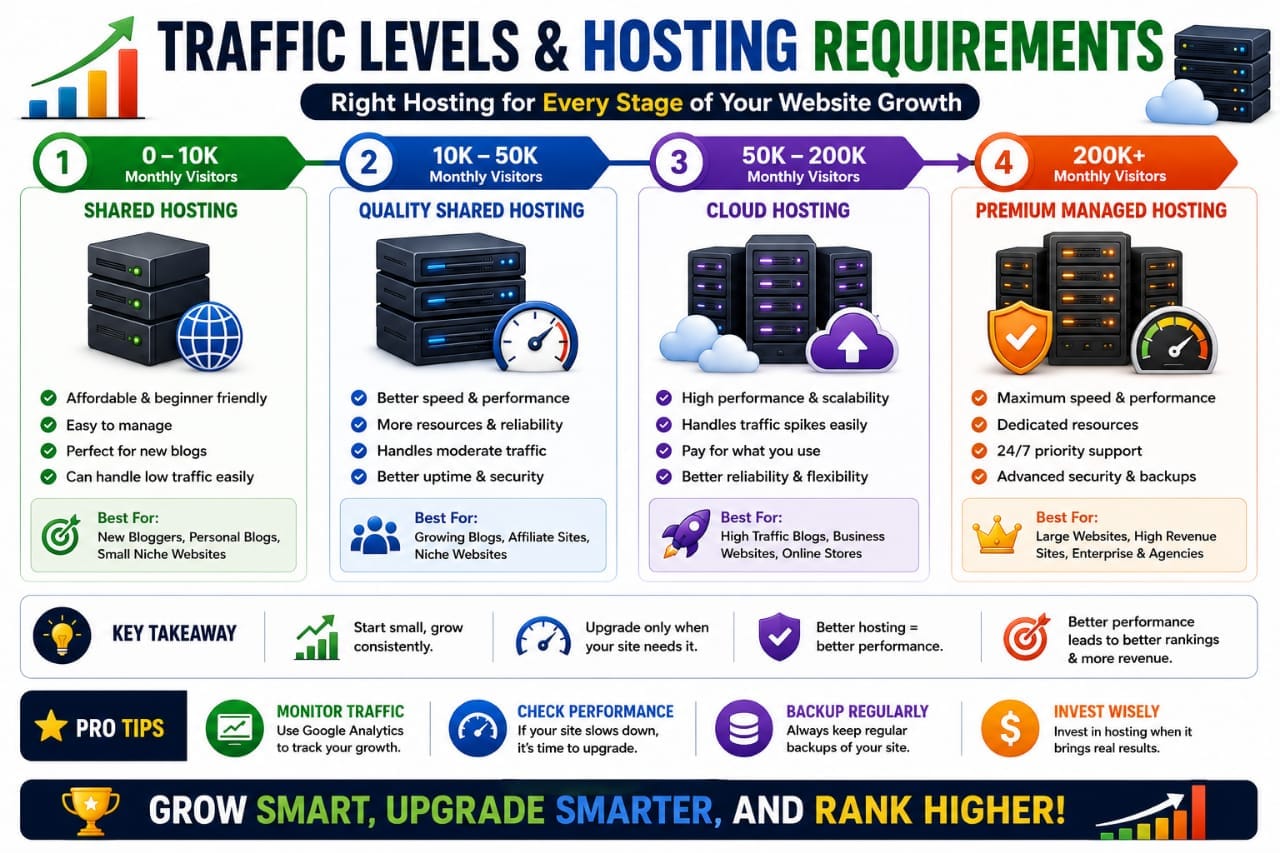
Does Server Location Affect SEO?
Server location can affect performance because physical distance and network routing can influence latency.
For an audience concentrated in one geographic region, choosing infrastructure reasonably close to that audience can help reduce latency.However, modern websites can also use content delivery networks to distribute static resources closer to users.
Therefore, server location should be considered as part of your overall performance strategy rather than treated as a direct ranking shortcut.
Cheap Hosting vs Premium Hosting for WordPress
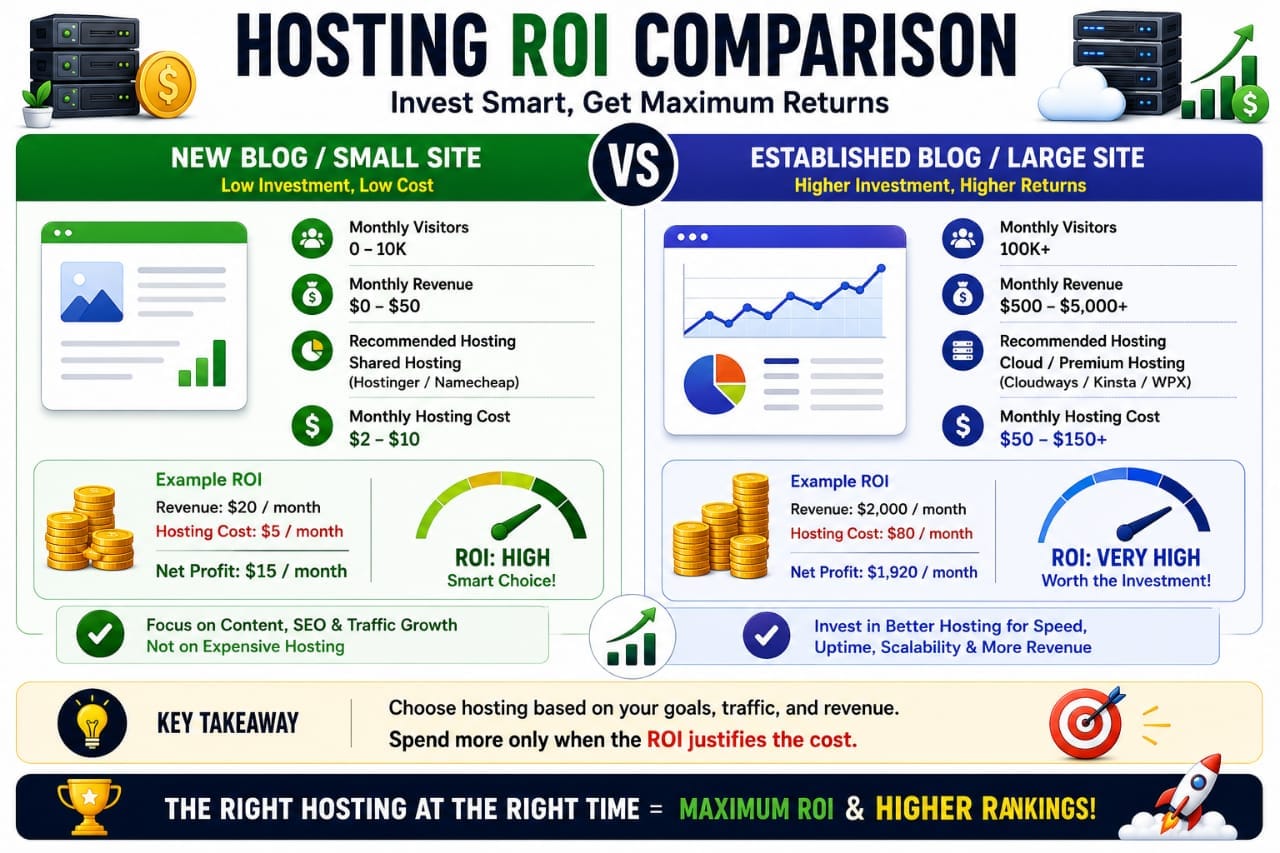
WordPress websites are particularly sensitive to hosting quality because the final performance depends on both the hosting environment and the WordPress configuration.A small blog with a lightweight theme, optimized images, good caching, and a modest number of plugins may perform perfectly well on an affordable hosting plan.
A large WordPress website with heavy plugins, WooCommerce, large databases, high traffic, and complex functionality may require significantly more resources.This is why hosting recommendations should always consider the website itself.There is no universal hosting plan that is best for every WordPress site.
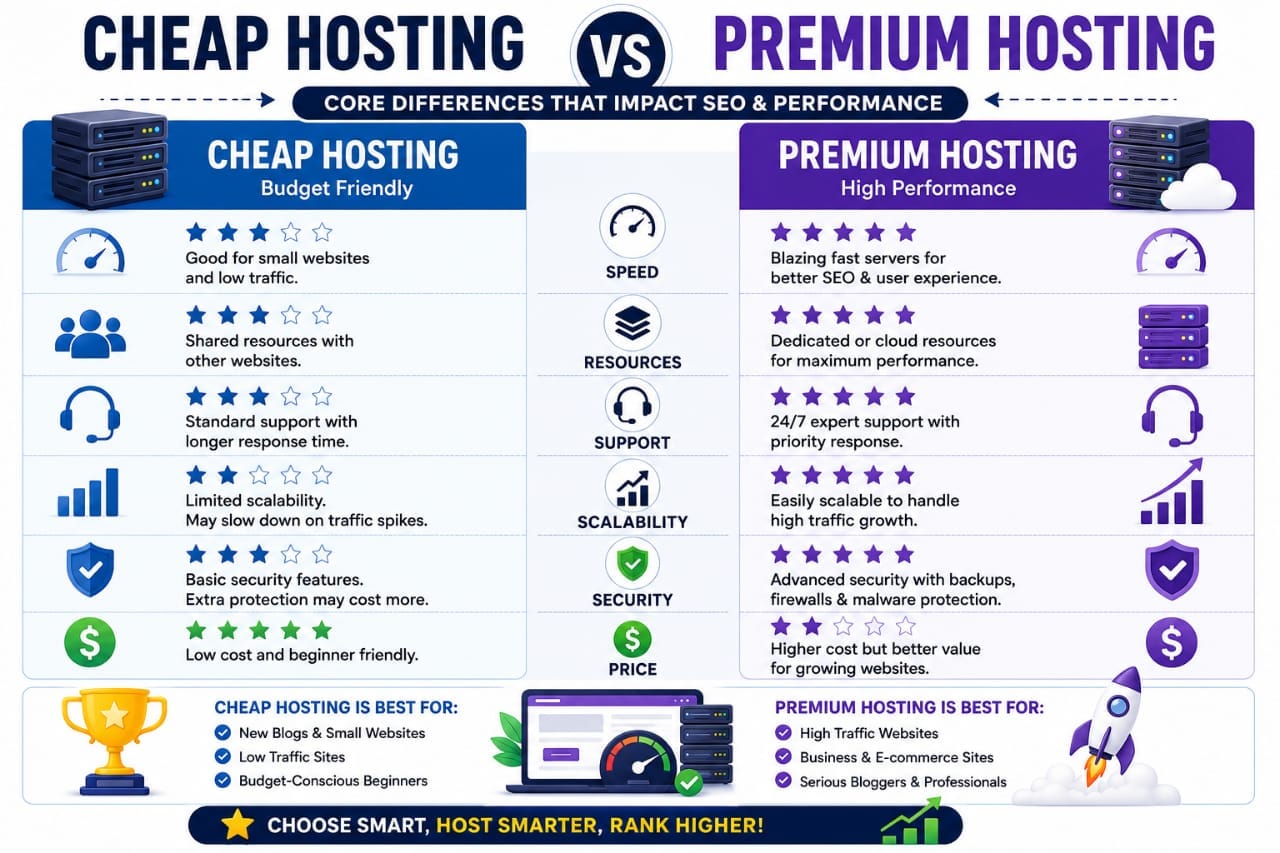
When Cheap Hosting Is Enough
Cheap hosting can be completely reasonable when:
Your website is new.Traffic is relatively low.
You run a simple blog.
Your pages load reliably.
You rarely reach resource limits.
Your hosting provider has acceptable support.
Your website does not require advanced server configuration.
In this situation, spending substantially more on hosting may not produce a meaningful SEO benefit.You could instead invest time and money into improving content, technical SEO, internal links, images, and user experience.
When Premium Hosting Is Worth Paying For
Premium hosting becomes more attractive when your website has measurable infrastructure requirements.Consider upgrading when:
Your site regularly hits resource limits.Server response remains poor after website optimization.Traffic spikes cause performance problems.Your website generates meaningful revenue and downtime has a real financial cost.You need better support.
You require advanced caching or server configuration.Your website runs demanding applications.You need more predictable resources.The key word is “measurable.”
Upgrade because your website has an infrastructure problem—not because a premium plan sounds more SEO-friendly.
How to Test Whether Your Hosting Is the Problem
Before changing hosts, gather evidence.Start with Google Search Console.Check whether your website has experienced crawling or indexing problems.Then test important URLs using PageSpeed Insights.Look at performance metrics and identify whether server response appears to be contributing to the problem.
You can also monitor your hosting resource usage.If your account repeatedly reaches CPU, memory, bandwidth, or other limits, that is stronger evidence that your current hosting plan may be insufficient.Test at different times too.
A website that performs well during quiet periods but becomes extremely slow during traffic spikes may have a capacity problem.
What Matters More Than Hosting Price for SEO?
If your goal is Google traffic, do not let hosting consume all your SEO attention.These areas are often more important:
Search intent
Content quality
Internal linking
Crawlability
IndexingTechnical accessibility
Page experience
Mobile usability
Useful original information
Authority and relevant linksA $50 monthly hosting plan cannot rescue an article that does not answer the user's question.Likewise, a $5 hosting plan is not automatically preventing a well-built website from ranking.
Final Verdict
So, does cheap hosting vs premium hosting matter for Google rankings?
Yes—but not in the way many hosting advertisements suggest.Google does not simply see a premium hosting plan and reward the website with better rankings.The real impact comes from the technical consequences of your hosting environment.If affordable hosting provides reliable uptime, sufficient resources, acceptable server performance, and a secure environment, it may be perfectly suitable for a small blog.
If your website has outgrown its resources, suffers from slow server response, struggles during traffic spikes, or needs more advanced infrastructure, premium hosting may be a worthwhile investment.The smartest approach is to diagnose the problem before spending more money.
Don't upgrade hosting to chase rankings. Upgrade hosting when better infrastructure solves a real problem.
For a new blogger, affordable and reliable hosting is usually a sensible starting point.As traffic, revenue, technical requirements, and resource consumption grow, you can upgrade when the evidence tells you that it is necessary.That is a much better SEO strategy than assuming expensive hosting automatically means better rankings.