10 Blogging Niches With Lower-Competition Opportunities in 2026
Starting a blog is easier than ever, but getting visitors from Google is still challenging. Broad topics such as technology, health, finance, and travel have many established websites competing for attention.
That doesn't mean new bloggers cannot succeed. A better strategy is to choose a specific audience, solve a particular problem, and target relevant search queries that larger websites may not cover in enough detail.
In this guide, you'll discover 10 blogging niche opportunities, examples of focused topics, possible monetization methods, and how to check whether a niche is worth pursuing.
Important: No niche is automatically low competition. The opportunities below are research directions, not guaranteed easy-to-rank keywords. Always validate individual search queries before investing time in them.
What Makes a Blogging Niche Worth Choosing?
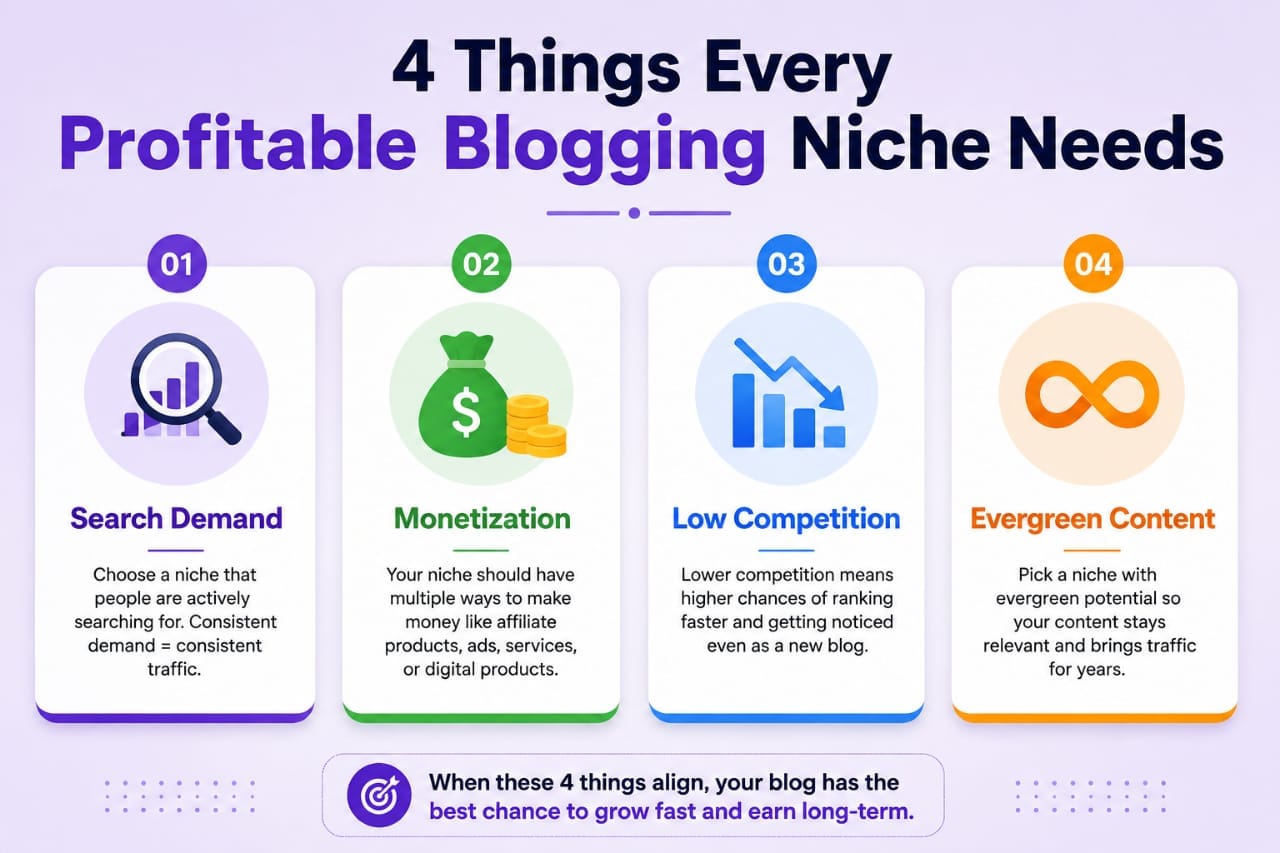
A promising niche usually has four characteristics:
- Search demand: People regularly look for information or solutions related to the topic.
- Relevant monetization: Suitable products, services, affiliate programs, or digital resources exist.
- Specific audience: You understand who you're helping and what problems they need solved.
- Content potential: You can publish multiple useful articles without repeating the same information.
You should also consider your knowledge, interest, and ability to keep information accurate and updated.
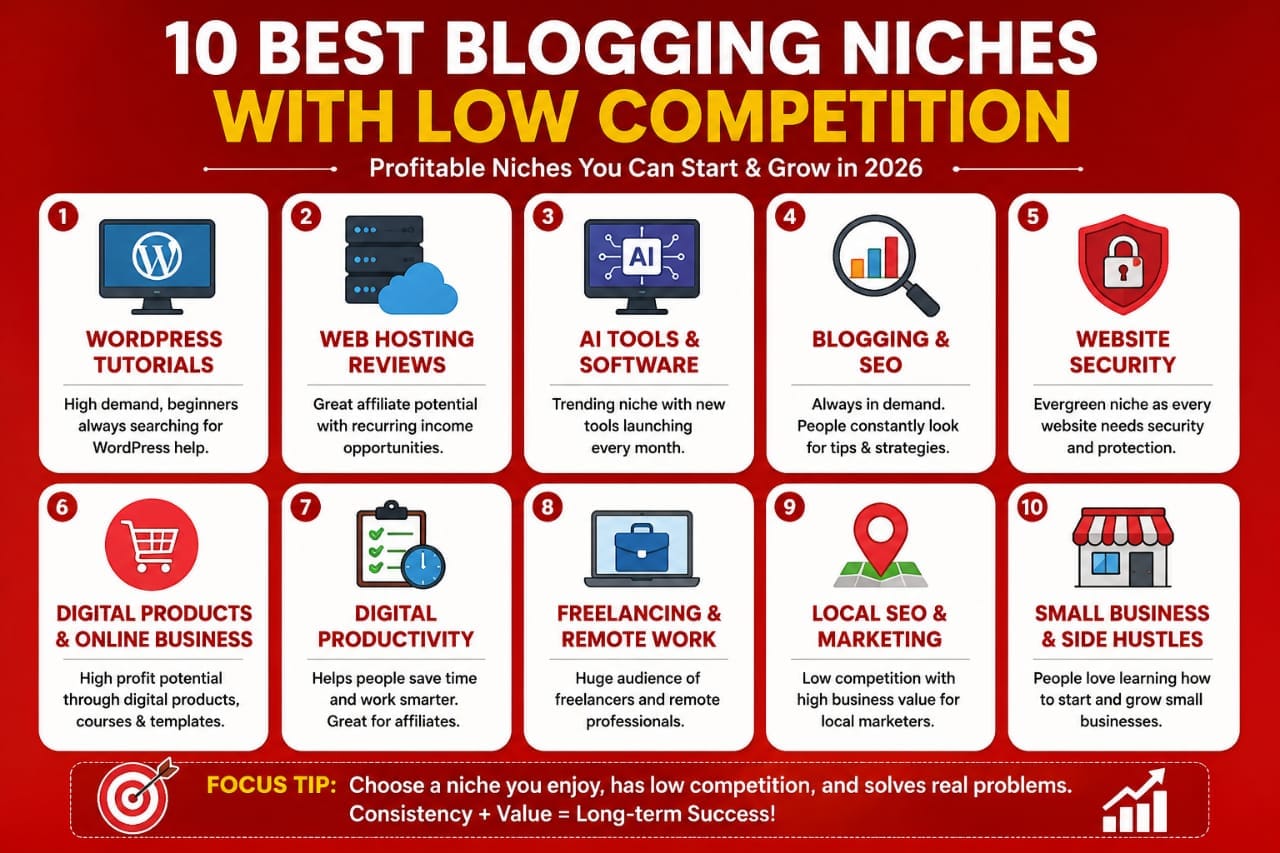
10 Blogging Niches Worth Exploring in 2026
1. WordPress Troubleshooting for Beginners
Instead of covering all of WordPress, focus on helping beginners solve specific website problems.
Potential topics include Elementor layout issues, plugin conflicts, broken links, website errors, and WordPress configuration.
Example article: How to Fix an Elementor Page That Is Not Loading.Monetization: Hosting referrals, relevant plugins, themes, WordPress services, and tutorials.
2. AI Tools and Workflows for Small Businesses
AI is a broad subject, so narrow it to practical tasks for a defined audience. For example, explain how freelancers, small businesses, or bloggers can use AI tools to save time.Cover real workflows, limitations, pricing considerations, and comparisons instead of publishing generic lists of AI tools.
Example article: How Freelancers Can Use AI to Organize Client Projects.
Monetization: Relevant software affiliates, templates, digital products, and consulting services.Because AI products change frequently, review this content regularly.
3. Google Search Console Tutorials for Small Websites
Many new website owners struggle to understand impressions, clicks, indexing reports, and search queries.
Create clear tutorials that explain individual Search Console problems and show readers how to investigate them.
Example article: How to Find Keywords Your Website Ranks for Between Positions 11 and 30.Monetization: SEO tools, training resources, consulting, and relevant software.
4. Website Speed and Core Web Vitals for WordPress
Rather than competing for broad website-speed keywords, focus on practical performance problems affecting WordPress users.Possible subjects include image optimization, caching, slow server response, Elementor performance, and Core Web Vitals.
Example article: How to Reduce TTFB on a WordPress Website.
Monetization: Hosting, performance plugins, optimization services, and technical guides.
5. Content Planning for Solo Bloggers
Many independent bloggers find it difficult to choose topics, organize clusters, and maintain a consistent publishing schedule.Help them build realistic editorial calendars, identify content gaps, plan evergreen articles, and organize internal links.
Example article: How to Build a 30-Day Content Calendar for a Solo Blogger.
Monetization: Planning templates, digital downloads, productivity software, and blogging resources.
6. Hosting Guides for Specific Website Types
Broad hosting comparisons are competitive. A more focused approach is to help specific audiences choose hosting based on their needs.Consider guides for small WordPress blogs, portfolio websites, local business websites, or beginner websites with limited budgets.
Example article: What to Look for in WordPress Hosting for a Small Business Website.
Monetization: Hosting affiliate programs, migration services, and website setup services.Be transparent about how you evaluate providers and disclose affiliate relationships.
7. WordPress Security for Small Websites
Security content can help beginners protect websites without overwhelming them with technical language.Cover backups, login protection, plugin updates, malware warning signs, SSL configuration, and recovery procedures.
Example article: A Beginner's WordPress Website Security Checklist.
Monetization: Security tools, backup services, hosting, and professional website maintenance.For security topics, rely on trustworthy technical sources and keep instructions updated.
8. Digital Templates for Specific Professionals
Instead of creating generic productivity content, build resources for a defined group such as freelancers, tutors, consultants, or small agencies.You could publish tutorials about project trackers, invoice templates, client onboarding documents, and content planners.
Example article: Essential Client Onboarding Templates for Freelance Designers.
Monetization: Your own digital templates, downloadable planners, and relevant software.
9. Freelancing Guides for WordPress Professionals
Help people who want to earn through WordPress services. Cover portfolio creation, finding clients, writing proposals, pricing projects, and maintaining client websites.
Example article: How to Create a WordPress Portfolio When You Have No Clients.
Monetization: Courses, templates, freelance platforms, services, and relevant tools.Use realistic examples and avoid promising guaranteed freelance income.
10. Local SEO for Specific Service Businesses
Local SEO is broad, but you can narrow it to the needs of particular businesses, such as plumbers, electricians, tutors, or independent consultants.
Explain local search visibility, business profile optimization, service pages, reviews, and local content planning.
Example article: Local SEO Checklist for a Plumbing Business.Monetization: SEO services, website packages, local marketing tools, and consulting.
Compare These 10 Blogging Niche Opportunities
How to Check Whether a Niche Has Lower Competition
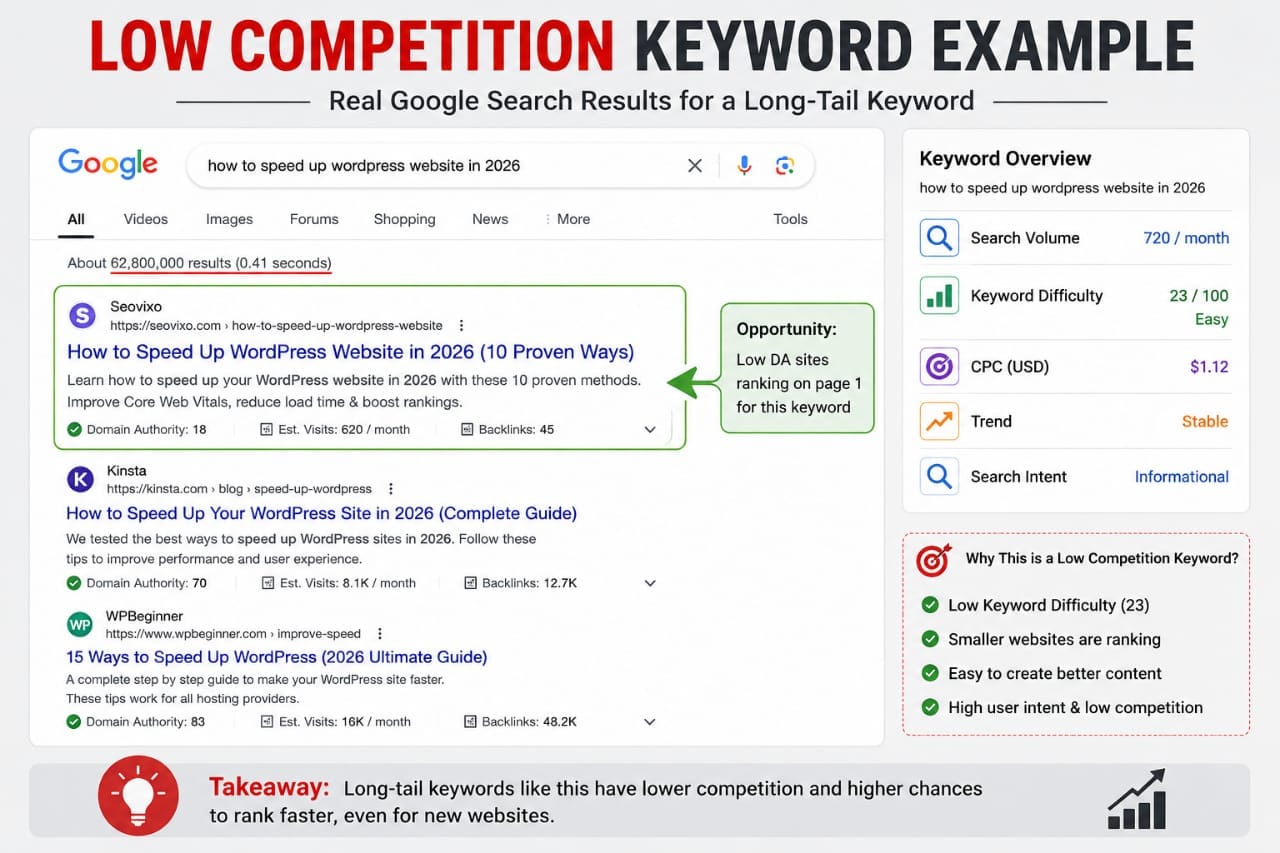
Before choosing a niche, research the actual keywords you plan to target.
1. Find specific search queries: Use Google Autocomplete, Keyword Planner, Google Search Console, and keyword research tools to collect topic ideas.
2. Understand search intent: Check whether people want tutorials, comparisons, troubleshooting help, or product recommendations. Make sure your article will satisfy that need.
3. Examine the search results: Review the websites ranking for each query. Look at their relevance, content quality, depth, and whether they answer the question clearly.
4. Evaluate keyword difficulty carefully: Third-party difficulty scores can help with research, but they are estimates rather than Google's ranking scores. Don't select a keyword based on one number alone.
5. Check monetization and audience fit: Ask whether the people searching for the topic might genuinely need a product, service, or resource you can recommend.
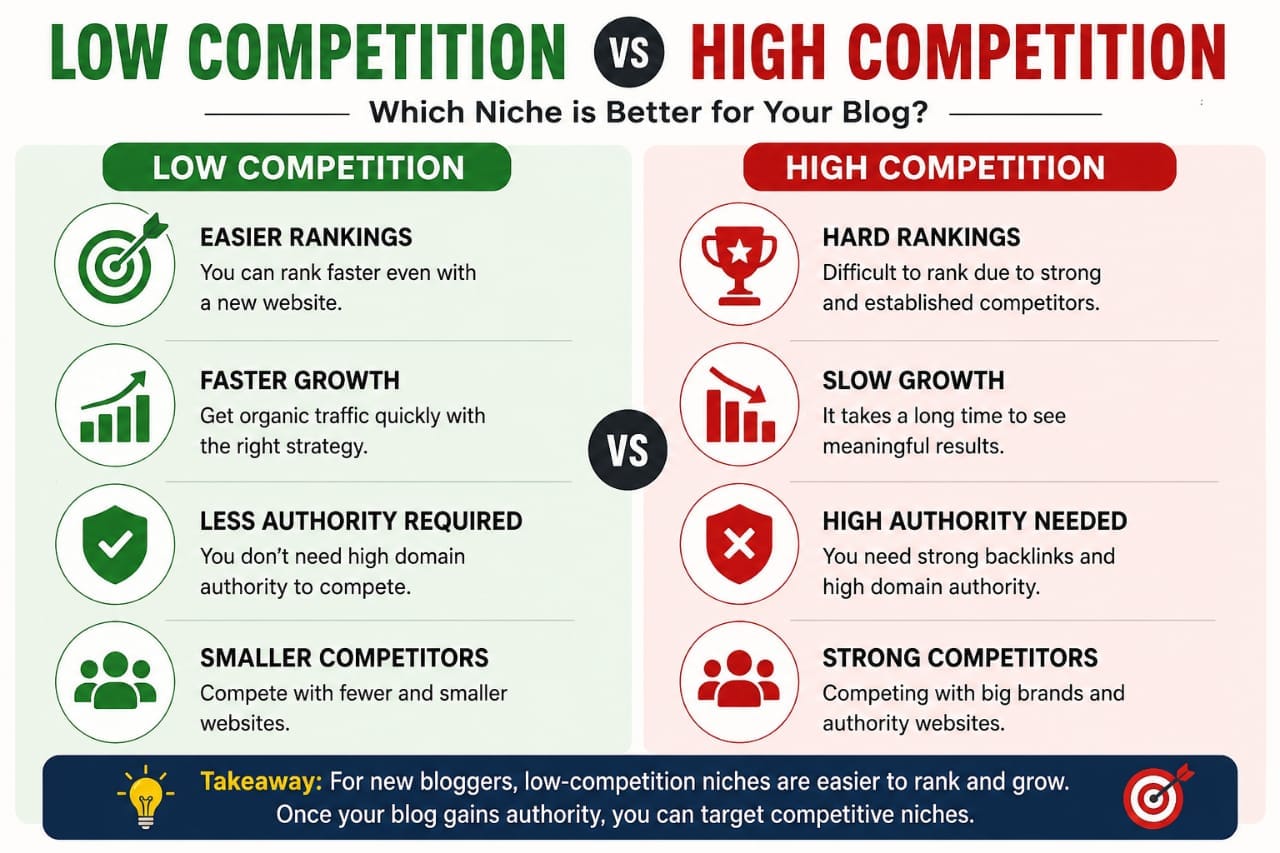
A specific query with clear intent and an audience you understand may be a better starting point than a broad keyword with high search volume.
How to Choose the Right Blogging Niche
Don't select a niche just because it appears profitable. Use these questions to evaluate it:
- Can I create at least 20 useful article ideas for this audience?
- Do I understand the problems these readers face?
- Can I produce accurate and helpful content?
- Are there suitable monetization options?
- Can I keep the content updated as products and information change?
Start with a manageable topic area. You can expand into closely related subjects after establishing a useful foundation.
For more topic research, read our guide on "How to Find Profitable Blog Ideas" (https://seovixo.com/find-profitable-blog-ideas/).
Common Mistakes to Avoid
Avoid choosing a niche only because another blogger appears successful. Their audience, experience, authority, and resources may be very different from yours.
Don't publish dozens of unrelated topics just to increase your article count. Build connected content around a clearly defined audience.Also avoid unrealistic income promises, unsupported competition scores, and outdated product recommendations.
Can You Change Your Blogging Niche Later?
Yes. You can refine your niche as you learn more about your audience and discover which topics attract relevant readers.However, avoid frequent, unrelated niche changes.
They can make your website's purpose unclear to readers and make it harder to build a coherent collection of content.Start focused, monitor your results, and expand gradually into related topics.
Final Thoughts
A profitable blogging opportunity isn't necessarily a broad industry with millions of searches. It can be a specific audience with a problem that you understand and can solve better through useful content.
Explore these 10 areas, research individual keywords, evaluate the competition, and check monetization possibilities before committing.
Choose one focused audience, build connected articles around its needs, and improve your content using real reader and search performance data.