How to Find Profitable Blog Ideas: 11 Search Methods That Actually Work
Finding blog ideas is easy. Finding topics that people actually search for, that solve real problems, and that have the potential to generate income is much harder.Many beginner bloggers make the mistake of writing about whatever comes to mind.
Others choose topics simply because keyword research tools show high search volume. Unfortunately, neither approach guarantees traffic or revenue.A better strategy is to research what people are searching for, understand their problems, study competitors, and identify relevant monetization opportunities before writing.
In this guide, you will learn 11 practical methods to find profitable blog ideas, along with a simple scoring system to help you choose which topics deserve your attention.

What Makes a Blog Idea Profitable?
A profitable blog idea is not necessarily a topic with thousands of monthly searches. It is a topic that connects audience demand with useful content and a realistic earning opportunity.
Before selecting a topic, consider these four factors:
- Search demand: Are people actively looking for information about it?
- Monetization potential: Can you earn through affiliate products, advertising, services, or digital products?
- Ranking opportunity: Can your website realistically compete with the existing search results?
- Audience relevance: Does the topic match your niche and the needs of your readers?
For example, a general article about blogging may attract informational searches. However, an article about the best blogging platforms for beginners may also attract readers who are comparing products before making a purchase.
Both topics can be valuable, but their search intent and monetization potential are different.
11 Ways to Find Profitable Blog Ideas
1. Use Google Autocomplete
Google Autocomplete is one of the easiest free ways to discover blog topics.
Start typing a broad keyword into Google, such as "blogging," and examine the suggested searches. These suggestions can reveal phrases people commonly search for.
Try adding different words to your main keyword:
- Best blogging tools
- How to start blogging
- Blogging tips for beginners
- Blogging mistakes to avoid
- Blogging without investment
You can repeat this process with different words and questions to build a list of potential article ideas.
Practical tip: Search using different modifiers such as "best," "how to," "for beginners," "vs," and "alternatives."
2. Explore Google's People Also Ask
The People Also Ask section provides questions related to a search query.Search for a topic such as "how to start a blog" and examine the questions that appear.
These questions can reveal problems and informational needs that deserve dedicated articles.
For example:
- How much does it cost to start a blog?
- Can beginners make money blogging?
- How often should bloggers publish?
- What should a beginner blog about?
Choose questions that are relevant to your audience and provide detailed answers rather than creating separate pages for every minor variation.

3. Check Google's Related Searches
Related Searches appear near the bottom of many Google search results pages.
They can help you discover narrower topics, alternative phrases, and related questions.
For example, searching for "keyword research for bloggers" may lead you toward related subjects such as free keyword research tools, long-tail keywords, and keyword research for beginners.
Use these suggestions to expand your initial topic list.
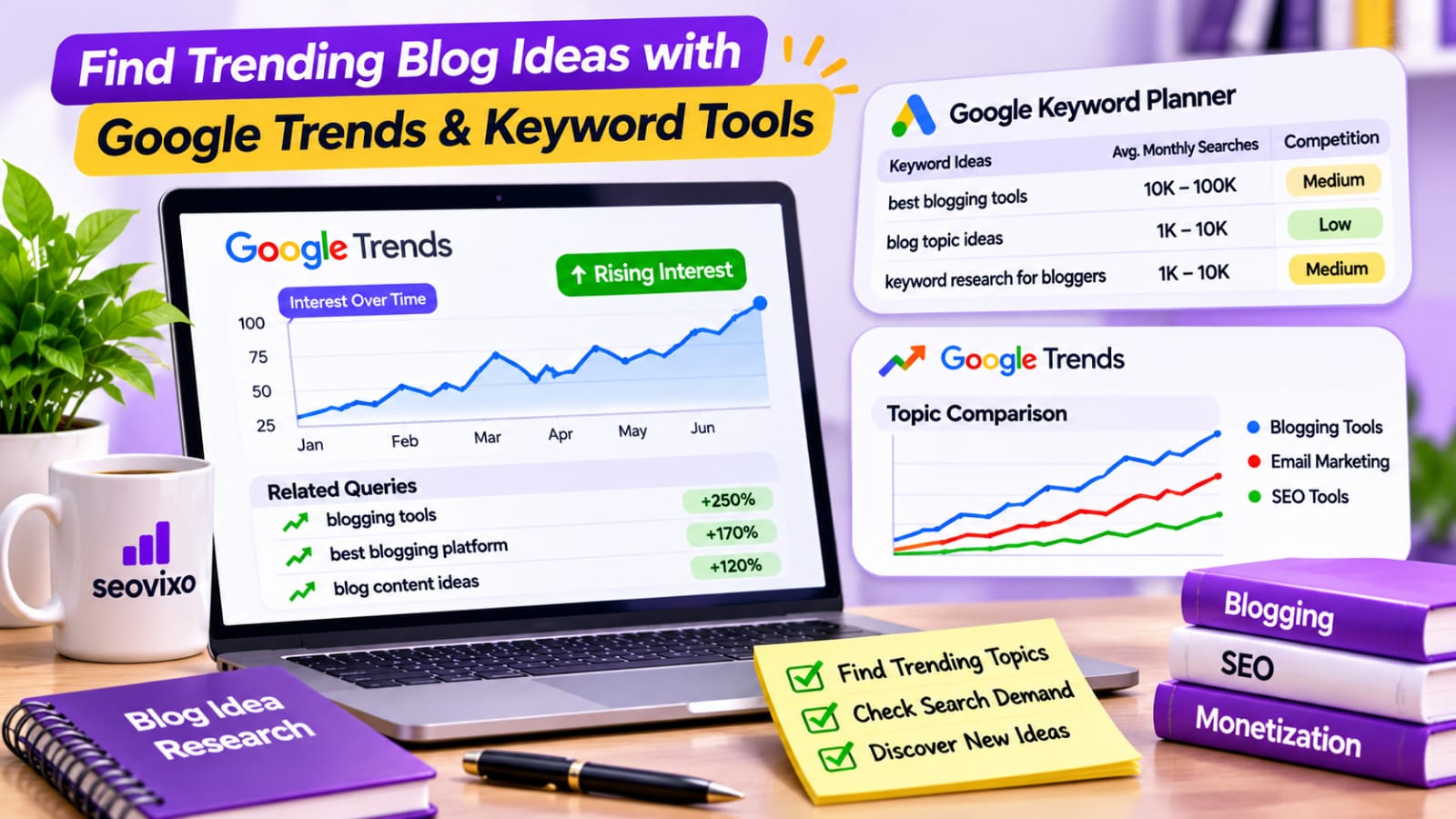
4. Discover Rising Topics with Google Trends
Google Trends helps you explore how interest in a topic changes over time.Enter a keyword and examine its interest over time. You can also compare multiple topics and explore related and rising searches.
For example, you could compare interest in blogging platforms, AI writing tools, and email marketing software.
Pay attention to:
- Whether interest is increasing or declining.
- Whether the topic is seasonal.
- Whether related searches reveal emerging questions.
- Whether interest is consistent across different periods.
Remember that Google Trends shows relative interest, not exact monthly search volume.
5. Use Google Keyword Planner
Google Keyword Planner can help you discover keyword variations and explore estimated search demand.Enter a broad topic, such as "blogging tools," to find related keyword ideas.
Review available information such as estimated search ranges, competition, and trends. Remember that its competition metric relates to advertising, not directly to organic SEO difficulty.
You can use the results to identify specific article opportunities, including:
- Best free blogging tools.
- Best content planning tools.
- Blogging tools for beginners.
- Free keyword research tools.
Do not choose a keyword based on volume alone. Check the search results and understand what people expect to find.
6. Find Ideas in Google Search Console
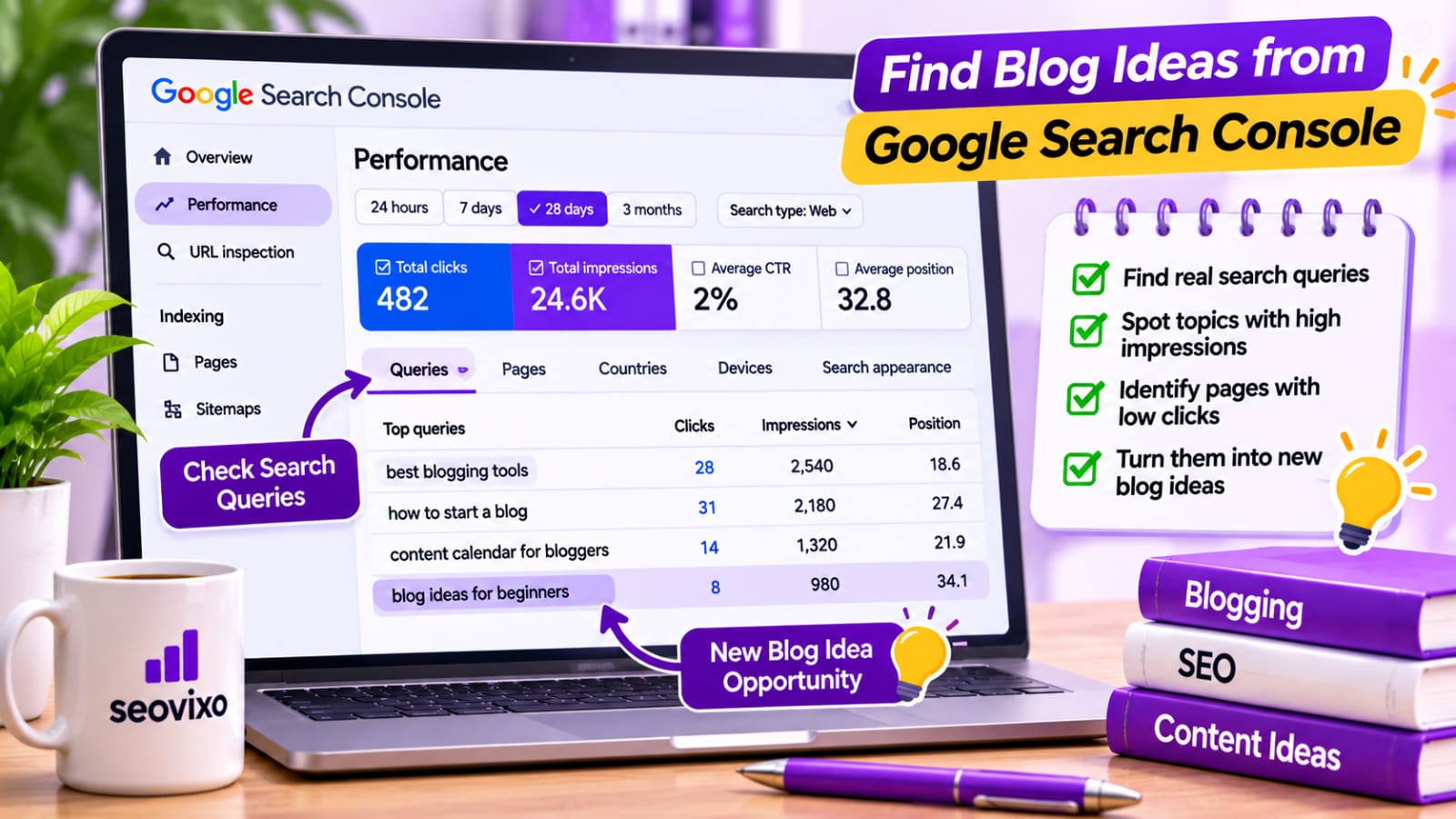
Already have a website? Google Search Console can be one of your most useful research resources.Open the Performance report and examine the Queries tab. Look for relevant search terms that generate impressions for your website.
Pay particular attention to queries that:
- Receive impressions but few clicks.
- Are related to topics you have not covered in detail.
- Reveal questions your existing articles only briefly answer.
- Suggest opportunities for a supporting article.
Before creating another page, check which existing URL is appearing for the query. Sometimes improving an existing article is better than publishing a new one.
7. Study Competitors and Find Keyword Gaps
Competitor research can reveal topics that are already attracting attention in your niche.Visit websites targeting a similar audience.
Explore their blog categories, popular articles, comparison guides, and recently published content.SEO tools such as Ahrefs and Semrush can also help you investigate competitor keywords and identify relevant content gaps.
Look for topics that competitors cover well but your website has not addressed. Then find a way to improve the coverage with clearer explanations, original examples, better comparisons, or practical instructions.
Avoid copying their articles. Your goal is to discover opportunities, not reproduce existing content.
8. Search Reddit, Quora, and Online Communities
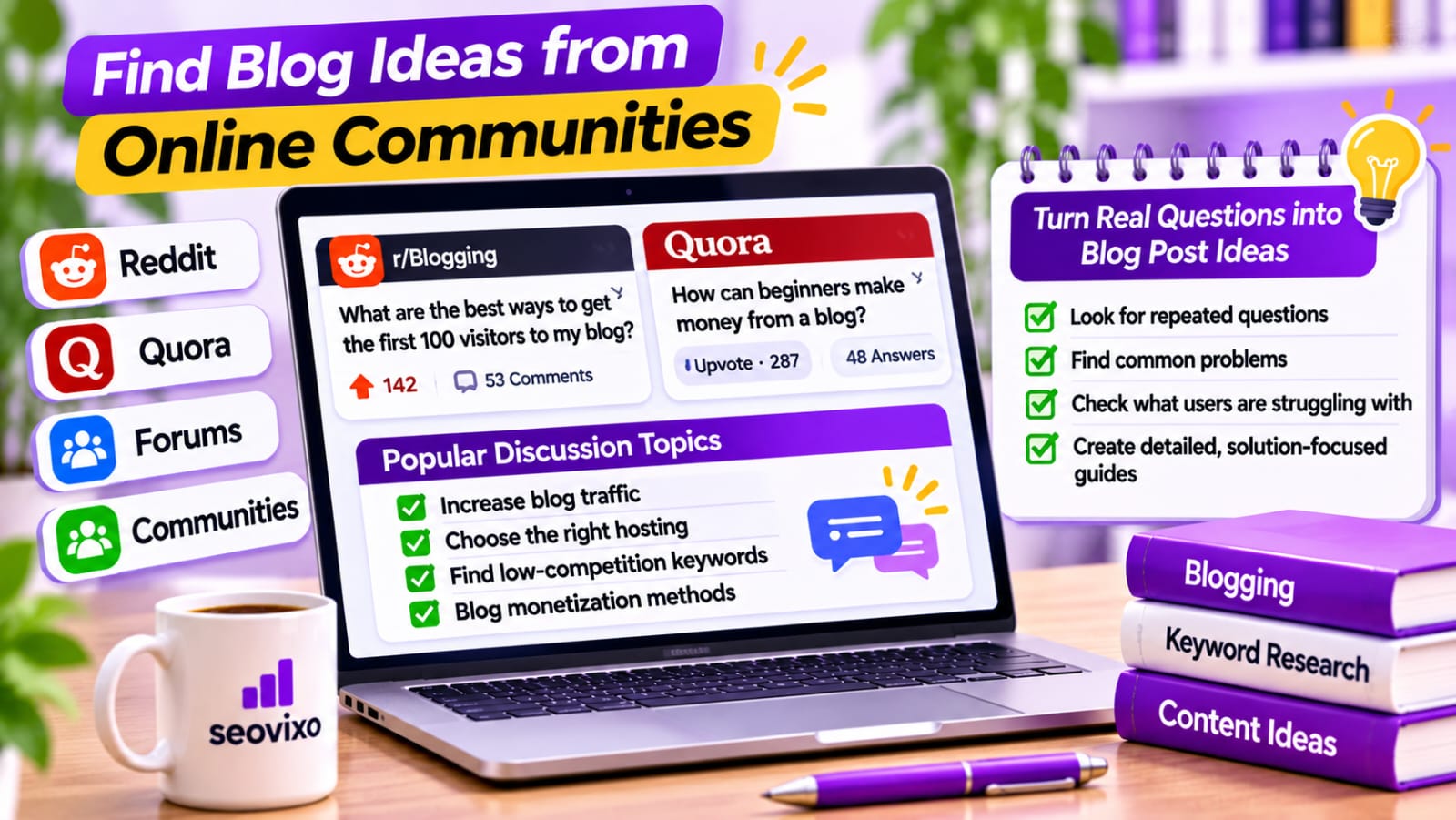
Online communities are valuable places to discover real questions and frustrations.Search Reddit communities, Quora discussions, and relevant forums for repeated problems related to your niche.
For example, in blogging communities, readers may ask:
- How do I get my first 100 visitors?
- Which hosting provider should I choose?
- How can I find low-competition keywords?
- Why are my blog posts not indexed?
Repeated questions can become useful article ideas.
Read the discussions carefully so you understand the context. An article should provide a genuinely helpful answer, not simply repeat a community conversation.
9. Use YouTube Search and Comments
YouTube can help you discover topics people want explained visually or step by step.Search for a broad keyword and examine suggested searches, popular video topics, and viewers' comments.
For example, searching for WordPress tutorials may reveal questions about website speed, plugin installation, themes, and website security.Comments are particularly useful because viewers often ask follow-up questions that the video did not answer.
Turn those questions into detailed guides, troubleshooting articles, and beginner tutorials.
10. Explore Product Reviews and Customer Complaints
Product reviews can reveal problems that potential buyers want solved.Explore customer reviews on relevant product websites, software directories, and app marketplaces.
Look for repeated complaints, missing features, confusing setup processes, pricing concerns, and common questions.
For example, if users repeatedly complain that an email marketing tool is difficult for beginners, you could research an article about easier email marketing tools for beginners.
This approach is especially useful for affiliate websites because it helps you create content around real purchasing concerns.
11. Research Affiliate Programs and Product Categories
Affiliate research can help you discover topics with commercial potential.Explore products and services relevant to your audience. Check their official affiliate program pages, product features, eligibility requirements, commission structures, and payment terms.Then develop article ideas that genuinely help readers make decisions.
For example:
- Best WordPress hosting for beginners.
- Hostinger vs Bluehost.
- Best SEO tools for small bloggers.
- Semrush alternatives for beginners.
- Best email marketing tools for new websites.
Do not choose a product just because it offers a commission. The product must be relevant, useful, and suitable for your readers.
Popular Blog Ideas vs Profitable Blog Ideas
How to Check Whether a Blog Idea Is Worth Writing
Use This Simple Blog Idea Scoring System
Practical Example: Turning One Topic into Multiple Blog Ideas
Suppose your main topic is blogging tools.You can use Google Autocomplete, community questions, competitor articles, and affiliate research to discover related opportunities.
Your shortlist might include:
- Best free blogging tools for beginners.
- Best keyword research tools for bloggers.
- Best content calendar tools.
- Best email marketing tools for beginner bloggers.
- Best free WordPress plugins for new blogs.
Before choosing one, inspect its search results, competing articles, audience relevance, and potential monetization routes.This gives you a focused list rather than a collection of unrelated topics.
Organize Your Ideas into Content Clusters
Once you find suitable ideas, organize them around a main subject.
For example:Pillar article: How to Start a Blog and Make Money
Supporting articles:
- How to Find Profitable Blog Ideas.
- Best Content Calendar for Bloggers.
- How to Write Evergreen Blog Posts.
- Best Affiliate Programs for Bloggers.
- Best Hosting for Beginners.
Link related articles naturally so readers can explore the subject in more depth. This also helps search engines understand the relationships between your pages.
Common Mistakes to Avoid
Do not make these mistakes when researching blog ideas:
- Choosing topics only because they have high search volume.
- Copying competitor content without adding something useful.
- Ignoring search intent and audience needs.
- Targeting several nearly identical topics with separate articles.
- Assuming every affiliate-related topic will generate commissions.
- Publishing trends without considering whether interest will last.
- Ignoring your website's existing articles and search queries.
Focus on original, helpful content that demonstrates knowledge and solves readers' problems.
A Simple Weekly Workflow for Finding Blog Ideas
Final Thoughts
Finding profitable blog ideas requires more than collecting keywords. You need to understand what people search for, what problems they want solved, and whether your website can provide a useful answer.
Start with free methods such as Google Autocomplete, People Also Ask, Google Trends, Search Console, and online communities.
Then use competitor research, customer feedback, and affiliate research to evaluate commercial opportunities.Most importantly, validate each topic before writing.
A smaller list of relevant, well-researched ideas is more valuable than hundreds of random keywords.