How Long Does SEO Take for a New Blog? (Realistic Beginner Guide 2026)
One of the biggest questions new bloggers ask is:
“How long does SEO take to work?”
The honest answer is:
SEO usually takes 3 to 12 months for a new blog to see meaningful traffic growth.
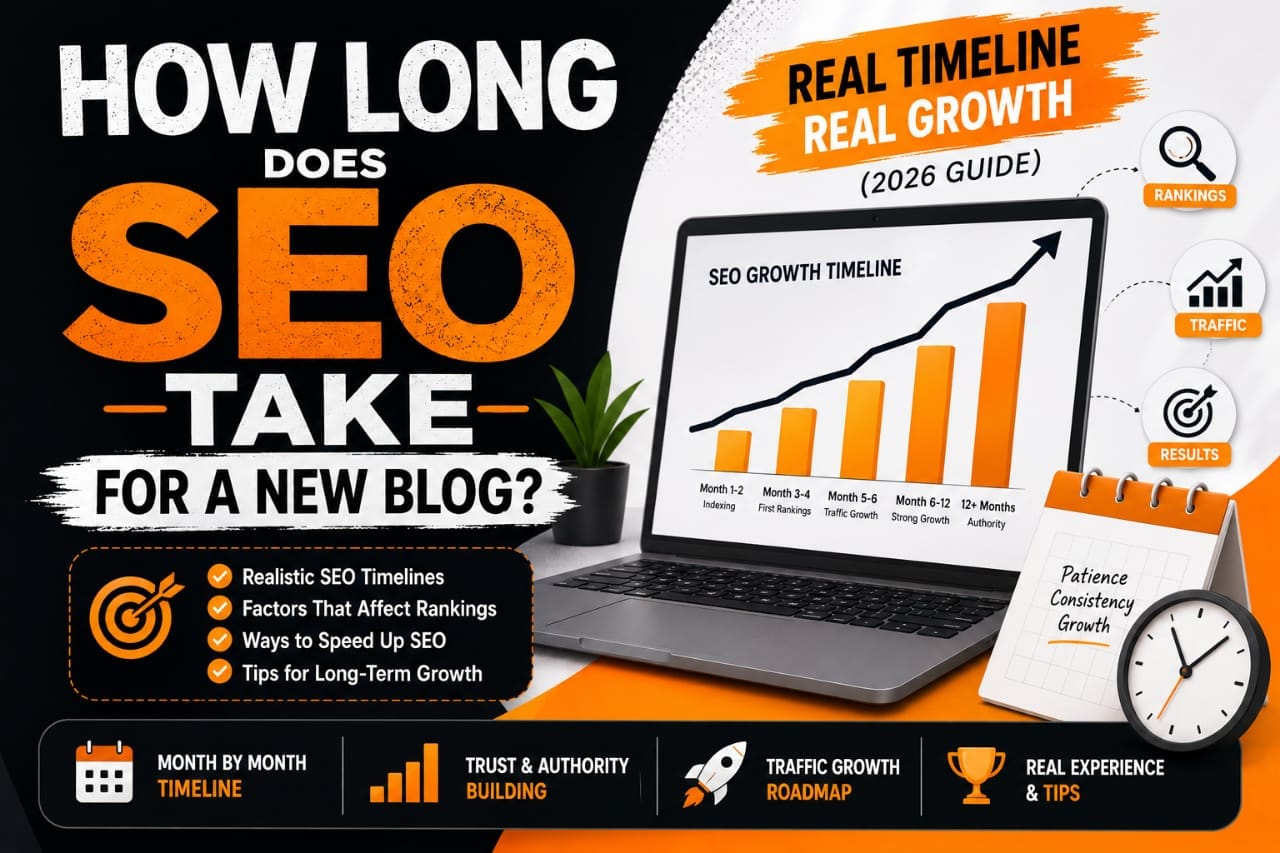
However, the timeline depends on many factors:
- Competition
- Content quality
- Keyword difficulty
- Website authority
- Consistency
- Backlinks
- Technical SEO
Many beginners expect instant rankings, but SEO is a long-term process.
🚀 Try Ahrefs Now For Seo GrowthIn this guide, we’ll deeply analyze:
- Realistic SEO timelines
- What happens in each SEO stage
- Why some blogs rank faster
- Common beginner mistakes
- How to speed up SEO growth
📑 Table of Contents
- The Truth About SEO for New Blogs
- Real SEO Timeline
- Why Some Blogs Rank Faster
- Biggest Beginner SEO Mistake
- Real Blogging Experience
- How Google Evaluates New Blogs
- Does Publishing More Content Help?
- How to Speed Up SEO
- Target Low Competition Keywords
- Build Topical Authority
- Improve Website Speed
- Write Better Content
- How Many Articles Are Needed?
- Does Domain Age Matter?
- Google Sandbox Phase
- Internal Linking Importance
- Publishing Frequency
- Can AI Content Rank?
- The Emotional Side of SEO
- Realistic SEO Expectations
- SEO as Compound Growth
- FAQs
- What Successful Blogs Have in Common
- Common SEO Mistakes
- Why Patience Matters
- Search Intent Importance
- Does SEO Still Work in 2026?
- Best Beginner SEO Strategy
- SEO vs Social Media Traffic
- Final Verdict
- Conclusion
The Truth About SEO for New Blogs
Google does not fully trust new websites immediately.
New blogs usually go through:
- Indexing phase
- Trust-building phase
- Ranking fluctuation phase
- Traffic growth phase
This is why many new blogs get little traffic during the first few months.
SEO is less like a “viral shortcut” and more like building long-term digital authority.
Real SEO Timeline for New Blogs
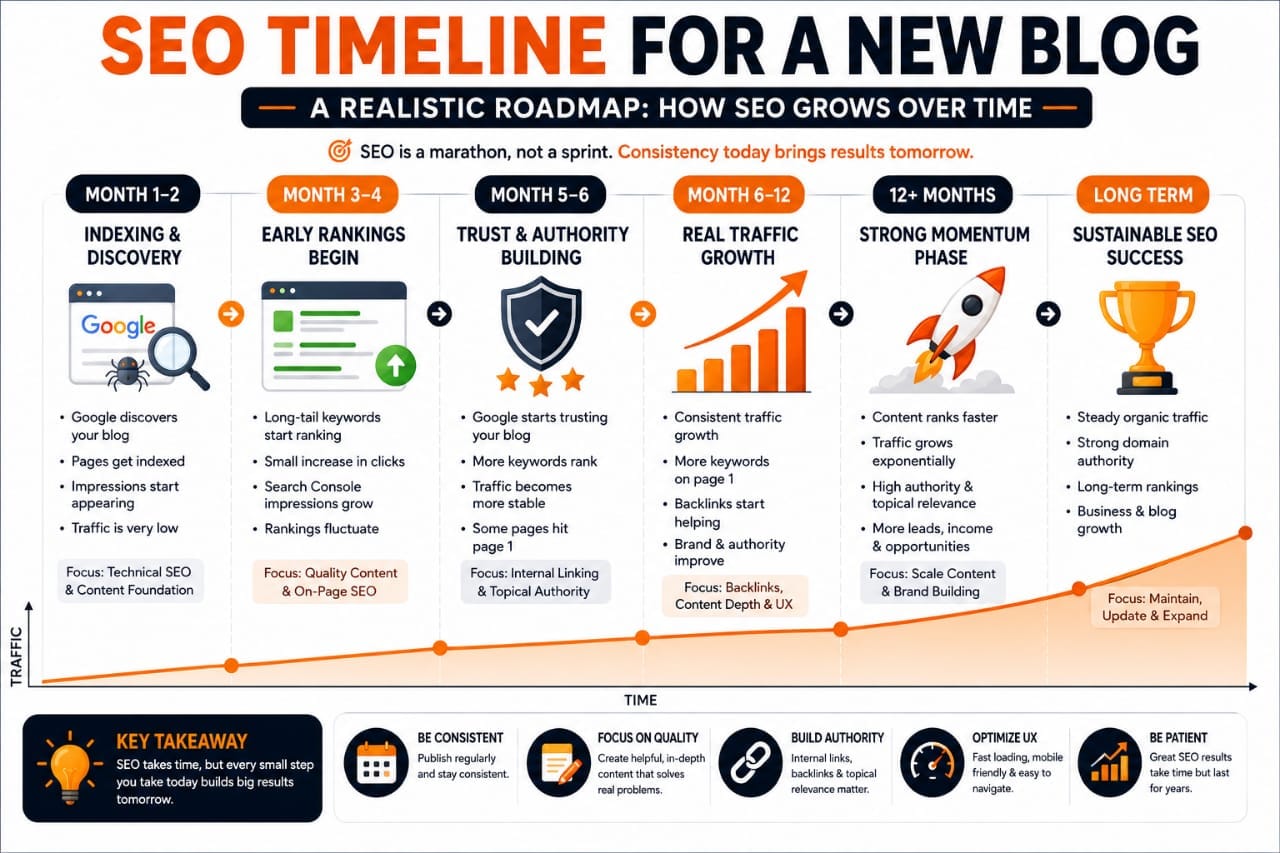
📌 Month 1–2: Indexing & Initial Crawling
During the first 1–2 months:
- Google discovers your website
- Pages begin indexing
- Search impressions slowly appear
- Traffic is usually very low
At this stage, many articles may not rank at all.
This phase is normal for almost every new blog.
👉 Learn why blogs don’t get traffic: Why Your Blog is Not Getting Traffic
📌 Month 3–4: Early Keyword Rankings
This is where many blogs start seeing:
- Small traffic increases
- Long-tail keyword rankings
- Google Search Console impressions
- First clicks from search engines
Low-competition keywords may begin ranking during this phase.
However, rankings still fluctuate heavily.
Google is still evaluating your website quality and consistency.
📌 Month 5–6: Trust & Authority Growth
If you consistently publish quality content, Google starts trusting your website more.
At this stage:
- Articles rank faster
- Traffic becomes more stable
- Internal linking helps more
- Some articles may reach page 1
This is where many bloggers start feeling motivated because SEO progress becomes visible.
📌 Month 6–12: Real SEO Growth
This is usually where strong SEO momentum begins.
Blogs with:
- Consistent posting
- SEO optimization
- Good content quality
- Strong internal linking
can start getting meaningful traffic during this period.
Many affiliate blogs begin generating their first real income around this stage.
Why Some Blogs Rank Faster Than Others
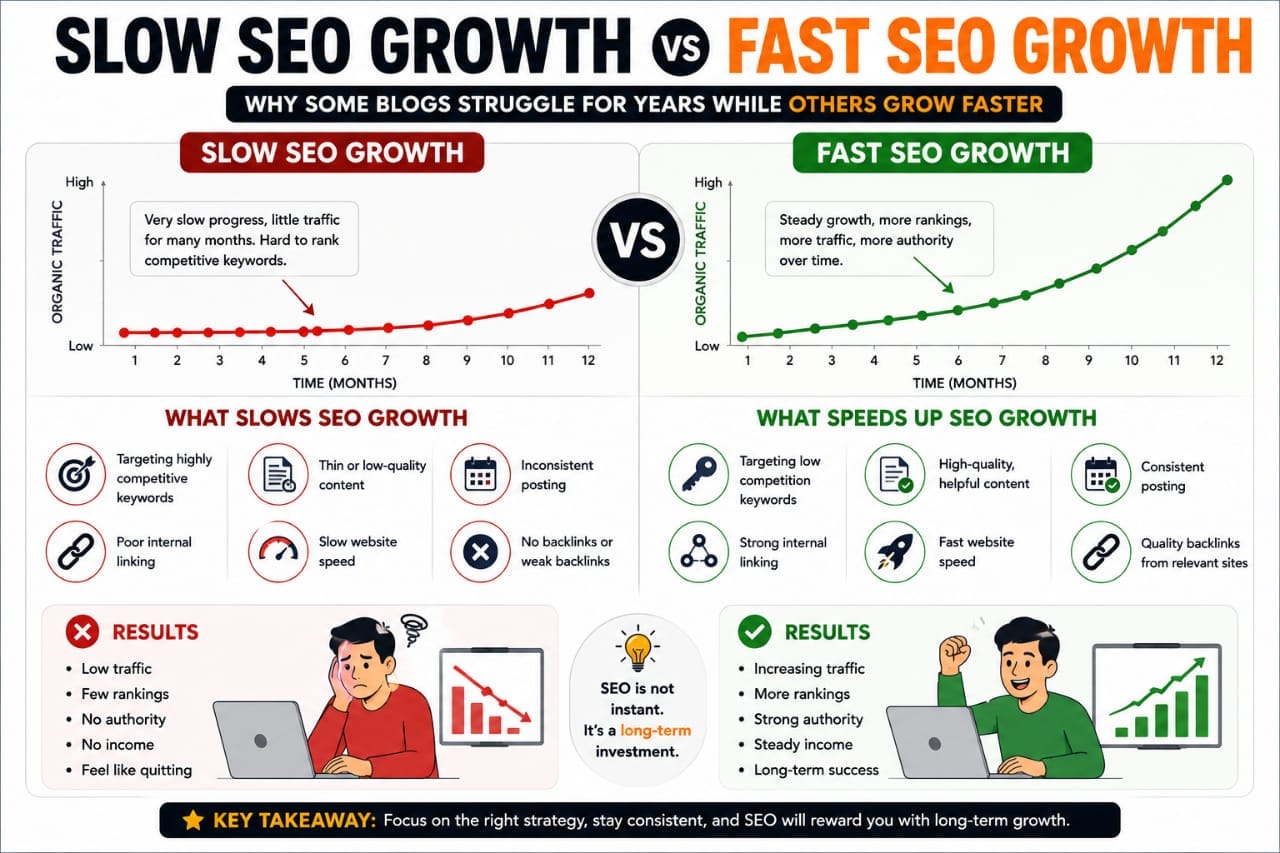
Not all blogs grow at the same speed.
Some websites rank in weeks while others struggle for years.
🚀 Factors That Speed Up SEO
- Low competition keywords
- Topical authority
- Strong content structure
- Fast website speed
- High-quality backlinks
- Proper on-page SEO
❌ Factors That Slow SEO
- Poor content quality
- Inconsistent posting
- Weak internal linking
- Slow website
- Targeting difficult keywords
- Thin content
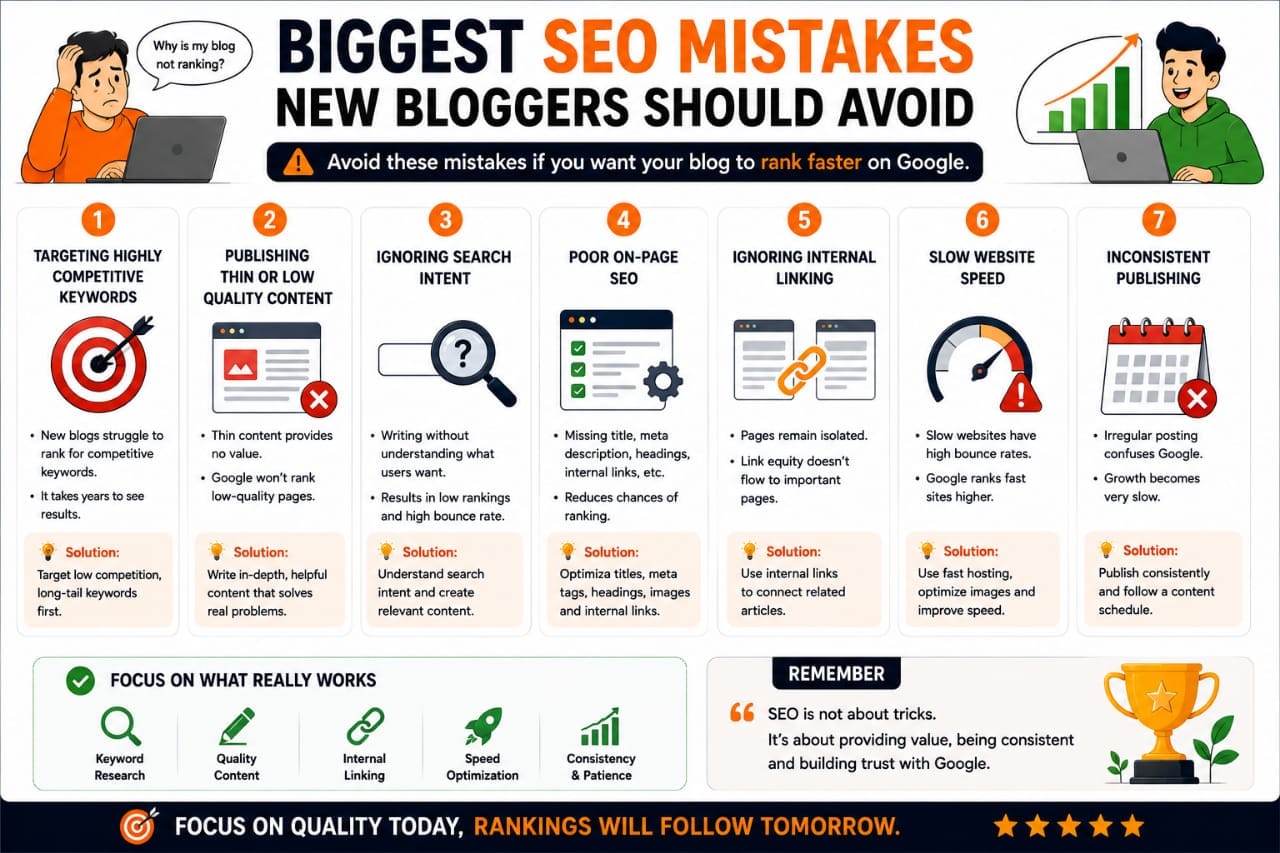
The Biggest Beginner SEO Mistake
The biggest mistake new bloggers make is quitting too early.
Many people stop publishing after:
- 2 months
- 10 articles
- Little traffic
But SEO rarely rewards short-term effort.
The blogs that eventually succeed are usually the ones that remain consistent for months.
Real Experience: What Most New Bloggers Feel
In real blogging experience, the first few months often feel frustrating.
You publish articles but:
- No rankings appear
- Traffic stays low
- Google barely sends visitors
This stage is extremely common.
However, SEO growth often feels “slow suddenly then fast later.”
Once Google begins trusting your website, rankings can improve much faster.
How Google Evaluates New Blogs
Google analyzes many signals before ranking new websites strongly.
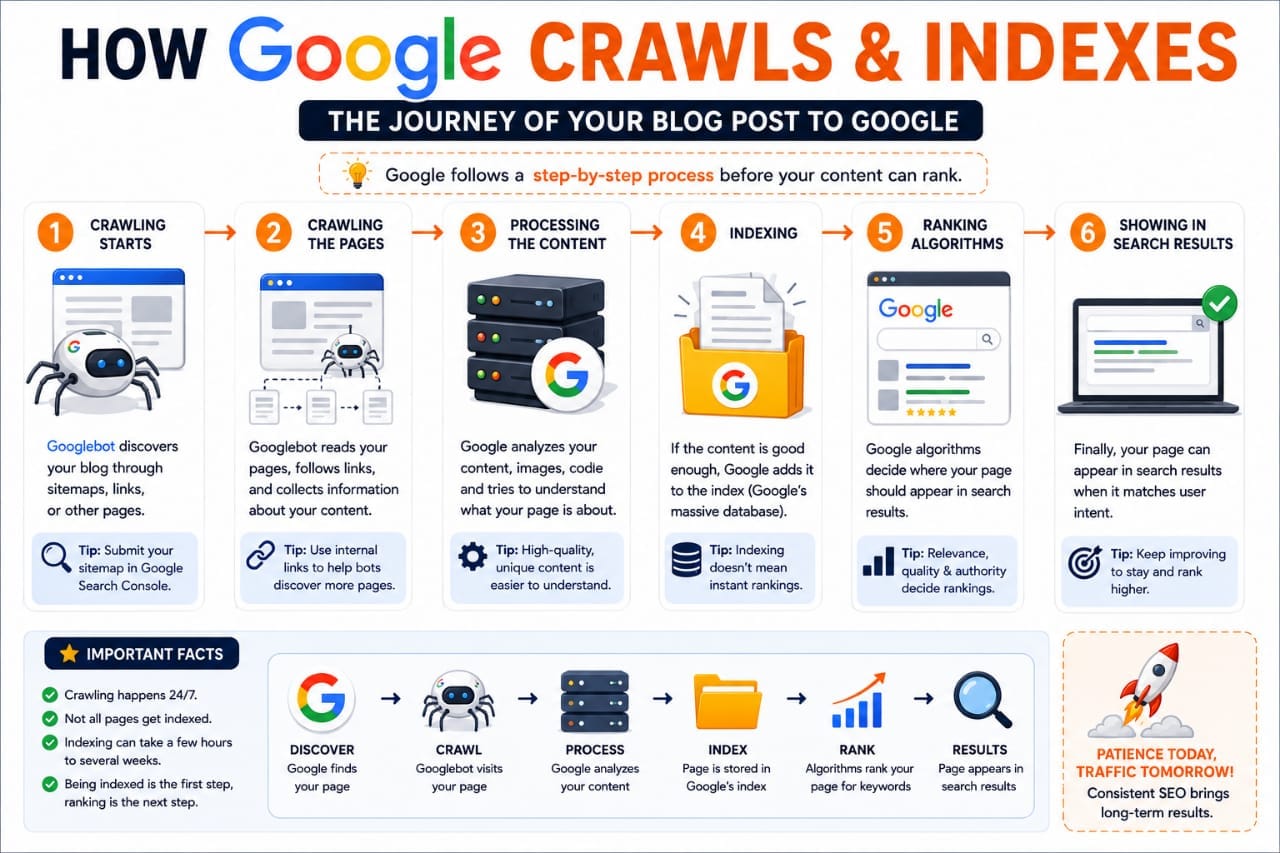
📌 Important Ranking Signals
- Content quality
- User experience
- Website speed
- Topical authority
- Consistency
- Internal links
- Backlinks
👉 Learn SEO basics: On-Page SEO Checklist
Does Posting More Content Speed Up SEO?
Publishing more content can help SEO — but only if the content is useful and optimized.
Quality matters more than quantity alone.
✅ Good Content Strategy
- Focus on one niche
- Target low-competition keywords
- Create detailed helpful articles
- Build topic clusters
This helps Google understand your website expertise more clearly.
How to Speed Up SEO Results for a New Blog
Although SEO takes time, there are proven ways to accelerate growth.
Many successful blogs grow faster because they follow smart SEO strategies early.
✅ 1. Target Low Competition Keywords
This is one of the most important SEO strategies for beginners.
Instead of targeting:
“SEO”
Target:
“How long does SEO take for a new blog”
Long-tail keywords are:
- Easier to rank
- Less competitive
- More targeted
- Better for new websites
Many new blogs fail because they target extremely difficult keywords too early.
✅ 2. Build Topical Authority
Google prefers websites that deeply cover one topic.
Instead of publishing random articles, create content clusters.
📌 Example SEO Cluster
- How Long Does SEO Take
- Why Blogs Don’t Get Traffic
- On-Page SEO Checklist
- SEO Mistakes Beginners Make
- Keyword Research for Beginners
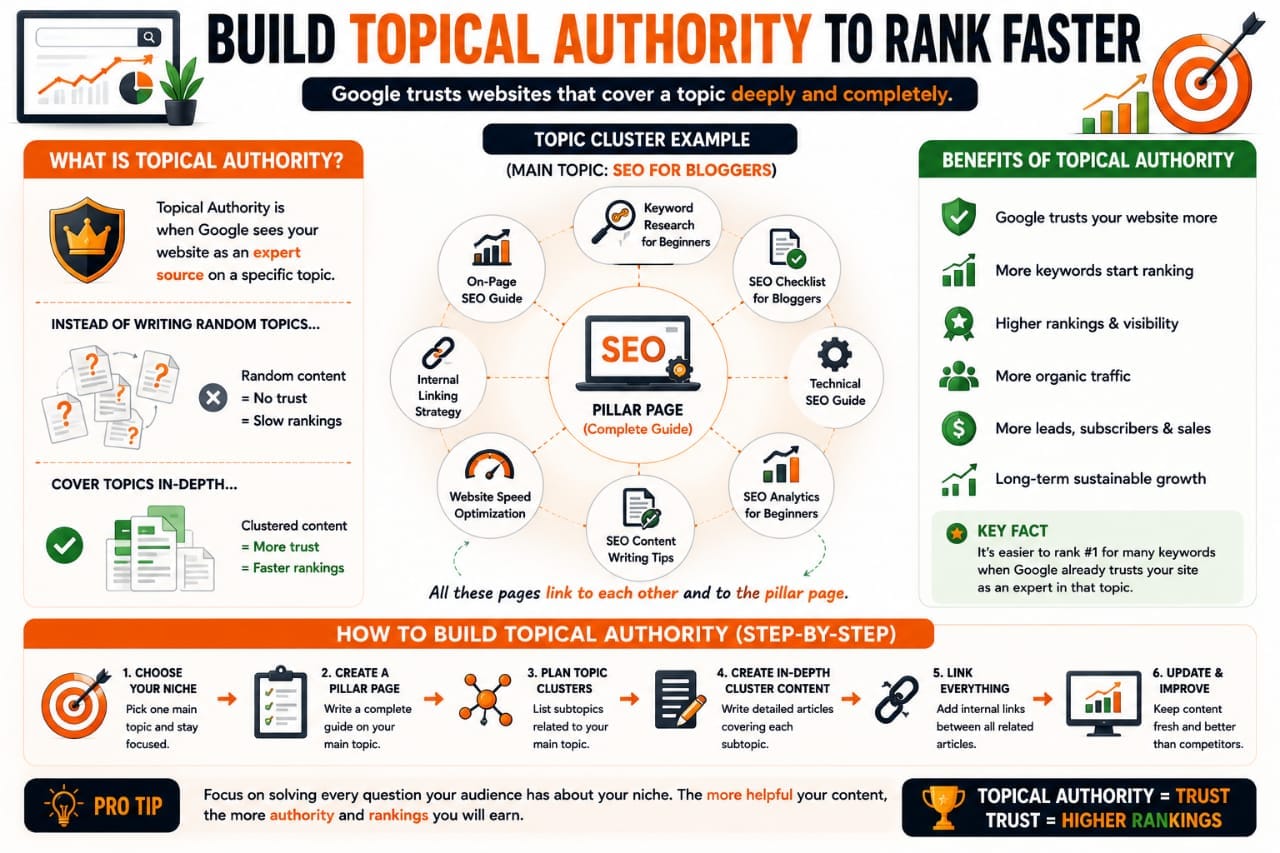
This helps Google understand your expertise.
👉 Internal resource: How to Start a Blog
✅ 3. Improve Website Speed
Website speed directly affects:
- User experience
- Bounce rate
- Core Web Vitals
- SEO rankings
Slow websites often struggle to rank well.
📌 Speed Optimization Tips
- Use fast hosting
- Compress images
- Use caching plugins
- Minimize plugins
- Use lightweight themes
👉 Learn advanced optimization: Speed Up WordPress Website
✅ 4. Write Better Content Than Competitors
Google rewards content that is:
- Helpful
- Detailed
- Well-structured
- Easy to understand
- Useful for readers
Many articles fail because they:
- Repeat generic information
- Lack depth
- Provide poor user experience
Your content should solve real problems clearly.
How Many Articles Does a New Blog Need?
There is no exact number.
However, many successful blogs begin seeing stronger SEO traction after:
- 30–50 quality articles
- Consistent publishing
- Strong internal linking
Some blogs rank faster with fewer articles if competition is low.
Others may need much more content in competitive niches.
Does Domain Age Matter?
Yes — but not in the way many beginners think.
Older domains usually have:
- More backlinks
- More trust
- More indexed pages
- Stronger authority
However, a new blog with:
- Excellent SEO
- Great content
- Low competition targeting
can still grow surprisingly fast.
What Happens During the Google Sandbox Phase?
Many SEO experts believe new websites experience a “Google Sandbox” period.
This refers to a phase where:
- Rankings fluctuate heavily
- Traffic remains unstable
- Google evaluates trust signals
Although Google does not officially confirm a sandbox system, many bloggers experience similar behavior.
This is why patience is critical.
Why Internal Linking Matters for SEO Growth
Internal links help:
- Google discover pages
- Transfer authority
- Improve crawlability
- Increase user engagement
Many new bloggers ignore internal linking completely.
A strong internal linking structure can significantly improve rankings over time.
How Often Should You Publish New Articles?
Consistency matters more than publishing huge amounts randomly.
📌 Good Beginner Publishing Schedule
- 2–4 quality posts weekly
- Consistent posting schedule
- SEO-focused content planning
Publishing regularly helps Google crawl your website more frequently.
Can AI Content Rank on Google?
AI-assisted content can rank if:
- The content is helpful
- It provides value
- It is edited properly
- It matches search intent
Low-quality AI spam content usually struggles long-term.
Google focuses more on quality and usefulness than whether content was AI-assisted.
The Emotional Side of SEO Nobody Talks About
SEO can feel emotionally difficult during the early months.
Many bloggers experience:
- Frustration
- Impatience
- Motivation loss
- Comparison with bigger websites
This is extremely common.
The blogs that eventually succeed are often the ones that continue publishing during low-traffic periods.
Realistic SEO Expectations
| Timeline | What Usually Happens |
|---|---|
| Month 1–2 | Indexing & very low traffic |
| Month 3–4 | First impressions & small rankings |
| Month 5–6 | Traffic growth begins |
| Month 6–12 | Real SEO momentum starts |
| 12+ Months | Authority & stable growth |
SEO is Compounding Growth
SEO often works like compound interest.
At first:
- Growth feels slow
- Traffic is minimal
- Results seem invisible
Then over time:
- Authority grows
- Content ranks faster
- Traffic compounds
- Google trusts the site more
This is why patience and consistency matter so much in blogging.